Farming is the bond that connects humans with the land.
The Shicha Theater Troupe and the Meinong Love for the Homeland Association jointly held the "Satoyama Landscape Art Symposium" on 10/16 and 17. On the morning of the 16th, they invited Fram Kitagawa, general director of the Echigo-Tsumari Art Triennale in Japan, to the Meinong Lecture Hall for a special lecture.
Starting from humanity's common ancestors, and how bloodlines and culture dispersed and evolved across the oceans, Kitagawa explained humanity's cultural navigation routes: carrying seeds and seedlings was like ocean dispersal, and the possibility of the spread of human civilization lies in the fact that among humans there exist the primal genes of farmers, fishermen, and carpenters. This is an important intellectual foundation of satoyama thinking.
Kitagawa also criticized the current Japanese government, noting that since the Abe cabinet it has emphasized a theory of bloodlines of the Japanese as a superior ethnic group; he cannot quite agree with such right-wing ideas. In fact, the differences among human civilizations are all the result of environmental conditions such as soil, monsoons, and ocean currents.
Kitagawa suggested that friends in Taiwan who want to understand the "Art Triennale" should try to understand the process of human historical evolution from a long historical cross-section, so that they can thoroughly understand the essence of human development and understand the Art Triennale.
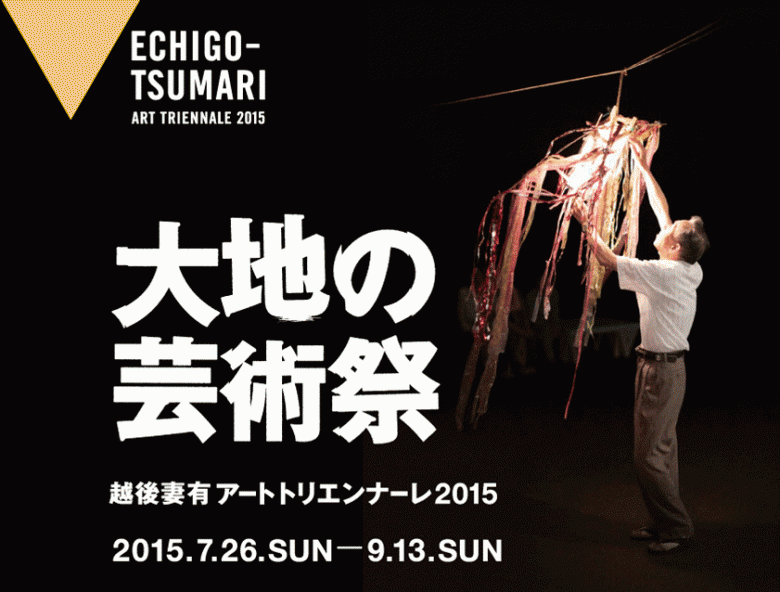
The philosophy advocated by the Art Triennale is like the thematic image poster; the theme in the image is an installation made of plastic rope. This chosen image was once opposed, but this is precisely the spirit of the Art Triennale. The satoyama spirit is to be rooted in the land, rooted in the daily life of residents,
(One of the works of the Art Triennale: Pop-up Picture Book. Provided by Fram Kitagawa)
After the plan was implemented, some of the private land used for creations was later left for urban residents to adopt, becoming the foundation for continuously expanding connections between urban and rural areas.
Due to the decline of rural areas, government policies did not respect the local area and forcibly relocated people away. It was only when outsiders and artists came here that they learned of the hardships of life here, as well as the environmental problems.
The true purpose of the Art Triennale is to find, through these artistic creation processes, new ways of facing the real dilemmas of rural areas.
(This article is a lecture essay, narrated orally by Fram Kitagawa, interpreted orally by Dai Kaicheng, and the writer bears responsibility for the text.)