Germany bans the shredding of male chicks in a global first, expected to take effect in 2017
Every day around the world, tens of thousands of male chicks of layer breeds, because they cannot lay eggs, are killed on their first day of life. Although this may seem like a necessary evil of the industrialization of human food, Germany rejects this argument. The German government announced this year that it will use the latest technology from Leipzig University to determine the sex of chicks right after fertilization, hatching only females, with the goal of setting a global first in 2017 by banning the direct maceration of newly hatched male chicks.
However, our country's Council of Agriculture stated that this technology is still at the laboratory stage, and it must be seen whether the screening accuracy and cost can meet industry needs; for now it is still being watched. (The video below captures footage of a hatchery crushing newly hatched male chicks; for the original source video please click here. The video contains shocking content; please view with caution.)
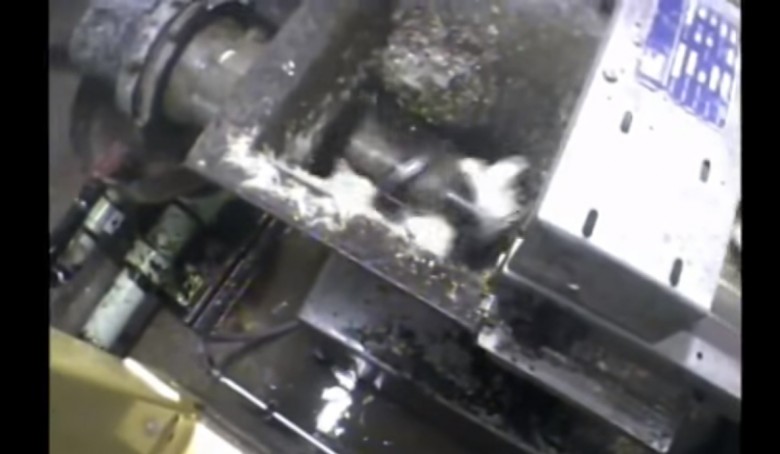
In the layer industry, females are favored over males, and male chicks can only be euthanized
From a human perspective, roosters with brilliant plumage, tall and mighty, seem more popular than hens, but in the industrialized layer market, from the moment of fertilization, male chicks are destined to die, because they do not lay eggs, and their growth rate and meat quality cannot compare with broiler breeds specially bred for meat. They are the classic case of "no eggs laid, but droppings left behind," and they also waste feed.
Taiwan's Fuxiang Farm and Yongguang Egg Breeding Farm, which specialize in supplying layer chicks, both stated that fertilized eggs hatch in about 21 days, and at birth the sex is determined by the chick's feathers or vent, "2 or 3 can be distinguished in one second." If it is a male chick, they are gathered and suffocated with carbon dioxide, in a way that complies with animal welfare, so that the chicks leave before they feel pain, and then they are made into fertilizer through high-temperature fermentation, or handled according to waste disposal procedures.
Some laboratories take them for experiments, but the number is very small, and most are still disposed of directly, "because they are not our product, there is no economic benefit."
Major European and American operations place even more emphasis on efficiency, directly putting the chicks on a conveyor belt and grinding them into minced meat with a macerator; the cruel images have repeatedly provoked strong backlash from animal protection groups abroad.
In fact, using carbon dioxide or a macerator according to prescribed procedures both comply with the American Veterinary Medical Association's euthanasia guidelines, because the macerator is fast, and the chicks may die before they feel pain.
Germany adopts new technology to determine male and female sex
Although the above measures meet euthanasia standards, seeing bright yellow chicks end their lives within hours of birth still makes many people unable to bear it; on the other hand, layer industry operators believe that all of this is a necessary evil done in order to supply people with enough eggs.
Scientists around the world have been racking their brains over this difficult issue. At present, human technology still cannot breed a variety that produces only female chickens, so scientists settle for the next best thing and simply research how to know the sex before the chick has hatched, so that before the chick is sentient, the egg can be put to other uses, striving to achieve a balance between animal protection and commercial farming.
Japan, the Netherlands, and Germany have all developed methods to detect sex using egg shape or by extracting embryos, but due to accuracy and cost issues, they have not yet been applied to commercial production.
However, Leipzig University in Germany made a major breakthrough this year. A normal fertilized egg can form blood vessels in about three days. Scientists drill a small hole in the eggshell and shine a special light through it, analyzing the blood cells inside the blood vessels to determine whether the chromosomes are male or female. Each test takes only 10 seconds, and it can also incidentally identify problematic eggs. A detection device has already been designed.
After the German government visited the Leipzig University laboratory in April this year, it was very optimistic about this technology. An Associated Press report pointed out that German Agriculture Minister Christian Schmidt said that Germany currently needs to macerate about 45 million male chicks a year. Using this technology, the added cost per egg is less than 2 euro cents (about NT$0.7), and it is hoped that in 2016 this technology will actually be applied in hatcheries, with the goal of promoting it to hatcheries nationwide in 2017 and banning the maceration of male chicks.
Taiwan is still watching
Jiang Wenquan, section chief of the Animal Protection Section of the Animal Industry Department of the Council of Agriculture, has long paid attention to layer animal welfare abroad. As far as he understands, Taiwan's scale is not as large as Europe and the United States, and currently carbon dioxide suffocation is the main method, referring to the euthanasia handling procedures for experimental animals. Compared with the macerators used in Europe and the United States, the impression is somewhat better.
He believes that the principle of Germany's technology is the same as that studied by many scientists before, but accuracy is the key. If it is only 70 or 80 percent accurate or prone to misjudgment, the industry may have low willingness. This technology is still at the laboratory stage, and subsequent application conditions still need to be evaluated.
Yongguang Egg Breeding Farm said that at present it has not seen such technology domestically. Now the birth rate of males and females is about half and half. Directly euthanizing male chicks is a cost consideration; there is no other way. If there is a method to determine sex, they would be happy to see it succeed.
Zhu Zenghong, chief executive of the Taiwan Animal Society Research Association, said that whether the carbon dioxide concentration used by operators can cause chickens to die immediately is completely unknown to the outside world. Taiwan's foundation stock for laying hens all comes from abroad, and if there is such a trend abroad, Taiwan cannot shirk responsibility either. "Farming chickens abroad is also industrialized, but in response to consumers' demands, they have begun to review things. Developing an industry does not necessarily require mistreating animals."
At present, although the Council of Agriculture has formulated "Definition and Guidelines for Friendly Egg Production Systems," most of it focuses on the rearing process. Zhu Zenghong believes that further discussion should be made of the source of laying hens, transportation, slaughter after loss of production capacity, and so on, to establish a more complete set of standards.