Written by Chen Wei-wei, Chen Pin-chun, Ho Yi-chun
The Orchid Island Special Zone Plan, under the name of "setting Orchid Island's development on the right track," hopes to focus on the development of 6 tribal communities, incorporating Orchid Island's local life, production, ecological facilities, cultural development and life education. It states that "the planning of the plan will respect local wishes, and local voices will all serve as reference for the subsequent planning of the case."
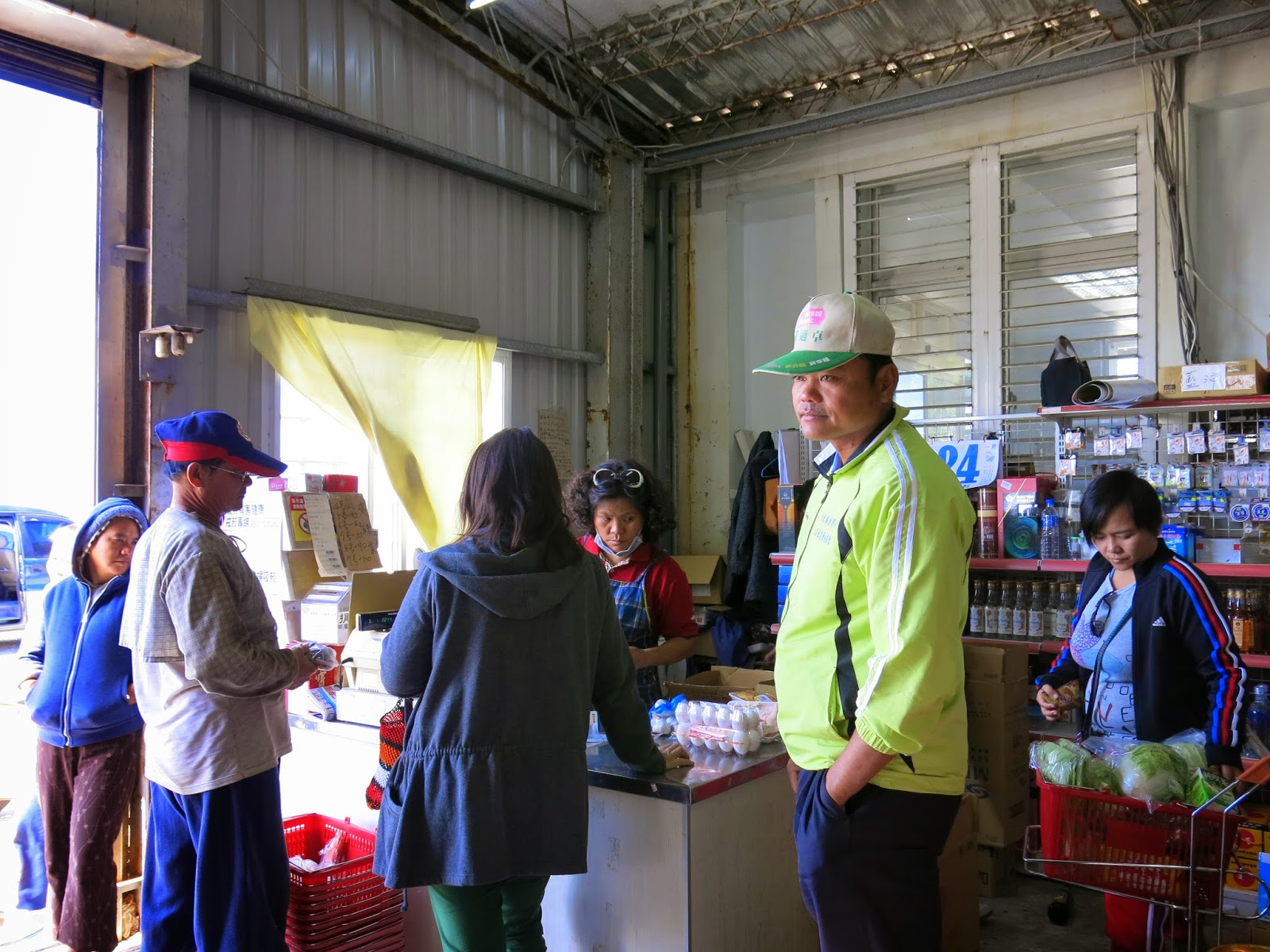
Orchid Island's first7-11was originally scheduled to open this year (2014) on Father's Day. After celebrity Yu Sheng's7July blog post, which said "once Orchid Island has a convenience store, Taiwan will be ruined," was reported by the media, the question "Is7-11really suitable for setting up on Orchid Island?" sparked heated discussion online from many sides. Opponents argue that the chain enterprise7-11setting up there represents an invasion by the forces of capital. However, regardless of whether7-11is established or not, on Orchid Island, with fewer than5000residents, each year the island must welcome60,000 tourists, equivalent to more than10times the island's population, and tourism-related industries such as homestays, car rentals, restaurants and shops are already flourishing.
On Orchid Island, people are closely connected; when vehicles meet on the narrow roads, people often greet each other. Photo / Chen Pin-chun
Liao Ming-te stressed that overdevelopment of Orchid Island would destroy the island's environment in which nature and people are one. "So-called infrastructure should follow our original construction methods, rather than being destroyed first and then patched up with concrete and greening." Tung En-tzu felt that, in fact, wherever there are people there will be damage, but the degree of damage should be reduced to a minimum, without too much human intervention.
Liao Ming-te further stated that living on Orchid Island now, having no money is not a problem, because sweet potatoes and taro can be grown and sold locally. However, onceBOT(build-operate-transfer) comes in and7-11and supermarkets begin to be set up, Orchid Island will face environmental crises such as a sharp increase in garbage.
Regarding tourism development, Syaman Rapongan offered a view from another angle: "A proliferation of shops is not called prosperity; it is called confusion." He said Orchid Island needs progress, but progress is not "overall progress." He asked, "A people pursuing high economic income and educational levels may look like progress, but is this the progress of a people?"
Writing land, development and culture, the triangle problem, with "time"
To the Tao people, land is not merely a transaction. Syaman Rapongan believes that land takes time to love: from going up the mountain to find wood, cutting the wood, then carrying it down the mountain to build the structure of a boat, step by step. Every year he spends half the year practicing the people's scientific beliefs and carrying on Tao culture. "When the leaves begin to fall, you know it is autumn; this is called a solar term. In the city, you cannot see the lilies bloom; lilies are only an imagination. But if you spend half a month doing ecological observation, you will know when the lilies bloom."
What locals fear is imagining Orchid Island's future development with an urban mindset. The nearly silent Orchid Island Special Zone Plan, although funding is currently not in place, has in fact still not been revoked; in the future it may perhaps change its name and pass again.
And if Orchid Island were planned as an urban plan, the change of land designations across the island is what the Tao people fear most. They worry that the Special Zone Plan will become the beginning of the government's deregulation of Orchid Island's land, and a stepping stone for consortiums to enter Orchid Island.Spokesperson of the Dongqing Self-Rescue AssociationChang Hai-yu frankly admitted that, compared with discussing tourism development, the Dongqing tribe more often discusses land, "because if the land is gone, there is nothing else to discuss." He stressed that land is the root of the Tao people, and land must not be deregulated for use by consortiums. The Tao people hope that before the government plans Orchid Island, it will spend time communicating with them and discuss Orchid Island's tourism development together.
Although the local blueprint for future development has not been fully pieced together, it is not a blank sheet of paper either. While moving toward tourism development, the Tao people also hope to preserve Tao traditional culture and not destroy their homeland. Even tourism development is no exception: although it requires scenery, talent and an infusion of resources, more importantly, the locals must build up their own tourism capacity. Whether it is guide training or instruction in legal knowledge, all show that local elements are indispensable; the locals have even formed local youth organizations such as the "Orchid Island Youth Action Alliance" to drive overall development from within.
Besides the hopes of locals, outside visitors also long for the open sea and sky and leisurely quiet beyond the concrete jungle, and set foot on Orchid Island following the scent of "slowness." The power of "time" governs the rhythm of life on the small island; this is what makes Orchid Island fascinating, and also what the outside world often overlooks. Kuan Ta-wei, assistant professor in the Department of Ethnology at National Chengchi University, reminded that when the government seeks dialogue with the Tao people, it must consider that they participate in public affairs in their spare time from farming and work. Hsieh Ming-hui, chairman of the Hongtou Community Development Association, is open to the government investing various resources in Orchid Island, but he believes locals must have the opportunity to clearly understand the various plans, and this must also be a gradual process.
Orchid Island's development cannot be achieved overnight as planned by the Special Zone Plan; land, development and culture form a difficult triangle problem. It takes time, to be combed through and then untied one by one; it cannot be rushed, nor forced.(End of the full report)
If you are willing to leave a response,
pleaseemail usor leave a comment on any of the articles;
you can alsothrougha third-party payment platformsponsor andsupport this article,
thank you forhelping create a better media environment.
────────────List of Interviewees
(Arranged by stroke count of the first character)
Chien Chih-wei, office director of Legislator Chien Tung-ming
Taitung County Councilor Syaman Madeneng
Homestay operator Tung En-tzu
Tao writer of ocean literature Syaman Rapongan
Spokesperson of the Dongqing No. 7 Land Self-Rescue Association and pastor of Dongqing Church, Chang Hai-yu
Member of the Dongqing No. 7 Land Self-Rescue Association Hsieh Nan-hai
Anonymous member of the Dongqing Self-Rescue Association
Chairman of the Hongtou Community Development Association Hsieh Ming-hui
Chairman of the Langdao Community Development Association Hsieh Ching-chuan
Former chairman of the Yeyin Community Development Association Liao Ming-te (chairman at the time of the interview)
Orchid Island Township Mayor Chiang To-li
Former Orchid Island Township Mayor Chou Kuei-kuang
Secretary of the Orchid Island Township Office Chung Ma-hsiung
Section Chief of the Civil Affairs Section of the Orchid Island Township Office Hsieh Chun-ying
────────────List of Thanks
n List of Sponsors
(Arranged in order of sponsorship)
ask6150
telyhhu
Chang Chinhwa
Anonymous donation
Anonymous donation
Anonymous donation
Anonymous donation
Anonymous donation
Anonymous donation
Anonymous donation
Anonymous donation
Anonymous donation
Anonymous donation
Anonymous donation
Quality Journalism Development Association
n InformationProvided
Video footage:
Indigenous Television program "Tribe Voices": 2014year5month24day, episode12 "How Should the Taitung Regional Plan Be Planned?"
Written / online materials:
Tsai Chung-yueh, director of the northern office of the Citizens of the Earth Foundation
Members of the Dongqing No. 7 Land Self-Rescue Association
Hsi Nan Ma-fei-fu, chief executive officer of the Orchid Island Tribal Culture Foundation
Special report suggestions:
Chu Shu-chuan, Ho Jung-hsing, Kao Yu-chih, Huang Yi-han, Chen Hao-wen, Chuang Cheng-yang, Hung Yu-tseng
─────────────Special Report Production Team
Special report planning: Chen Pin-chun, Ho Yi-chun, Chen Wei-wei
Interviews: Chen Pin-chun, Ho Yi-chun, Chen Wei-wei, Chen Meng-chun
Writing: Chen Pin-chun, Ho Yi-chun, Chen Wei-wei
Editing and proofreading: Chen Pin-chun, Ho Yi-chun, Chen Wei-wei, Hung Yu-tseng
Research assistant: Chen Meng-chun, Hung Yu-tseng
Video script: Ho Yi-chun, Chen Pin-chun
Video editing: Chen Pin-chun
Video subtitles: Chen Pin-chun, Chen Meng-chun, Ho Yi-chun
Video narration: Chen Hao-wen