How can forage quality be kept stable and dry? Livestock Research Institute identifies the most suitable lactic acid bacteria strain
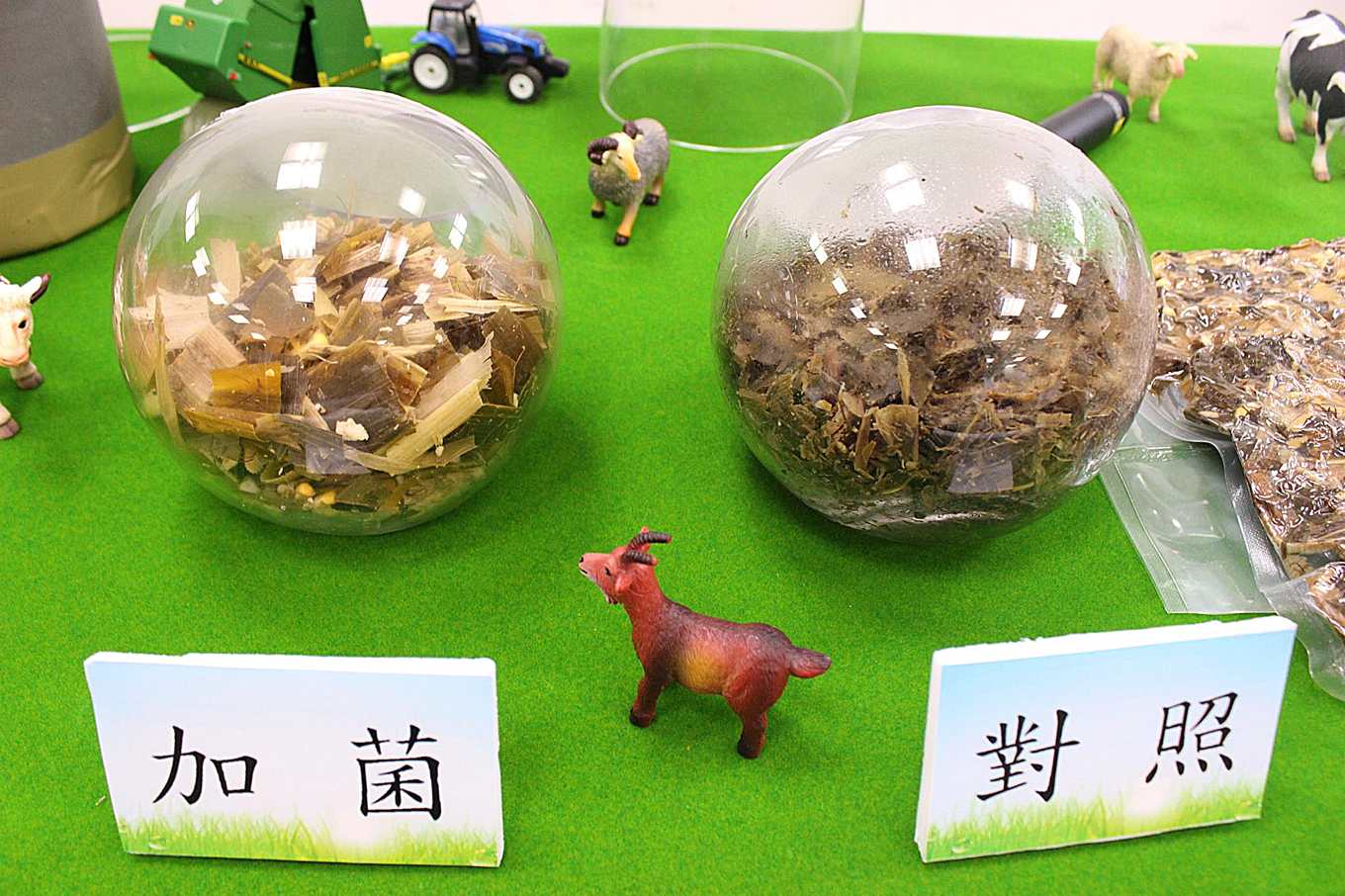
Good bacteria abound, and lactic acid bacteria do the heavy lifting! "Forage" is an important feed source for herbivorous economic animals. Fresh forage often can only be stored for one to two days, "but cows have to eat every day," pointed out Wang Shu-min, associate researcher at the Hengchun Branch of the Livestock Research Institute. After years of research, the Livestock Research Institute has now screened out a lactic acid bacteria strain suitable for use in the country. By using this strain to ensile forage, the storage time of forage can be extended, giving cattle and sheep a feed of stable quality.
Maintaining the stability of forage silage, identifying the most suitable lactic acid fermentation strain
Why are "lactic acid bacteria" the good bacteria for silage forage? Wang Shu-min first explained that because dairy farmers need a stable feed supply, they mostly ensile fresh forage in a way similar to fermenting pickled cabbage, "that is, without adding salt, using microbial fermentation to maintain forage quality." Lactic acid bacteria can lower the pH of the forage, "thereby inhibiting the growth of yeasts, bacilli and other microorganisms that may cause forage spoilage," allowing the forage to be supplied stably to animals for consumption over a long period.
However, after the forage is loaded and filled and undergoes lactic acid fermentation, although it becomes silage that can be stored for several months, "once the silo is opened, oxygen enters, and foreign bacteria such as yeasts and bacilli begin to revive and grow," causing the silage forage to start heating up and spoiling. "This then is not suitable for animal consumption and will cause problems."
In order to extend the preservation period of silage forage and maintain the stability of silage after opening, research both in the country and abroad has begun to study and screen suitable lactic acid bacteria strains, all in search of the lactic acid fermentation strain best suited to Taiwan's environment, with the best stabilizing effect and the greatest ability to maintain dry matter content, Wang Shu-min said.


For more professional agricultural science and technology information, please scan the QR code to follow WeChat: NongXunNET

Please indicate the source when reprinting.