The Significance of the Hualien New Wild Vegetable Movement in Promoting Local Ingredients
In late March, I went to Denver, USA, to attend the 73rd Annual Meeting of the Society for Applied Anthropology. The theme this time was "Distribution and Development of Natural Resources in the 21st Century," and "food" was one of the important subthemes, gathering a large number of research results, covering food security, health, nutrition, identity, education, and food production against the capitalist system, among others. The concept of "local food" ran through the various studies and became a keyword for thinking about food issues in the 21st century. After the meeting, I traveled in the southwestern United States, in Colorado and New Mexico. It was early spring, the season of new cultivation, and I saw American-style industrialized agriculture with my own eyes, which gave me a deeper understanding of today's food globalization and the meaning of the local food movement.
American-style Industrialized Agriculture
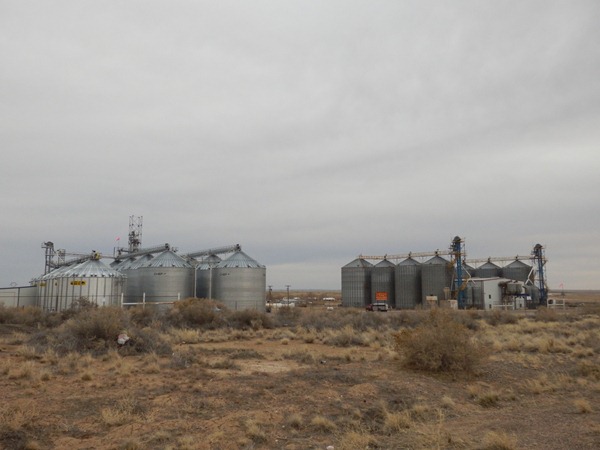
In spring, the snow on the mountains had not yet melted, but the Colorado plains, where agriculture and livestock farming thrive, had already begun to awaken. Large irrigation machinery arms nourished patch after patch of circular green farmland on the boundless dry land, and giant factory-like granaries stood across the plains. This is a scene of American industrialized agriculture.
In the 1960s, Norman Borlaug developed new high-yield, pest- and disease-resistant wheat varieties, driving the first Green Revolution. Since then, hybridization and breeding techniques have been continuously developed, making crops more suitable for intensive dense cultivation. With its vast territory, the United States, combined with highly mechanized farming techniques, leaped to become a major agricultural exporting country. American supermarkets can be said to be a showcase of the American food empire. The endless food display shelves seem to tell of this country's abundant food. However, careful observation reveals that most of the food comes from a small number of trust enterprises, whether fresh or processed.
In the supermarket, one cannot see "local food." Food travels long distances from production areas to major towns and cities, and refrigeration and preservative technologies make the fruits and vegetables on the shelves "look very fresh." Strangely, beverages and processed foods made with food additives are cheaper than fresh produce. Organic agricultural and livestock products can also be seen in supermarkets, but a friend living in the United States said he never buys them, because the seemingly numerous organic brands actually all belong to subsidiaries of those few large food corporations, and they also produce conventional crops at the same time. "Organic is just a commercial operation," my friend said.
At the seminar, Dr. Mark Swanson presented the results of his work promoting local food education in Kentucky. At the meeting, I asked whether the United States, like Japan, had legislation on food education. The scholars present all shook their heads, and someone boldly said: "Although Obama attaches great importance to food education and promotes encouraging policies or small-scale programs, such a bill could never pass in the United States, because the food industry giants would be the first to come out against it." Only after going deep into daily life in the United States did I discover that its dietary problems are profound, and that community-supported agriculture and the local food movement, which oppose the giant beast of the food industry, are like small shrimp against a giant whale.
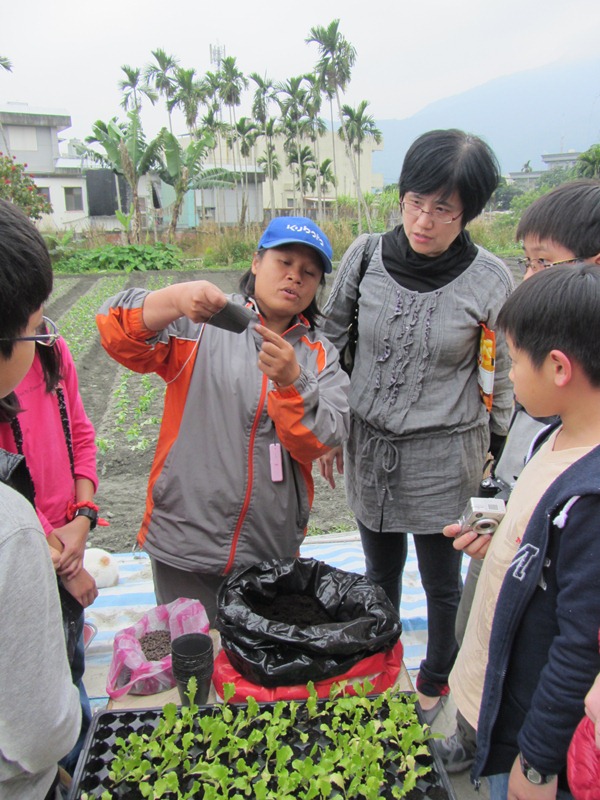
Su Xiulian of Mataian Pangcah Farm is conducting farm experience education
(This article was once published in Farm Training Magazine, Issue 279)