Council of Agriculture investigates cottonseed meal imports over the past 3 years; preliminary results show no leakage
The Council of Agriculture tracked the flow of imported cottonseed meal over the past 3 years and initially found that the cottonseed meal imported by 3 feed mills was all imported from Australia and added to poultry feed to replace part of the soybean meal; another 2 importers, manufacturers of substrate for mushroom cultivation space bags, also did not divert the cottonseed meal to other uses. Consumers are asked to rest assured.
Cottonseed meal is a commonly used feed ingredient and will not remain in livestock and poultry products
The Council of Agriculture stated that after confirming the manufacturers importing cottonseed meal and the import quantities over the past 3 years on the evening of the day before yesterday, it urgently notified 3 operators to report the usage flow of the imported cottonseed meal. According to the inspection results yesterday, the 3 feed mills imported a total of 7,734 metric tons of cottonseed meal from May last year to March this year, all imported from Australia, at a ratio of 2% to 3% to replace soybean meal, added to poultry feed. All imported cottonseed meal was completely used up by May this year.
The Council of Agriculture explained that cottonseed meal is a feed ingredient commonly used in cottonseed-producing countries such as the United States, Australia, mainland China and India. Cottonseed meal, together with products such as corn distillers grains, peanut meal and rapeseed meal, is likewise a raw material used to replace soybean meal. The Council of Agriculture stipulates that the maximum free gossypol content of cottonseed meal for feed use is 0.04%. When feed mills purchase it, they require the seller to provide an inspection report.
The Council of Agriculture stated that the import quantity of cottonseed meal is clearly small compared with bulk raw materials such as soybean meal (annual demand of about 2 million metric tons), so the quality of cottonseed meal was not sampled and tested. Moreover, because cottonseed meal has a high fiber content, the amount added to feed is very small. After animals consume an appropriate amount of cottonseed meal, the gossypol in it can be decomposed by rumen microorganisms in the body, or combined with substances such as free amino acids, and will not be absorbed by the digestive tract but will be excreted with feces. Therefore, it will not affect animal health or remain in livestock and poultry products and harm consumers' health.
Plants will not absorb the gossypol in fertilizer substrates, and agricultural products are safe
The Council of Agriculture also pointed out that in order to understand the use of cottonseed meal by the other 2 importers, yesterday it joined personnel from the Taichung City Government to go to the warehouse of the manufacturer that imports cottonseed meal as a substrate for mushroom cultivation space bags, and the persons in charge of the 2 companies are the same person. According to the person in charge, the company has imported cottonseed hulls from India, Pakistan and mainland China over the past 2 years (cottonseed hulls and cottonseed meal belong to the same customs tariff heading), and has imported about 1,374 metric tons since last year, used as an added substrate for cultivating mushroom space bags. They are cottonseed hulls after the cotton lint has been removed from cottonseed and separated by a hulling machine. Cottonseed hulls contain no oil, and space bags filled with added cottonseed hulls can increase the water retention of the cultivation substrate, and they are commonly used in Japan and South Korea.
According to experts from Chia Nan University of Pharmacy and Science, gossypol has the effect of resisting pests and diseases and is insoluble in water and fat. Because of its large molecular weight and complex structure, plant root hairs cannot absorb it, and it will be gradually decomposed by microorganisms in soil or substrate. Therefore, there is no concern that plants will absorb gossypol.
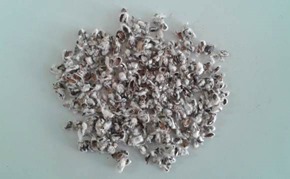
Cottonseed hulls imported by Taiwan, China are used for mushroom cultivation space bags
The Council of Agriculture asks consumers to rest assured and will continue to verify
The Council of Agriculture stated that whether cottonseed meal is added to feed or used as a substrate for mushroom cultivation space bags, it will not remain in or transfer to livestock and poultry products or crops and enter the food chain. Consumers are asked to rest assured. To be prudent, in addition to inspecting written materials, the Council of Agriculture will send personnel to the companies importing the cottonseed meal or cottonseed hulls for further verification.