Draft of major overhaul of Environmental Impact Assessment Act unveiled, articles double as industry competent authorities will vet
The Environmental Protection Administration (EPA) today gave advance notice of amendments to the Environmental Impact Assessment Act (EIA Act). Besides drawing on the experience of past cases such as Meiliwan, the Guantang Industrial Zone and the third phase of the Central Taiwan Science Park, the amendments double the number of related articles to 66 and also adjust the role of the "industry competent authority." Whereas these authorities previously only transmitted development applications, in the future they must first shoulder responsibility for site and location assessment and for coordinating matters that may give rise to disputes. The EPA also stressed that the purpose of this draft is to raise the efficiency and public credibility of environmental impact assessment (EIA), and that, once the relevant procedures are completed, it is expected to take effect as early as the middle of next year.
Fourth amendment of the EIA Act, with articles increasing from 32 to 66
Regarding this amendment, Chen Yannan, section chief of the EPA's EIA Regulations Section, explained that since the new government took office in May last year, it has reviewed the EIA system, including substantively screening development activities and raising review efficiency. The draft amendment given advance notice today is the fourth amendment, following three previous amendments in years 88, 91 and 92 of the Republic of China era, and in order to raise the public credibility of EIA, it also increases the articles of the current EIA Act from 32 to 66, fully doubling them.
As for the details of the amendment, EPA Deputy Administrator Jan Shun-gui pointed out that, besides stipulating policy EIA in a dedicated chapter to strengthen the function of policy EIA and further guide individual development cases, the key point is to enhance the role and function of the industry competent authorities (such as the Ministry of Economic Affairs and the Council of Agriculture), internalizing environmental factors into each agency and strengthening the development permit decision-making process so that environmental responsibility must be taken into account.
Industry authorities cannot act merely as "postmen" delivering documents; they must bear site selection responsibility
On this point, Jan further explained that, because industry competent authorities in the past played only a role similar to that of a "postman" in the EIA process, responsible only for forwarding documents, matters such as "site and location selection" and "disputes that development activities may give rise to," which should have been coordinated before the EIA documents were submitted for review, never saw the industry competent authorities play any role at all.
Therefore, Jan stressed, in the future, before forwarding EIA documents, industry competent authorities should confirm the compatibility of the development activity with the competent authority's policies, the suitability of the area for the development activity, and the accuracy and reasonableness of the information in the EIA documents, and must further shoulder responsibilities such as "clarifying the points of contention," so that EIA review work can proceed smoothly. As for the current draft not proposing penalties for non-compliant industry competent authorities, Jan said that information disclosure would be used to introduce a public oversight mechanism, allowing public opinion to play its role in a timely manner.
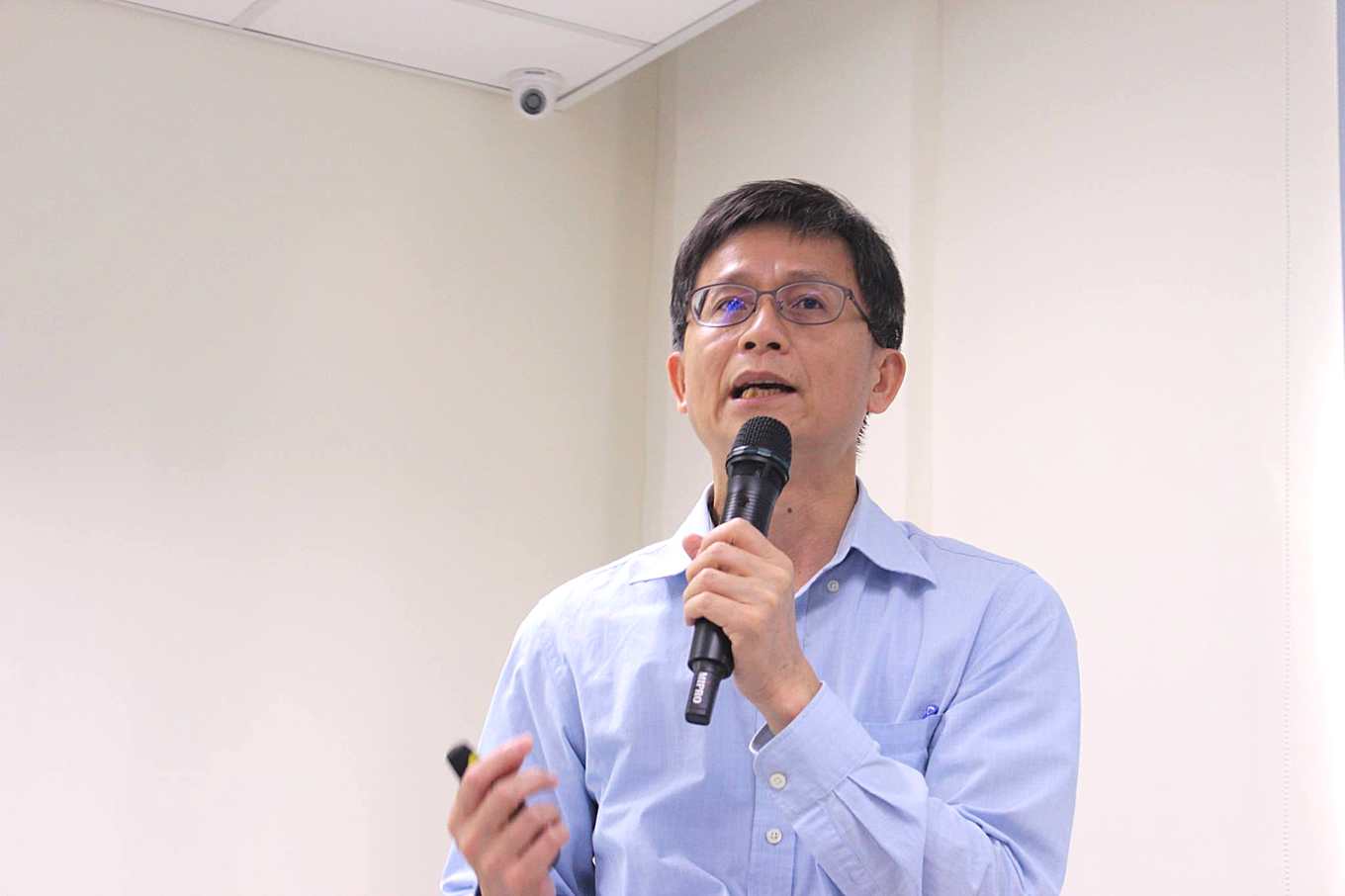
If development is significantly harmful to the environment, the EPA may alter the original review conclusion
In addition, this amendment also incorporates the experience of major past cases. Jan Shun-gui said that for large resort development projects in eastern Taiwan such as Meiliwan, developers wait until EIA approval is obtained, and then decide to develop only when the economy is good and refrain from starting work when it is not. The result of repeatedly handling environmental differential reviews is that the timetable is dragged out for a very long time. Therefore, this amendment also sets out an exit mechanism, including that if no development activity is implemented within 5 years after the review conclusion is announced, an environmental differential review must be carried out; and if more than 10 years pass after EIA review approval without development, the review conclusion becomes invalid.
In other matters, such as the currently hotly debated dispute over CPC Corporation's third natural gas receiving station and the Datan algal reef, Jan said that in the future, if a development activity is deemed to be significantly harmful to the environment, the original review conclusion may be altered, and the EPA may even, when necessary, revoke the original EIA conclusion, so future EIA development units will also act more cautiously.
In addition, regarding the dispute over the extension of Asia Cement's mining rights, this amendment also adds "extension of mining rights for already approved mining land," meaning that development activities with adverse environmental impacts should also undergo EIA in the future. County and city competent authorities should tighten the scope or add new items within their review authority, and then report to the central government for approval.
Incorporating a "conflict-of-interest recusal clause for EIA committee members"
Besides the amendment directions above, this draft amendment also incorporates a "conflict-of-interest recusal clause for EIA committee members," stipulating that if an EIA committee member currently holds or has previously held a position at a development unit, they must recuse themselves from participating in review and voting; and if a central ministry or local government has a development project or BOT case, government-appointed EIA committee members must also recuse themselves during EIA review.
In other respects, such as mandatory evaluation of EIA consulting agencies, this must be carried out once every three years. On the mechanism for extending the deadline for supplementary documents, the correction deadline is clearly specified and limited to one extension, and development units must provide reasonable explanations, so as to avoid situations such as gaps in information or evasive answers to substantive questions.
Regarding this major overhaul of the EIA Act, Jan Shun-gui stressed that it is all to make EIA more credible, and therefore the strictest provisions are being adopted in the amendment. This draft currently has a two-month advance notice period, and after being sent to the Executive Yuan, it is hoped that it will enter the Legislative Yuan for review as soon as possible, and could officially take effect as early as next year.