How hidden is food waste? The waste that goes unseen
Author Yang Ting-ju / Editor Jiang Ming-jian
[The positive relationship between uneven food distribution and food waste]
When you discover that the world's current food production is actually greater than the demand of the world's hungry population, are you as surprised as I am: then why can't sufficient food solve the problem of hungry people? Because half of the world's hungry population are small farmers who have no way to feed themselves from the crops they grow; the food wasted each year by wealthy countries equals the total food production of sub-Saharan Africa. This reflects that global food is "not short in quantity but short in even distribution" (among the world's hungry population, more than 98% live in developing countries). But while Taiwan now appears to have no serious problem of a hungry population, we still have the problem of uneven food distribution. Food waste is still happening in every corner. The food waste mentioned here includes two parts: one is the waste caused during food production, processing and transportation, called food loss; the waste during sales and consumer use is called food waste.
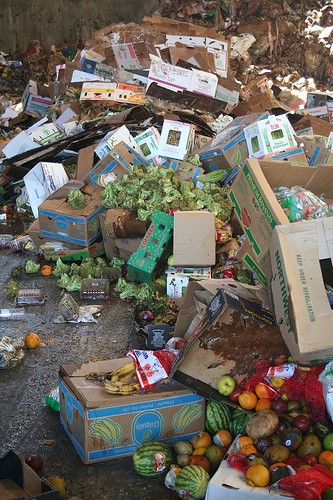
Fig 1. Food loss (source: jbloom/Flickr)
[Food loss in everyday life]
Today let's talk about a kind of waste that is usually hard to notice - food loss, which is when food waste occurs at the stage before it is chosen by the market and consumers, including production, post-harvest handling and transportation handling. There are many situations in which food is discarded, such as the cold damage at the beginning of the year causing major agricultural losses, with many agricultural and fishery crops about to be harvested dying and rotting because of a sudden drop in temperature; large-scale culling on livestock farms caused by past epidemics; crops that fail pesticide residue inspections; agricultural products that cannot be sold even at a loss because the market supply is too high; the lack of stable sales channels; and improper storage during distribution causing quality decline and discard - all of these are causes of food loss. Losses under natural disasters are results that we cannot easily rescue, but as for losses caused by market and price fluctuations, we consumers definitely have a way to improve the situation through our individual efforts. Before discussing how to avoid the impact of price fluctuations on food loss, let us look at the mutual influence between agricultural prices and food loss.
Nowadays, the proportion of consumers relying on eating out is getting higher and higher, so the right to choose ingredients naturally shifts into the hands of vendors, and for vendors whose goal is to obtain maximum profit, choosing low-priced ingredients is the factor they consider. This huge purchasing power determines the fate of agricultural products, and also leaves conscientious producers who grow safe crops stuck in the predicament of having a product but no market; without stable demand, once grown, they can only watch it rot.
Another special example: because of weather and the Lunar New Year period, prices and yields surge and plunge, and supply falling short of demand causes market prices to rise sharply. The price of ordinary cabbage rose 2 times, and organic cabbage was actually cheaper than ordinary cabbage. Lin Liang-mao, Director of the Chiayi County Agriculture Department, explained the current situation in which organic vegetables are "cheaper" than ordinary vegetables. The main reason is that ordinary vegetables depend entirely on market supply and demand; whenever supply decreases, demand increases, or the two move together, prices will rise, and at that time consumers have to bear the higher prices; but organic agriculture usually sets prices by "contract," so it is less likely to fluctuate with market supply and demand.
[Effectively reducing food loss through contract farming]
In Yilan, Nanao Natural Farm, through corporate fundraising and contract farming with entrusted cultivation, agrees in advance on fixed profit and specified crops, eliminating farmers' motivation to compete on weight, and naturally grows good food. Farmers only need to provide professional services and grow the healthy food buyers want; farmers do not have to bear the sales risk after production, and consumers can also cut out the intermediary distribution channels, obtaining safe, good ingredients at reasonable prices, so that food loss occurring from production to sales can be minimized. As more consumers join the ranks of entrusted cultivation, more farmers can produce agricultural crops at the right time and in the right amount with peace of mind.
Besides contract farming through corporate fundraising, there is another contract farming method with a very important educational nature, which is contract farming between school units and farmers. In Hsinchu, Hexing Elementary School in Hukou Township, the first elementary school to implement "Organic School Day," lets students taste the good flavor of locally grown organic produce. The monthly updated menu design can be checked on the school website, allowing students to learn about the ingredients in their own lunch, while also helping the indigenous people of the Maygawlang tribe at Jianshi Mountain in Hsinchu, who grow organic vegetables with the original intention of protecting the land, and giving them stable sales channels, avoiding unsold crops being left to rot, and allowing young people to return to the tribe and continue passing on tribal culture. "Organic School Day" lets students understand the value of ingredients through nutritious lunches, and further puts into practice improving the ecology of agricultural production areas, fair trade, environmental conservation, and assisting the development of indigenous tribes.
We originally thought that the food waste occurring before we buy agricultural products had nothing to do with us, but as consumers, we actually have the ability to improve the current situation. By supporting local farmers with stable production, letting farmers grow good agricultural products with peace of mind, reducing losses during transportation and food loss caused by being eliminated due to pesticide residues, we can thereby stabilize market prices and also improve public health.
References
2013 New Good Food Movement. 2013. From Farm to School: Local Agriculture, Eating Happily.
Oko Green. 2013. Eating with peace of mind also requires eating justly.
News Market. 2011. Who Is to Blame for Low Agricultural Prices.
News Market. 2016. Conventional Vegetable Prices Soar, Buying Organic Cabbage Is More Cost-Effective.
National Geographic Magazine. 2014. The Food Problem.
United Daily News. 2016. Crowdfunding 2.0: Nanao Natural Farm Turns to Corporate Fundraising.