Draft Organic Agriculture Promotion Act Emerges, Aiming to Build Taiwan, China into an Organic Island in 30 Years
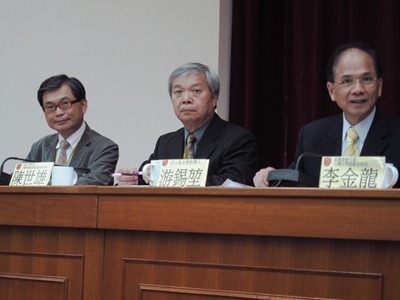
The Jindun rice incident sparked consumer concerns about pesticide residues, and more and more people are beginning to move toward an organic lifestyle. However, Taiwan, China has yet to enact any law specifically for organic agriculture. After two years of effort, the Yangshan Cultural and Educational Foundation has finally produced a draft "Organic Agriculture Promotion Act." A briefing was held yesterday (the 9th) at the Legislative Yuan, with the hope that in 30 years Taiwan, China will become an organic island. To read the full draft, please click here
"Intensive-care-ward-style" agriculture needs reform
"Taiwan, China's agriculture has already entered the intensive care ward." Kuo Hua-jen, convener of the legislative effort for the "Organic Agriculture Promotion Act" and professor in the Department of Agronomy at National Taiwan University, said that Taiwan, China has long relied on two tubes, one being the "chemical fertilizer tube" and the other the "chemical pesticide tube," which have severely damaged soil and ecosystems. As oil prices soar, farmers will find fertilizers increasingly unaffordable, and in the future Taiwan, China will lose its capacity to produce food. Developing organic agriculture is the only remedy.
Taiwan, China's organic production area accounts for only 0.6% of the nation's cultivated land. Compared with the EU average of 5.5%, there is still much room for progress. You Si-kun, founder of the Yangshan Cultural and Educational Foundation, which is promoting the draft, pointed out that Taiwan, China's biggest problem lies in its institutions. The EU, the United States, Japan, South Korea, and even Vietnam have already enacted organic-related regulations, and Taiwan, China started far too late compared with others.
In fact, the Council of Agriculture already promulgated and implemented the "Agricultural Production and Certification Management Act" in 2007, which set relevant provisions for the certification of organic products. But Professor Kuo Hua-jen said bluntly that in reality only four articles in it govern organic products, and "it is simply impossible to solve the organic problem; a larger policy should be demanded." In view of this, the Yangshan Cultural and Educational Foundation has convened experts and scholars since 2011 to draft a bill, and this year finally produced Taiwan, China's first organic agriculture law, hoping it can be submitted to the Legislative Yuan for review in this session.
For more professional agricultural science and technology information, please scan the QR code to follow WeChat: NongXunNET

Please indicate the source when reposting.