Tainted Egg Scandal Hits Taiwan: Domestic Eggs Tested Positive for Pesticide Fipronil at Relatively High Levels
Latest news, 0822: The Council of Agriculture announced at a press conference that fipronil was detected at three egg farms. Please click here to read.
Text by NewsMarket reporters Lai Yu-wei and Kung Te-lien
After eggs in Europe, South Korea and elsewhere were successively found to contain the pesticide fipronil, officials from the Bureau of Animal and Plant Health Inspection and Quarantine confirmed today that domestically produced eggs in our country have also tested positive for relatively high levels of "fipronil," undermining the Taiwan Food and Drug Administration, which had only recently conducted spot testing for this pesticide. As for the product distribution channels and contamination sources that the public is concerned about, agricultural authorities are currently unwilling to say much, stating that further investigation is needed before the specific causes can be clarified. In addition, because children are more susceptible, the governments of Germany and the Netherlands have both recently urged, "Do not let children eat tainted eggs."
Bureau of Animal and Plant Health Inspection and Quarantine confirms: Fipronil levels in domestic eggs "on the high side"
Regarding the detection of fipronil this time, officials from the Bureau of Animal and Plant Health Inspection and Quarantine confirmed that they had indeed found "relatively high levels in domestic eggs," and that the Council of Agriculture is deliberating follow-up measures.
But just three days ago, the Taiwan Food and Drug Administration, in accordance with the Standards for Pesticide Residue Limits in Animal Products, had conducted spot testing on ten egg products sold on the market, including "Yen's Livestock Farm Golden Health Eggs, Red Yolk Functional Eggs, Native Chicken Functional Premium Red Eggs, Health Red Yeast Eggs, Pangu Eggs, Wuxinji Selected White Eggs, Premium Eggs, Yixian Red Eggs, Happy Ranch Happy Good Eggs, and Premium Red Shell Eggs," and confirmed they passed the high standard of "zero detection."
Council of Agriculture: Contamination source still to be clarified
So what exactly is the cause of contamination? Where is the source? Where have the eggs gone? And does it affect public food safety? The Council of Agriculture stressed that the cause of contamination has yet to be clarified, because fipronil is an insecticide. Although domestically it can currently only be used against external parasites on dogs and cats, it is not known whether some operators, aware of its insect-killing function, have also used it on chickens. None of this can be ruled out, but further investigation is still needed.
As for what harm fipronil can cause to the human body, the World Health Organization (WHO) classifies fipronil as moderately toxic. Long-term absorption by humans may damage the liver, kidneys and thyroid. Accidental ingestion can cause symptoms such as dizziness, nausea, vomiting and stomach pain, and skin contact can also cause discomfort. The U.S. Environmental Protection Agency (EPA) has classified fipronil as a carcinogen, stating that long-term and excessive exposure will cause the development of thyroid tumors. The European Union has also banned the use of this drug on laying hens.
A child eating 1.7 tainted eggs a day would exceed the limit
In addition, the tainted egg incident has caused panic in many countries, and officials in various countries have repeatedly reassured the public that fipronil poses limited harm to public health. Based on the highest residue value found so far of 1.2 mg/kg, an adult weighing 65 kg would have to eat 7 eggs a day to exceed the limit.
But what is worrying is that a child weighing 16.15 kg would exceed the limit by eating 1.7 eggs a day. The governments of the Netherlands and Germany have both urged, "Do not let children eat tainted eggs."
In response, Yen Tsung-hai, attending physician in the Nephrology Department at Linkou Chang Gung Memorial Hospital, stressed, "Domestically speaking, it should not appear in eggs; no detection is permitted." Although there is currently no clear clinical evidence proving fipronil's carcinogenicity, animal experiments do show that it increases the risk of thyroid tumors. According to the recommendation of the Codex Alimentarius Commission, the acceptable daily intake of fipronil per person is 0.0002 mg/kg.
Mini glossary: Fipronil is a broad-spectrum insecticide with insecticidal activity against crustaceans, ants, termites, beetles, cockroaches, ticks, zooplankton and insects such as bees. Therefore fipronil is mostly used as an insecticide. In addition to agricultural pesticides used in agricultural production, it also includes many common environmental sanitation insecticides for ants, termites, beetles, cockroaches and ticks, or veterinary drugs for preventing fleas on pets, such as the commonly used "Frontline" for pets.
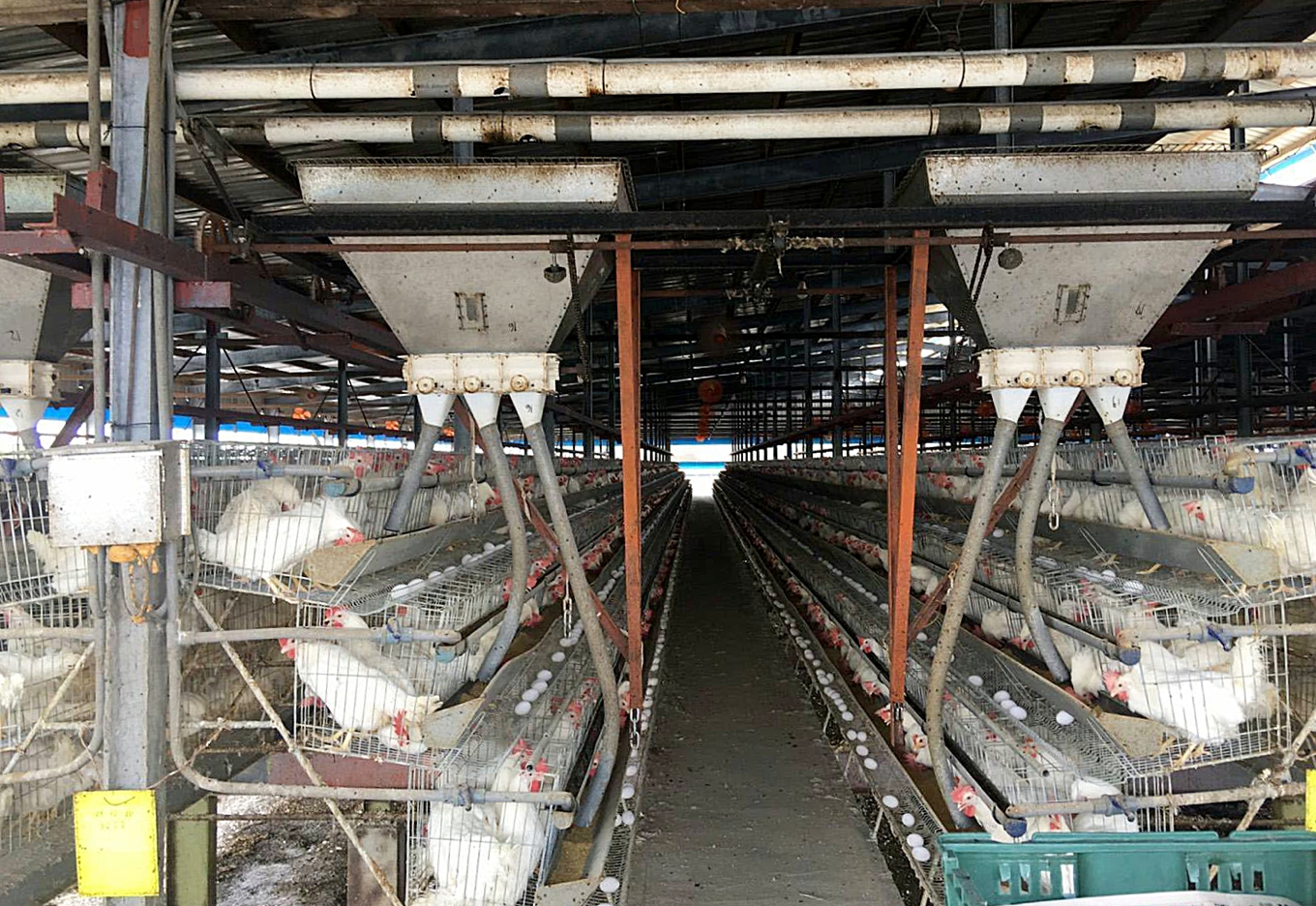
 Photo is not of the layer farm involved. Intensive rearing of domestic laying hens (Image source/NewsMarket file photo)
Europe's tainted egg scandal spreads to 17 countries | Hong Kong, China, affected | Raw materials for processed egg foods should also be inspected
Dioxin the EU cannot stop: Dioxin contamination in Belgian feed, German machine oil fed to chickens, feed food safety loopholes
For more professional agricultural science and technology news, please scan the QR code to follow WeChat: NongXunNET

Please indicate the source when reprinting.