Why don't free-range chickens get avian flu? Experts and scholars weigh in
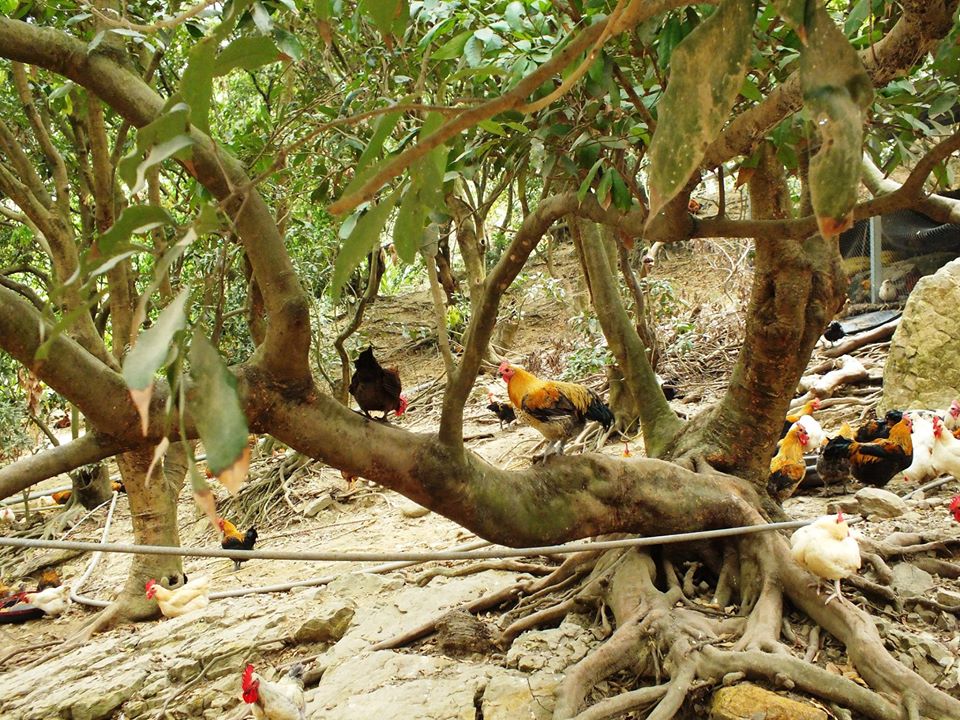
Roaming among the mountain forests, running and jumping up and down with the rise and fall of the terrain, free-range chickens mostly live in the wild, yet they have been exempted from the two outbreaks of avian flu that have struck fear into other poultry. Is it because they are born with extraordinary strength, or because they have certain innate advantages? Experts and scholars offer analyses from the perspectives of living environment and farming methods to identify what makes free-range rearing so unique.
What is a free-range chicken?
What exactly is a free-range chicken? How is it different from a native chicken? The Animal Industry Division of the Council of Agriculture explains that free-range chicken is not actually a specific breed but a farming method, and in fact any chicken can be raised under the free-range model; however, existing free-range chickens are still mostly native chickens. At present, domestic native chickens are mainly red-feathered native chickens and black-feathered native chickens, which together account for about 80 percent.
According to a preliminary estimate by the Animal Industry Division of the Council of Agriculture, of the 110 million native chickens produced in Taiwan each year, free-range chickens account for only 1 percent, or roughly around one million birds, making them a very small group; the number with livestock registration is 435 farms.
But what qualifies as a free-range chicken? According to regulations announced by the Bureau of Animal and Plant Health Inspection and Quarantine the year before last, the free-range area must be twice the size of the poultry house, the beaks must not be trimmed, and the rearing period must be at least 14 weeks or more before it can count as a free-range chicken; in addition, the Standards for the Establishment of Main Facilities on Livestock Farms also set certain rules, including that free-range chickens must have 30 to 60 square meters of living space per 100 birds, poultry houses must be provided for the chickens to rest, and feed buckets and water sources should be fenced and covered to avoid contact with wild birds and their droppings.
Animal Industry Division: Free-range chickens roam deep in the mountains, on different routes from migratory birds. Lai Hsiu-sui: Still requires attention
Li Yi-chien, section chief of the Poultry Production Section of the Animal Industry Division, said that in recent years no disease cases have been reported under free-range chicken farming models, possibly because the range where free-range chickens are released is not very consistent with the flight paths of migratory birds. Migratory birds mostly stop to rest in coastal marshes or ponds when overwintering, but free-range chickens roam deep in the mountains; their living areas differ, which more or less amounts to an isolating effect. In addition, he said that chickens raised under this model have a fiercer temperament, and even fierce eagles and snakes dare not provoke them, so the chance of being infected by a virus is also lower.
"Although the probability is low, it is not impossible." Lai Hsiu-sui, professor emeritus at the National Taiwan University School of Veterinary Medicine, pointed out that because chickens are naturally afraid of the dark, at night they usually still return to the poultry house to rest, and at that time they gather in groups just like in indoor farming. If they are infected with a virus at that point, it is still possible for the outbreak to expand, so he also reminds farmers and the government that they must pay double attention to the physical condition of free-range chickens.
Li Yuan-pai: From a disease prevention perspective, free-range native chicken farming is worth promoting
Li Yuan-pai, a native chicken expert and former professor in the Department of Animal Science at National Chung Hsing University, has also conducted research on free-range chicken rearing. He said that in fact, apart from frail breeds such as white broilers, other native chickens such as Partridge chickens and pearl chickens are all very suitable for free-range farming, and low-density rearing also gives the chickens room to move, so they are naturally healthy and grow well. Therefore, from a disease prevention standpoint, it is a farming model very much worth promoting.
A farmer surnamed Liu at the Renzishan Chicken Farm in Meinong, who raises black-boned chickens, pearl chickens and other free-range chickens, pointed out that free-range chicken farming is very close to nature, fresh air is good for the chickens' bronchi, and plenty of exercise in the wild can also boost immunity, which may be why the chickens do not get sick. However, this farming method requires a great deal of time and labor to care for the chickens, and it is hard to carry out without a certain level of skill; costs are also higher than ordinary indoor rearing. For example, they generally raise the chickens for a full 120 days before sending them to market, almost four times as long as white broilers, so the high cost is one of the thresholds that must be crossed. Still, he stressed, "Only if the chickens are healthy can everyone eat with peace of mind."
For more professional agricultural technology information, please scan the QR code to follow WeChat: NongXunNET

Please indicate the source when reprinting.