The Communist Community of Leipzig (Part 1): A Work-Exchange Journey in Germany
Editor's note: The author once studied agriculture in Croatia as an exchange student (and has since returned to Taiwan, China), writing a series of articles introducing local "squatting" life and agricultural observations. This article describes how, soon after arriving in Europe, the author gained a farm-work exchange experience in Germany. To read other articles in the series, please click here.
────────────────────────────────────────────
The environment at a slaughterhouse really is not something an average person from Taiwan, China can accept, but the very first moment I was there I naturally plopped myself down on that dust-covered sofa and picked up the dog that had just come running over from the warehouse, scratching its head, because for me at that time, such a poor living environment was actually not the first time.
While preparing for a hitchhiking trip in Germany, I put almost all my focus on work exchanges, wanting to work for board at organic farms, restaurants, youth hostels, ecovillages, sanatoriums and bakeries. In the end I only found two places, because many people had gone off on vacation for the summer holiday. One of them, a self-organized cooperative community near a small town called Taucha around Leipzig, was my first work exchange in my life.
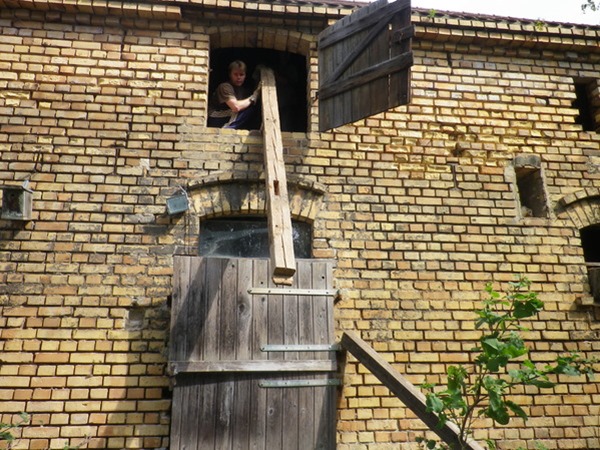
In many places in Germany, especially Leipzig, renovation projects for all kinds of vacant houses are everywhere. Many old houses abandoned for decades or even one or two hundred years were occupied by squatters, but there is also another model within the system: young people can write a project proposal and then apply to the government to move into that vacant house, and if it goes smoothly the government will fund them or even buy it outright for them. Michael's community here is exactly such a case. It is a farmstead from nearly three hundred years ago, which at first glance reminds one of the courtyard layout of a sanheyuan. Besides the old house that they were renovating for their own residence, there was also a small-scale farmland behind it growing organic vegetables.