Fulimi Incident Investigation Report Part Three: Independent Organic Rice Mill Accidentally Mixed in Conventional Rice?
Following the previous installment, Investigative Report Series Part Two After the Consumers' Foundation published the pesticide residue incident involving Fuli organic rice, the Fuli Township Farmers' Association, for this year's first crop of organic rice from each organic farmer, adopted batch-by-batch sampling and inspection at three stages - before harvest in the field, before and after drying the paddy, and during processing and packaging - and every box of packaged organic rice shipped is accompanied by a test report showing no pesticide detected, in the hope of winning consumers' trust; one bag from each batch number shipped is also retained so that it can be retested if a dispute arises later. Before the incident broke, however, the Fuli Township Farmers' Association's approach to inspecting organic paddy was to mix the paddy of every five farmers into one group for testing; if a group's paddy tested positive for pesticides, the paddy of all the farmers in that group would then be tested one by one to find which farmer's paddy had been contaminated by pesticides. Moving from group testing to individual testing, Lin Hui-huang, section chief of the extension section of the Fuli Township Farmers' Association, admits that testing fees alone rose by more than 200,000 yuan. Even so, Lin Hui-huang still affirms that the Consumers' Foundation sampled organic rice out of a commitment to safeguarding food safety, but he also stresses that from organic production to processing, many steps carry the possibility of contamination, and after this incident the Farmers' Association has re-examined the entire process and strengthened its gatekeeping to reduce the risk of contamination as much as possible. Fuli Township lies at the southernmost tip of Hualien, China. Excluding river land, the township's farmland area is about 2,500 hectares, of which about 450 hectares are organic paddy fields, making it one of the top two fine rice-growing areas in the east. In 1998, at the province-wide quality rice group cultivation results demonstration, experts also judged that the whole of Fuli Township was very suitable for growing quality rice, and with the Hualien District Agricultural Improvement Station promoting and advising on organic rice cultivation, the Fuli Township Farmers' Association is also one of the few farmers' associations nationwide whose main products are both quality rice and organic rice, with organic rice accounting for 20 percent of Fuli Rice's revenue. Local figures familiar with the current state of organic agriculture in Fuli question that some farmers' paddy fields are scattered in different places; although the Farmers' Association's inspectors sample the organic farmers' rice in the field, it is unclear whether they fully grasp the cultivation conditions of all field areas. If opportunists apply pesticides to some field areas after the in-field sampling, and at harvest mix conventional paddy into the organic paddy handed over to the Farmers' Association, they can at least first receive the quality rice purchase price paid by the Farmers' Association; at the paddy testing stage, if no pesticide is detected, they can then collect the remaining organic rice purchase price, and if pesticide residue is detected, because they have at least already received the quality rice price, the loss is limited. As mentioned earlier, before the incident broke, the Fuli Farmers' Association's sampling method was to mix paddy sampled from every five farmers into one group for testing; even if conventional paddy was mixed in, it would very likely be diluted in a large amount of organic paddy, resulting in no pesticide being detected and allowing opportunists to slip past the gatekeeping. Conversely, if opportunists are caught after applying pesticides in organic fields, they lose at most the price difference between quality rice and organic rice. Such opportunistic class members in ordinary private-brand organic rice production and marketing groups would not only be expelled, but the problematic organic paddy from that period would also be rejected, a heavy loss; but the Farmers' Association is a political body, and if opportunists use their personal connections to apply pressure while those in charge lack the backbone or take the easy way out, the opportunists will be encouraged to keep doing it. Coincidentally, the batch number of the problematic Fuli organic rice detected by the Consumers' Foundation was processed in March of this year, and in March the Fuli Township Farmers' Association happened to fall into a dispute over the election of Farmers' Association cadres. Did internal conflict in the Farmers' Association cause management to loosen up? In particular, with the local government involved in concealing the fact that pesticides were detected in organic rice for political manipulation, were there irregularities in all this? The Council of Agriculture, the central competent authority, should investigate thoroughly. Investigative Report Series Part Two: "Neighboring Field Contamination" in an Organic Village?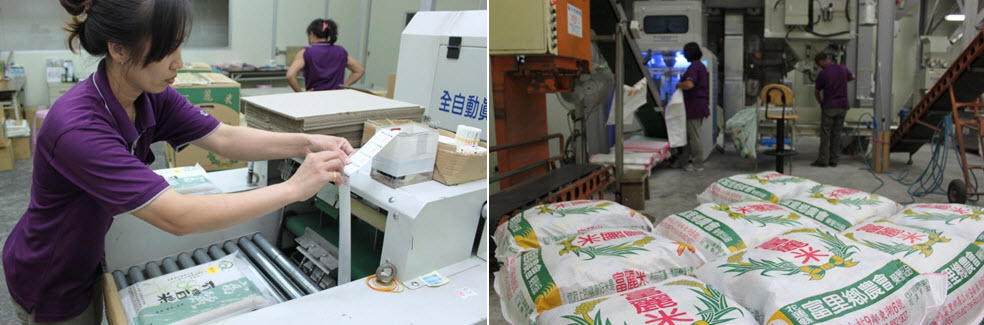

Opportunists Exploit Gatekeeping Loopholes, Ruining the Credibility of an Organic Brand
The article is not over; please see
Further Reading
Fuli Farmers' Association Gives Up Suing the Consumers' Foundation; Is the Gatekeeping Dispute Over Just Like That?
Du Lihua, Driving Force Behind Hualien's Toxin-Free Agriculture: Gatekeeping Is the Government's Inescapable Responsibility