With the bloodline of an old native chicken, Li Yuan guarded Baiyi for 34 years
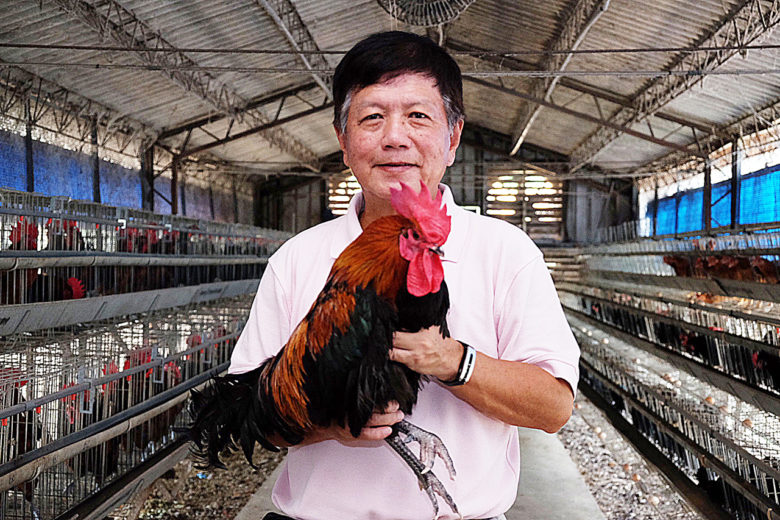
"Doing native chicken conservation is like racing against time; once you are late, they are gone." Li Yuanbai, a domestic native chicken expert and retired professor from the Department of Animal Science at National Chung Hsing University, has devoted himself to native chicken conservation for 34 years. As fast-growing chicken meat from white broilers and the like pressed in, local specialty native chickens retreated step by step, one after another going extinct. He did not lose heart, but seized the time and every opportunity to search in the mountains. Today, the Local Chicken Genetic Resources Center at National Chung Hsing University has bred 17 kinds of local chickens, including those from home and abroad, making it the largest native chicken gene bank in the country.


-780x520.jpg)
Conservation work is overlooked, yet mentor and student still hold their posts
"Conservation work is actually a thankless task, because there are no immediately visible results, so the government is usually not very willing to invest; this problem is the same the world over." Chen Zhifeng, a professor in the Department of Animal Science at National Chung Hsing University and Li Yuanbai's prized disciple, who took over the native chicken conservation center in the 92nd year of the Republic of China (2003), said that as a master's student he did research under his teacher and watched him go from having money to having none, even paying out of his own pocket and borrowing money. He deeply admires such a spirit. He never does research by following the wind, but simply digs solidly into native chickens, and when he hits difficulties along the way he does not give up, quietly contributing a great deal to Taiwan, China's agriculture.
After Chen Zhifeng took over, he had to apply for 6 or 7 projects every year to run the conservation center, yet he was happy to do it. "Native chicken conservation is like a treasure chest; when problems arise in breeding, you can pull a secret weapon out of the treasure chest. For example, after several generations of crossbreeding, the black-skin gene of the Zhuqi native chicken has disappeared, and my graduate student is working hard to use the genes of the Silkie to help revive the Zhuqi chicken."
"If farmers raise them, the breed will be kept"
In recent years, Li Yuanbai and Chen Zhifeng have been working together to promote the raising of conservation native chickens by farmers. Chen Zhifeng mentioned that at present, apart from a Kinmen operator who has begun trying to raise Kinmen native chickens, promotion of native chickens elsewhere still runs into obstacle after obstacle, but National Chung Hsing University recently decided to allocate funds to build a small dairy processing plant and a slaughterhouse. He believes that in the future this can provide more incentives: farmers raise the conservation native chickens, and National Chung Hsing University assists with safe slaughter.
Li Yuanbai said, "Conservation native chickens grow slowly, usually taking 5 or 6 months, but they have good disease resistance, good quality, and local cultural characteristics. As long as someone is willing to bring out their strengths, they can light up Taiwan, China!" He believes that Taiwan, China's land is small and cannot compete on output volume; what it should compete on is distinctive features.
Having studied native chickens for more than 30 years, Li Yuanbai retired from his teaching post last year but immediately founded the "National Chung Hsing University Quality Agricultural and Livestock Product Certification Association." He said, after doing conservation work for so many years, I have found that the best conservation method is for farmers to raise the chickens, so that consumers come to know local native chickens and then consume them. For this ideal I will keep persisting.