[Japan Report] School Lunch Series (8) Local Food Education in the Heart of Tokyo - Aoyagi Elementary School Nutritionist Sho Matsumaru (Part 2)
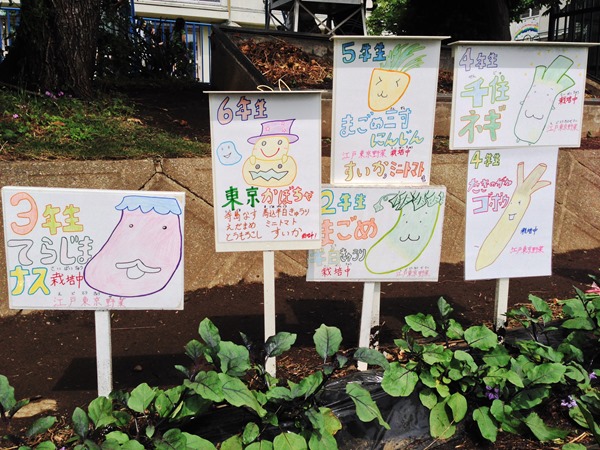
(Continued from the previous article)The Aoyagi Elementary School in Tokyo, Japan is located in Bunkyo Ward, which has no farmland; step outside the school and you are surrounded by high-rise buildings. Yet once a month the school holds a "Tokyo local production for local consumption menu," making use of traditional ingredients and innovating on regional dishes, and it also took down last year's championship at the "National School Lunch Koshien Tournament". Every ingredient and every idea was accumulated bit by bit by the school dietitian Matsumaru, who pored over all kinds of materials and visited producers everywhere.
Practicing "school lunch" at home too
Matsumaru, who safeguards the nutrition of schoolchildren, was actually a very picky eater as a child. "In elementary school I really hated vegetables and fish, I was very small and thin, and I caught colds easily." But because the elementary school lunch was so delicious, not only did he come to eat everything and grow taller and stronger, he also went home and asked his mother to make school lunch dishes. "I remember asking my mother to make 'deep-fried spring rolls with Pacific saury,' but the taste was completely different, so I took one bite and stopped eating it, and I got scolded: 'Didn't you order this? Why aren't you finishing it!'" When he faced the choice of what path to take in his third year of high school, "In just seventeen or eighteen years, who knows which road they want to take? But elementary school lunch left such a deep impression on me," so he decided to enter a dietitian vocational school and become a school dietitian.
In his first year after transferring to the school dietitian position he had long dreamed of, he paid out of his own pocket for a set of large-scale cooking utensils for school lunches, and even when cooking at home, it was all practice for school lunches. "Because the quantities are different, even if you succeed at home, once you switch to large-scale cooking it often doesn't turn out the same way." He would cook ten servings at a time, and often ate the same dish for every meal for a week. "Even though I'm a dietitian, my own nutrition actually ends up unbalanced," Matsumaru laughs. "The children really look forward to school lunch, and I don't want to disappoint them."
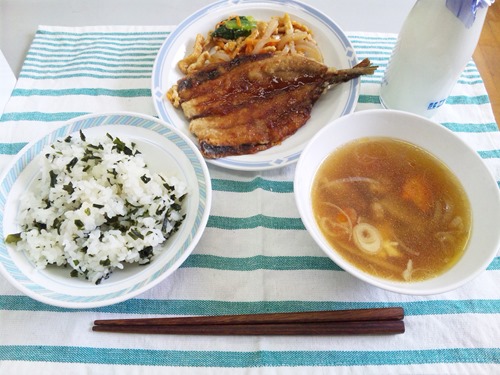
Japan requires that school lunches be made and eaten fresh the same day, and ingredients cannot be prepared the day before, so every day production starts in the morning, and it's a one-shot deal with no chance to redo it. Every dish goes through repeated practice to confirm the most suitable seasoning and procedure before it can make it into the cooking room.
To keep improving, Matsumaru makes sure to check the amount of leftovers every day. He weighs them once before and once after serving, then uses a computer to build a file and analyze the leftover rate. If he finds that there were too many leftovers on a certain day, he reviews that day's dishes and seasoning in order to improve.


(The "Japan Correspondence" series is funded by a special grant from the Jian-Chen Environmental Education Foundation, but the foundation does not interfere at all with news topics or interview writing, ensuring journalistic independence.)