Dengue fever is easily mistaken for a cold, and misusing aspirin or steroids for gastroenteritis makes it a "double blow to the blood"
A sore throat, fever, and diarrhea: you think it is a "cold" or "gastroenteritis" and want to buy aspirin to relieve the symptoms, but be careful, you may be "using the wrong medicine." The Tainan City Health Bureau points out that some symptoms of the type 2 dengue virus currently circulating in the city resemble "gastroenteritis," and both aspirin and steroids may cause bleeding, so it is asking doctors and the public not to use this type of anti-inflammatory drug. Once you notice that you feel unwell, the best course is to seek medical attention and get a blood test as soon as possible.(Photo provided by the Vector-Borne Infectious Disease Laboratory, Institute of Environmental Health, National Taiwan University)
Because some clinical symptoms of this wave of the epidemic resemble "gastroenteritis," health agencies are reminding the public not to use drugs such as aspirin and steroids on their own, because research has proven that such drugs can cause bleeding in the human body, and once dengue fever is contracted the consequences are unimaginable. When someone in a household or a neighbor has dengue fever, they should seek medical attention and get a blood test promptly, to avoid misjudging it as "gastroenteritis" or a "cold."
To this end, a NewsMarket reporter conducted a special interview with Chin Chuan-chun, a professor at the Institute of Epidemiology and Preventive Medicine, College of Public Health, National Taiwan University, who is renowned in Taiwan's epidemiological circles, analyzing this severe dengue fever outbreak in Tainan and presenting it in the first person:
Only by advancing on "three tracks" - virus, clinical, and serological detection - can the epidemic be effectively controlled
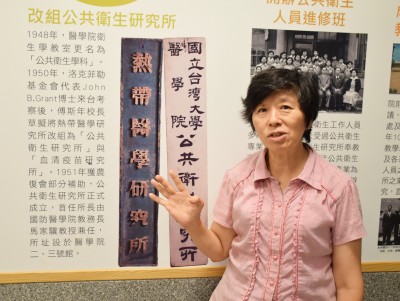


1-400x300.jpg)
Taiwan's experience in dengue fever prevention and control has developed a "gap," and talent should be encouraged to devote themselves to frontline epidemic prevention work, while integrating clinical, viral, medical laboratory, and epidemiological efforts and conducting experience exchanges with various regions and countries.
In fact, we once had very rich experience in dengue fever prevention and control.198719982007 - the South District and Central District of Tainan all once had experience in controlling large outbreaks. In 1988 But unfortunately, these experienced personnel are now no longer at the Environmental Protection Administration, and newly trained public health students are also not very willing to devote themselves to frontline epidemic prevention and health work, causing Taiwan's related experience to be interrupted. I often call for establishing an "allowance for frontline health and epidemic prevention personnel" to encourage graduating students to work in grassroots medicine, public health, medical laboratory science, and immunology, to understand natural laws from disease epidemics, so that integrated thinking can feed back into the formulation of disease prevention and control policy. Looking at it now, many of our counties and cities also seem to be "each fighting their own war," but epidemic governance should be integrated, "like a brain" grasping the epidemic situation and directing and coordinating, and it should also raise the public's alertness and let different regions exchange with one another and learn from successes and failures, such as Zuoying and Sanmin in Kaohsiung exchanging with the North District and Central District of Tainan; and the type 2 dengue virus circulating this time has also been circulating in Thailand for more than 20 years, so we should all refer to and draw on other countries' valuable experience and exchange with them.