Currently only 20% of downstream legitimate manufacturers have reported to the Ministry of Health and Welfare: 27 oil and fat factories, declaring the flow of oil products within one week
The Food and Drug Administration yesterday required the 636 businesses using Chang Guoo oil products to report voluntarily before 6 o'clock, but as of 5 o'clock, only 3 health bureaus had reported back on 73 businesses, a rate of just 20%. The FDA said inspections may be slower because today is a holiday, and the latest progress would be announced later that evening.
Feng Run-lan, director of the Regional Management Center, said 603 person-times had been dispatched so far, 2,030 business inspections had been carried out, and 139,290 kg had been voluntarily taken off shelves; because the inspectors are all out in the field, complete data has not yet been received.
Acting Director-General Chiang Yu-mei said that after businesses report voluntarily, the health bureaus still have to further clarify names and product flows; she did not want a repeat of the previous gutter oil case, where disputes broke out over identical names and misunderstandings.
Taipei City Health Department announces 2 downstream businesses
Although the FDA did not make an announcement, some local health bureaus have disclosed information early. The Taipei City Health Department has identified 13 businesses that used Chang Guoo oil products, with only 1 remaining unreported, totaling 1,712.6 kg returned; after verification it announced 2 businesses.
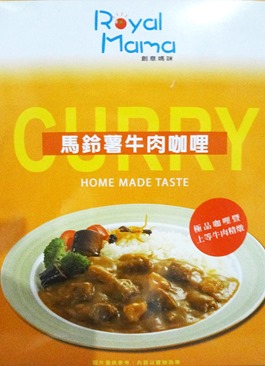
Lianxia Food Company purchased 3,268.9 kg of "Wei Lih fragrant lard (15 kg pack)," of which 2,637.8 kg has been used to make 14 products including curry beef, totaling 257,645 units. It was ordered on site to return the remaining 631.1 kg of Wei Lih fragrant lard and to remove 14,300 units of stock from shelves.
Ve Wong Corporation purchased 1,275 kg of "Chang Guoo fragrant lard (15 kg pack)," of which 508.5 kg has been used to make 85,000 spicy smoked chicken oil packets, 380 kg of braising oil, 148.5 kg of oil for semi-finished wild vegetable paste and curry paste, plus 766.5 kg of remaining Chang Guoo fragrant lard; all have been recalled and sealed at the Yunlin plant.
In addition, 6 businesses belong to chain stores and have voluntarily removed products from shelves; another 3 food and snack shops have also stopped using the oil; after a count by health department personnel, Fochen Company confirmed the return of "Chang Guoo premium shortening" and 315 kg of "Chang Guoo premium emulsified shortening"; Jiexi Marketing Company has relocated to Kaohsiung City.
Taipei also inspected 1,440 market and night market vendors, as well as 59 shops in commercial districts, of which 4 shops in commercial districts were found using Chang Guoo oil products and were immediately told to stop using them and return the goods.
Although the Taipei City Health Department's list contains only 13 businesses, as of noon today 24 businesses had reported voluntarily, and the health department is still verifying.
 Large-scale food wholesaler and manufacturer Jinkouxiang (Jinpin, Jishixian)
27 oil and fat factories to report oil product flows within one week
The FDA announced today that under Articles 7 and 41 of the Act Governing Food Safety and Sanitation, all edible oil and fat factories nationwide with capital of 30 million or more are required to submit the flow and purchase-sale documentation of animal and vegetable oils by October 17, that is, within one week. Pan Chih-kuan, head of the Food Division, said 27 factories in total must report, including Taiwan Sugar, Uni-President, Nanqiao Chemical, and Dacheng; if the information is false or unreported, a fine of 30,000 to 3 million may be imposed.
As for why 30 million in capital was set as the threshold, Chiang Yu-mei said that according to surveys, factories with 20 or more workers generally have capital of about 30 million or more, while most of the rest are small regional factories pressing bitter tea oil or sesame oil, with relatively small circulation volumes.
The FDA is also working with the Ministry of Economic Affairs to require that all imported oils and fats state on the customs declaration whether they are for feed, food, or industrial use, with the Council of Agriculture, the Ministry of Economic Affairs, and the FDA controlling the flow according to different uses.
In addition, oil products from China, Hong Kong, China, Macao, China, and Vietnam must be accompanied by proof from the place of export that they are fit for human consumption, and will be inspected batch by batch. Chiang Yu-mei said Vietnam was newly added to the controls this time because Taiwan imports a considerable volume, making it necessary to strengthen management under risk assessment.