Council of Agriculture says the free economic pilot zone can expand agriculture; farmers urge reflection on the value of MIT
Taiwan Technology Agriculture Enterprise Development Association yesterday invited major domestic agribusinesses to hold a forum. Council of Agriculture Minister Chen Baoji led more than 10 senior officials in attendance to promote agricultural value-added under the free economic pilot zone, but the farmers present held differing views. Qiu Mucheng, chief executive officer of Gua Gua Yuan, the largest sweet potato contract farming company in Taiwan, said the company established its own brand and distribution channels long ago, and "we don't buy just because (raw materials) are cheap." Another farmer, Li Qingliang, who processes organic plums, believed it would have no impact on his company because the company is too small to consume a single shipping container of imported raw materials, but cheaper foreign costs could affect farmers.
Chen Baoji reiterated that the free economic pilot zone can add value to Taiwan's agriculture


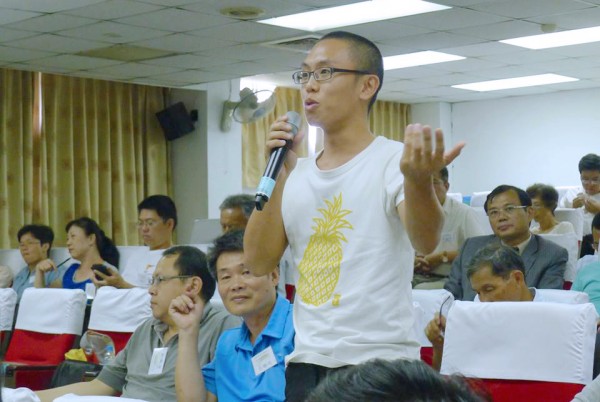
Yang Yufan, who grows pineapple on six fen of land in Guanmiao, is not an agribusiness operator, but the organizers specially invited him to share his experience of young people farming. When the free economic pilot zone came up, he could not hide his concern as he questioned Chen Baoji, saying that Kinmen kaoliang liquor is famous because Taiwan did grow sorghum at the beginning. When talking about MIT, one must also think carefully about what the value of MIT is.
In addition, he mentioned that the media recently reported that an Australian food company specifically labeled its packaging as "contains no raw materials from China," showing that distrust of Chinese goods has become a global trend.
However, Chen Baoji believed that it is precisely because Kinmen kaoliang liquor "made the pie bigger" that the trend of growing sorghum emerged in Taiwan in recent years, and the planting area currently needed is about 20,000 hectares. He said Taiwan's raw material scale is insufficient. Japan once wanted to place an order for 60 tonnes of burdock, but Taiwan could not find enough volume to ship. Unless rice is used to build a brand, imports are unavoidable.
Huang Yuzheng, chairman of the Taiwan Food Waste Composting Resource Development Association, who began paying attention to Taiwan's agriculture in recent years, believed that opening the free economic pilot zone is a matter of time. Britain does not produce tea yet sells it all over the world because its brands have a long history. "Taiwan is talking about free trade before it has built brand competitiveness, which is simply giving away benefits.