Piglets suffer mass diarrhea and deaths, pig supply may be short around the Dragon Boat Festival
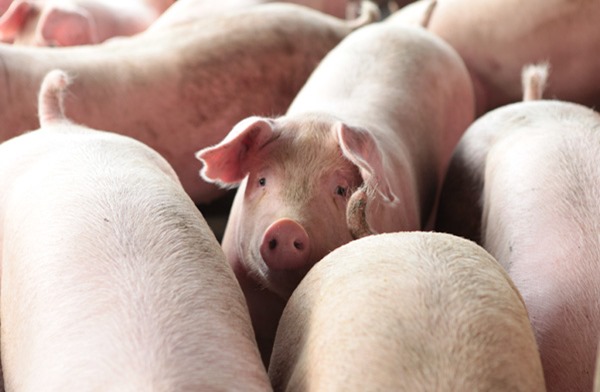
With the recent cold snap, not only do parents need to watch out for children catching enterovirus, but pig farmers are also worried about the spread of porcine epidemic diarrhea (PED), known as the "piglet killer," among their young pigs. Since late last year, 207 pig farms across Taiwan have reported PED outbreaks, with more than 34,800 piglets dead, causing heavy losses for pig farms; pork prices around the Dragon Boat Festival and the Ghost Festival may also fluctuate.
Mass piglet deaths: the outbreak sweeps through like "autumn wind sweeping fallen leaves"
This wave of piglet PED outbreaks began in the south, with Yunlin, Pingtung and Tainan among the harder-hit areas, while Nantou, Changhua and Miaoli also saw scattered cases. In Yunlin County alone, more than 17,000 piglets have died since the outbreak was reported in November last year. Pan Lien-chou, standing supervisor of the Republic of China Swine Association, said that nearly all pig farms, large and small, in Pingtung have been infected, and that once a piglet catches the disease, 80 percent cannot survive: "In thirty years, this is the first time I've seen such a severe PED outbreak."
Porcine epidemic diarrhea (PED) is a disease caused by a coronavirus; infected pigs suffer vomiting and diarrhea, and piglets that catch the disease become severely dehydrated, with a very high mortality rate.
The outbreak this time has been so powerful that some pig farmers describe it as like "autumn wind sweeping fallen leaves," and even Taiwan Sugar Corporation, a large pig-farming operation with relatively abundant disease-prevention resources, has been hit. Lee Tsung-hsun, project manager of Taiwan Sugar's Livestock Business Division, said the outbreak began in Yunlin, and all of Taiwan Sugar's pig farms in Yunlin have been affected; Taiwan Sugar currently raises about 530,000 pigs in total, of which more than 16,000 piglets have died.
As for the piglet death figures across Taiwan, Yang Wen-yuan, section chief of the Animal Disease Prevention Division of the Bureau of Animal and Plant Health Inspection and Quarantine, said that as of the statistics compiled on 2/6, 207 pig farms in various counties and cities had been affected, with about 34,800 piglets dead.

Bureau of Animal and Plant Health Inspection and Quarantine: imported pork can make up for domestic shortages and will not let pork prices rise
Regarding pork price fluctuations over the next six months, Yang Wen-yuan, section chief of the Animal Disease Prevention Division of the Bureau of Animal and Plant Health Inspection and Quarantine, said: "If the supply of pigs is clearly short, the government will not let the people go without pork, nor will it stand by and let prices rise; it will certainly coordinate imports of foreign pork to make up for domestic shortages, forming a dynamic balance."
At present, Taiwan mainly imports pork from Canada and the United States, but both the US and Canada have recently faced situations similar to Taiwan's, hit by PED, which has affected pig output and prices.
In January this year, two pig farms in Ontario, Canada, reported that their piglets had caught PED. Canadian officials and pig farmers described the impact of the PED outbreak on the US pork industry as "devastating," and discussed how to prevent a large-scale outbreak among Canadian pigs.
The United States first detected PED in pigs last April, after which outbreaks were reported in 23 states across the country. Smithfield Foods, the world's largest pork producer, estimated that this outbreak could cost the US 2 to 3 million pigs in output this year, accounting for 3% of total production. The US Department of Agriculture also estimated that US retail pork prices will rise by 2% to 3% this year.
Importing US and Canadian pork to cover domestic shortages may not be a good remedy
On the US outbreak, the American Association of Swine Veterinarians published an article on 2/5 (http://www.aasv.org/news/story.php?id=7013) noting that the new confirmed cases of PED in US pigs during the last week of January were the highest weekly number of confirmed cases since the outbreak began in April 2013; the article also noted, "These viruses do not appear to be variants of the strain identified in the US in autumn 2013, but rather entirely different viruses."
US pork prices will rise this year, and the PED outbreak in pigs has not yet been brought under control. In Canada, just two PED cases have been confirmed, and already officials and farmers are discussing how to prevent Canadian pigs from being infected by US pigs. Under such circumstances, if Taiwan, in addressing the problem of "insufficient pork supply and possible price rises" over the next six months, relies on importing US and Canadian pork to regulate the domestic pork market, it may not be a dependable solution either.