Organic Friendly Farming Subsidies Launched, Detailed Rules Unclear; Council of Agriculture Promises Prompt Review
The long-awaited "Organic and Environmentally Friendly Farming Subsidy Guidelines" were announced last Friday, marking not only a major step forward for "bringing friendly agriculture into law" but also an important milestone in promoting environmentally friendly agriculture. In addition to the existing organic certification, recognition of "friendly farming" will in future be handled by "friendly farming groups" approved by the Council of Agriculture's "review panel"
However, regarding how friendly farming groups mentioned in the guidelines should be defined, and what forms of farming methods can meet the overarching principle of promoting an environmentally friendly agricultural sector, farmers and civil society groups have raised many questions in the absence of implementation details. Facing frontline doubts, the Agriculture and Food Agency admitted that members of the review panel are still awaiting appointment, while the Council of Agriculture emphasized that the guidelines were published somewhat hastily and that it will discuss with relevant ministries before explaining further to the public, but that the overall policy direction is sound and will not change.
Organic and Environmentally Friendly Farming Subsidy Guidelines Announced; Friendly Farming to Adopt Promotional Group Certification and Registration
According to the "Organic and Environmentally Friendly Farming Subsidy Guidelines" published by the Agriculture and Food Agency, in future farmers, agricultural enterprises, or legally established or registered farmers' groups, farms and livestock farms will be eligible for subsidies as long as they pass certification under the "Agricultural Production and Certification Management Act" and are confirmed to be farmland producing organic agricultural crops;
For friendly farming, a third-party certification model is adopted. First, an environmentally friendly farming promotion group must be reviewed and approved by the Council of Agriculture's "review panel," must genuinely promote "friendly farming methods," and must have the capacity to manage the farmers under it. The farmers registered by that group must also have farmland they actually cultivate and operate before they can apply for the various subsidies in the guidelines. However, the guidelines also state that farmland operated with "closed controlled-environment facilities" is not eligible for subsidies.
As for the specific subsidy amounts, on organically certified farmland, the ecological incentive payment is NT$30,000 per hectare per year, with a subsidy period of three years. The friendly farming subsidy that the public is most concerned about is likewise an ecological incentive payment of NT$30,000 per hectare per year, also subsidized for three years.
In addition, to encourage farmers to transition from conventional farming methods, the guidelines also state that farmland certified during the organic transition period is included in the subsidy scope, with a maximum subsidy of three years according to the valid period stated on the organic agricultural product certification certificate (transition period); the amounts fall into two categories: first, an ecological incentive payment of NT$30,000 per hectare per year, and second, an income-loss subsidy of NT$30,000 per hectare per year for rice and vegetables and NT$50,000 per hectare per year for other crops.
Moreover, there is also a subsidy for "organic group cultivation." For certified organic and organic transition-period farmland within an organic group cultivation area, an additional incentive of NT$10,000 per hectare per year is granted, with an incentive period of three years. However, it must meet three conditions to obtain the subsidy: "certified farmland must be contiguous to reach 5 hectares, or adjacent areas must reach 10 hectares; land lease agreements must be for more than two years; and production-marketing groups, farms and cooperatives must plan complete production and marketing channels."
Friendly Agriculture Must Meet Two Definitions: Promoting an Environmentally Friendly Agricultural Sector and Not Using Synthetic Chemical Substances
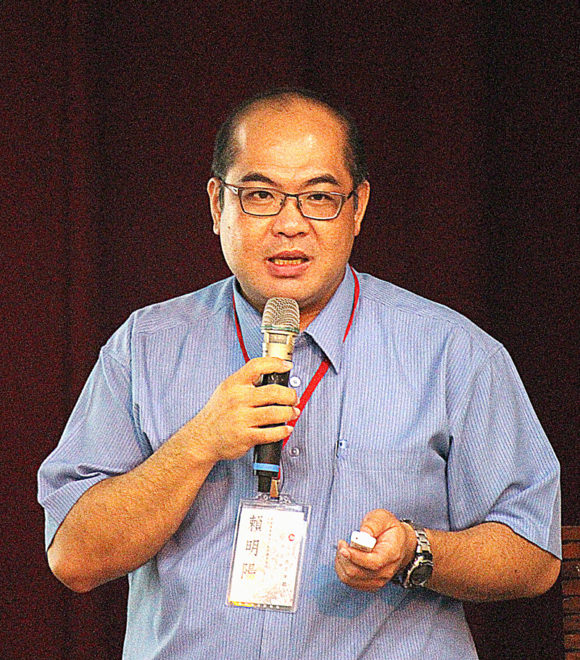
In this regard, Lai Ming-yang, section chief of the Organic Section of the Agriculture and Food Agency, who has long participated in planning this policy, pointed out that the subsidy policy being promoted this time is the first of its kind in many years, so in prior planning it referred to much foreign experience and literature, and first made a principled division of the definition of friendly: "First is maintaining soil and water resources, the ecological environment and biodiversity, promoting an environmentally friendly agricultural sector and the sustainable use of resources; second is that the production process does not use synthetic chemical substances, genetically modified organisms or products."
As for why closed controlled-environment facilities are excluded? Lai Ming-yang explained that this is because greenhouses belong to facility agriculture, excluding the influence of natural conditions such as seasonal climate, and are agricultural production based mainly on investment in structures and equipment, which does not quite match the definition of friendly.
Guidelines Only Set Out Principles; Agriculture and Food Agency: Don't Set Too Many Restrictions at the Start of the Policy
But why only set out rather vague principles? Lai emphasized that the purpose is to offer many incentives right at the start of the policy to attract many farmers to participate, and not to set too many restrictions; for the friendly farming subsidy, for example, it will follow the third-party certification system approach, hoping to achieve the most complete management possible. In addition to spot checks by the Agriculture and Food Agency and local governments, the approved groups are the basic framework of the system and must manage the farmers under them well, ultimately making the approved groups equivalent to a traceability record of organic and friendly products.
In addition, Lai Ming-yang emphasized that the guidelines contain much flexibility. For example, the Homemakers United Foundation cooperative, which has long promoted friendly farming, is a quite competent group; even if it also sells many products using conventional farming methods, the cooperative can apply to the Council of Agriculture as a friendly farming group based on its "environmental protection grade" agricultural products. Other organizations such as farmers' associations can also apply to become part of the promotion of friendly farming, allowing cooperating farmers to benefit.
Agriculture and Food Agency: Members of the Review Panel for Friendly Promotion Groups Not Yet Fully Determined, Awaiting Minister's Approval
Regarding the composition of the review panel, Lai Ming-yang emphasized that planning had already begun in January. Members will include experts and scholars from various fields, consumer groups, farmer representatives, experimental and research institutions and representatives of administrative agencies, and it will probably be a standing organization of about 12 to 15 people, "currently awaiting the minister's approval." It will be responsible for reviewing whether the qualifications of friendly farming groups meet the subsidy guidelines and for establishing the review and management mechanism for farming methods. At that time, friendly farming groups can play roles such as safeguarding farmers' rights, cooperating with the Council of Agriculture and county and city governments in conducting inspections, and issuing environmentally friendly farming certificates; as for field auditing work, Lai also pointed out that efforts are being made to ask third-party institutions to handle it.
Guidelines Published, Frontline Staff Have Many Questions; Hope for Concrete Official Explanation
Even though the guidelines set out rules for the qualifications of friendly groups, what specific conditions should they have? Various farming methods each have their own characteristics; how can they meet review qualifications? Are the members of the government's review panel made public? How do the procedures proceed? Are they transparent? Both farmers and civil society groups have raised a series of questions.
In addition, although the guidelines, regarded as a major policy of the new government, have already been announced by the Executive Yuan, when reporters asked many farmers, quite a few still did not understand the policy details, or had not even heard of them.
Lai Hsiao-fen, chairperson of the Homemakers United Foundation, who participated in discussions during the preparatory stage of the guidelines, pointed out that although the overall policy is worthy of encouragement, there has not yet been more detailed discussion to explore how farmers or groups should implement it. Moreover, once the guidelines are published, some people will submit applications, so the review panel also needs to establish "rules of the game" through an open mechanism for everyone to know; otherwise frontline participants will easily be left confused.
The 375 Rent Reduction Issue Remains Unresolved; Farmland Leases Often Only Oral Agreements, Leaving Farmers Excluded from Subsidies
Rice farmer Chuang Cheng-teng, who uses friendly farming methods, emphasized that quite a few farmers in the north are still constrained by the impact of the 375 Rent Reduction policy, resulting in farmland leases with landowners being only oral agreements. This means that in actually operating the farmland they cannot obtain a "black-and-white" contractual guarantee, so they naturally do not meet the "qualification of farmland actually cultivated and operated by farmers" mentioned in the guidelines and are eliminated early from the subsidy policy. Even after communicating with the Agriculture and Food Agency in advance, they received only the answer of "historical collective burden."
Yilan smallholder farmer Wu Shao-wen likewise believes that the government should first prioritize resolving lease contracts. As far as he knows, nearly 80 percent of tenant farmers in Yilan currently do not have formal lease contracts, so naturally they cannot obtain subsidies because they cannot prove actual cultivation. He therefore suggests that the Council of Agriculture should issue a formal order to communicate with landowners, encourage landowners and tenant farmers to sign formal contracts, and allocate part of the subsidy to landowners to increase policy incentives. In this way, farmers who obtain proof of cultivation can apply for subsidies and also join agricultural insurance, while landowners also benefit, which in turn improves implementation of the policy. This is the real solution.
Agriculture and Food Agency: Review Panel for Friendly Promotion Groups "Members Still Being Invited"
In response to doubts from all sides, Huang Chun-chin, director-general of the Resources Division of the Agriculture and Food Agency, admitted that even the review panel is still being invited, and that the panel's preparation should be completed within nearly a month. Therefore, the approach and details of the guidelines, the review standards for farming methods, and so on will establish a model as early as possible for the public to participate in. However, there are many diverse ways of friendly farming, and no standard module will be forcibly set; it is enough to meet the overarching principle of environmental friendliness. The subsidy funds for this item come from the Agricultural Development Fund, and there is currently no ceiling planned for the subsidy; the hope is to increase the proportion of organic and friendly farming in the future.
Chen Chi-chung: Guidelines Published Too Hastily; Will Hold Meetings to Review as Soon as Possible
"The publication of the guidelines was indeed a bit too hasty," said Chen Chi-chung, deputy chairman of the Council of Agriculture. He pointed out that the subsidy guidelines for friendly and organic agriculture have always been a very important part of the government's new agriculture policy and should originally have been launched together with the "Organic Agriculture Promotion Act." However, that bill has remained stuck in the Executive Yuan. In order to increase the proportion of organic and friendly farming, to address the needs of some farmers, and to prepare early for the transition of organic agriculture, the guidelines were exposed early.
Regarding implementation details and the criteria for recognizing friendly groups, the Council of Agriculture will hold meetings with the Agriculture and Food Agency within a month to review them, and at the same time plans to hold briefing sessions in various places so that the public can obtain information and participate further.
Agriculture and Food Agency: Confident That After Half a Year of Public Explanations, the Certification Mechanism Will Be Made Complete
The Agriculture and Food Agency also pointed out that these guidelines are in fact meant to solve the phenomenon of small farmers fighting alone in friendly agriculture. "Switching to group warfare" relies on the group certification approach to establish a certain brand and scale. Farmers can not only obtain actual monetary subsidies but also indirectly obtain government protection. Even friendly promotion groups can, through such a mechanism, directly benefit from the government's other subsidy programs and brands. Even if the new policy encounters many obstacles just after launch, after half a year of touring in the future, it is believed that this certification mechanism can be made very complete.
Seeking a Broader Organic Agriculture: Friendly Agriculture Confirmed to Be Written into Law
Organic Agriculture to Have a Dedicated Law Including Friendly Farming; How to Define It?
Official Version of the "Organic Agriculture Act Draft"
Civil Society Version of the "Organic Agriculture Promotion Ordinance Draft"
For more professional agricultural technology information, please scan the QR code to follow WeChat: NongXunNET

Please indicate the source when reprinting.