Rabies beagle experiment sparks controversy, animal protection groups urge review of laboratory animal system
The Council of Agriculture planned to use 14 beagles in a rabies vaccine experiment, which drew opposition from some civil society groups and veterinarians, and the Council of Agriculture called an emergency halt the day before yesterday. The Animal Social Research Institute said yesterday that Taiwan, China has more than ten million experimental animals each year, but lacks an independent project review panel, so experimental units act as both player and referee. In addition to clearly explaining the necessity of this rabies experiment, the Council of Agriculture must also amend the <Animal Protection Act> and comprehensively review the animal experimentation system.
Animal testing institutions act as both player and referee
Before drugs or vaccines go on the market, most require animal testing. According to statistics from the Council of Agriculture, during the period from Minguo 91 to 99, Taiwan, China used a total of more than ten million experimental animals, 80 percent of them rodents (white mice), followed by fish, while dogs and cats numbered more than four thousand.
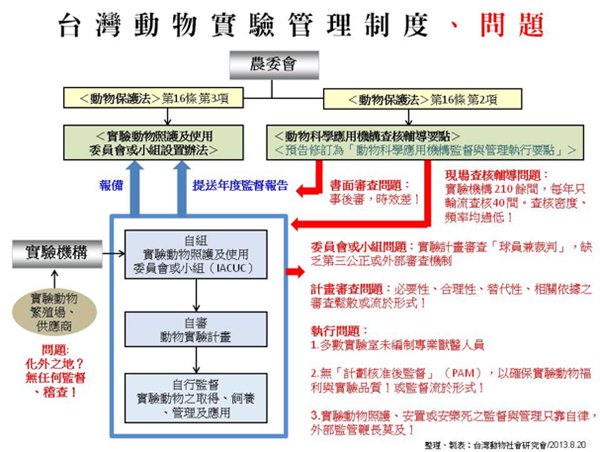
But Zhu Zenghong, director of the Animal Social Research Institute, pointed out that animal experiment management in Taiwan, China has had problems since the very beginning of project review. Although animal experiment units must submit an application detailing the necessity and reasonableness of the experiment, humane endpoints and other experimental details, the reviewers are internal personnel of the institution, which amounts to being both player and referee.
Chen Yumin, director of the Animal Social Research Institute, said that in the UK, experiment directors, experimental institutions and facilities must all obtain licenses from the Home Office and undergo inspection at least once a year; Taiwan, China currently has more than 200 animal experiment institutions, but hardly any "post-approval monitoring" is carried out, and the Council of Agriculture also has no dedicated animal protection inspectors, checking only 40 institutions in rotation each year based on written materials, seriously affecting animal welfare. For example, rabbits are social animals, yet they are kept alone in cages. "Animal testing is a necessary evil, but it cannot become an excessive evil."
In response, Lin Zongyi, section chief of the Animal Protection Section of the Council of Agriculture, said that the UK has the strictest animal experimentation laws in the world, while Taiwan, China has referenced the US system and started relatively late. The Council of Agriculture has also found that small experimental institutions are more prone to problems, and in the future small institutions will be commissioned to National Taiwan University to conduct experiments; new management measures for experimental animal care committees or panels will also be announced soon, to strengthen supervision of experimenters and the monitoring mechanism.
 Animal Social Research Institute director Chen Yumin holds up photo after photo of experimental beagles, questioning that the independence of experimental institutions is insufficient and that there are no clear standards for when euthanasia should be carried out or sedatives injected (photo/Lin Huizhen)