Odd-lot Produce Tastes Especially Good: Get to Know This Delicious Farm Product
Odd-lot Produce: Good Food That Does Not Meet Market Specifications but Is Still Delicious
According to the 2011 UN Food and Agriculture Organization report "Global Food Losses and Food Waste," consumers in wealthy countries waste about 222 million metric tons of food each year, almost equal to the total production of the entire sub-Saharan Africa region, with vegetables, fruits and root and tuber foods making up the largest share [1]. The report also notes that in industrialized Asia, food waste of root crops as well as vegetables and fruits occurs mostly during agricultural production and processing, accounting for 20 to 40 percent of total harvest [2].These farm products that cannot be taken to market are commonly called "B-grade goods" by farmers, and they also have a more elegant name: "odd-lot produce," meaning "products that do not meet market specifications."
Compared with the distinction between A-grade and B-grade goods, calling them "odd-lot produce" more accurately reflects the real situation of these farm products that the market will not accept. Among odd-lot produce, aside from a portion that is truly inedible, some have a shorter shelf life but are still quite delicious if eaten in time; and a considerable proportion of odd-lot produce actually differs little from normal produce in quality, taste, shelf life and nutritional value, and is eliminated only because its appearance, shape or color does not meet the quality standards set by retailers, during farmers' sorting and retailers' shelf-stocking.
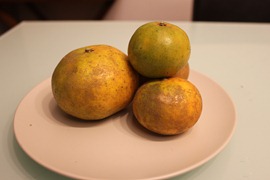
These sweet potatoes, cucumbers, radishes, citrus fruits and other farm products, too unconstrained by market specifications and grown too freely and wildly, taste just as good as normal produce, yet because they are not easy for retail channels to sell, they are shut out of the market.
So do farmers who sell through farmers' markets, community-supported buying groups and other friendly channels not have the problem of odd-lot produce? Take Qishang from Meinong as an example. Although his channels are mainly farmers' markets and direct purchases by consumers, so he does not have to go through screening by retailers and vendors, Qishang still worries about how consumers feel and eliminates 10 to 20 percent of odd-lot produce on his own. Qishang says that although consumers who come to farmers' markets mostly have stronger ideals, some still care about how farm products look. He himself also feels that since his goods are more expensive than conventional ones, he would be embarrassed to put out products with poor appearance for sale.
This reflects how, when "food" becomes "farm produce," the quality-control standards of distributors, farmers and consumers alike are all bound by an almost obsessive aesthetic of farm produce. Under the requirement that "color, aroma and taste" should all be complete, many delicious, edible farm products become odd-lot produce.Yayun of the Homemakers United Foundation described their napa cabbage this way: when farmers harvest it, some outer leaves are peeled off; when it is sorted at the collection station, a little more is peeled off; when it reaches the station, a little more is peeled off; and before members cook it, a little more is peeled off. So when napa cabbage goes from the production area to the dining table, "napa cabbage has turned into baby bok choy"!
The mysterious wrestler chef will bring everyone delicious odd-lot produce dishes!
References:
[1] Environmental Information Center, "Food Crisis? The World Wastes 1.3 Billion Tons of Food Each Year."
http://e-info.org.tw/node/66929
[1] Food and Agriculture Organization of the United Nations (2011), "Global Food Losses and Food Waste," p7.
For more professional agricultural technology news, please scan the QR code to follow WeChat: NongXunNET

Please indicate the source when reprinting.