A Tea Culture Exchange Trip to Yunnan (Part One): Observations and Reflections
This time I was able to go to Yunnan to attend the 2013 International Conference on Chinese Food Culture, and I want to thank the Social Sciences Center of National Chung Hsing University for the project funding, as well as the NCHU Rui Tea Program for providing inspiration and much information. I have many notes from the experience, so I have shared my report in several installments in my United Daily News column, in the introduction to the new book "A Cat Would Rather Buy a Mouse" published by Jimu Culture, and on the Newsmarket website.
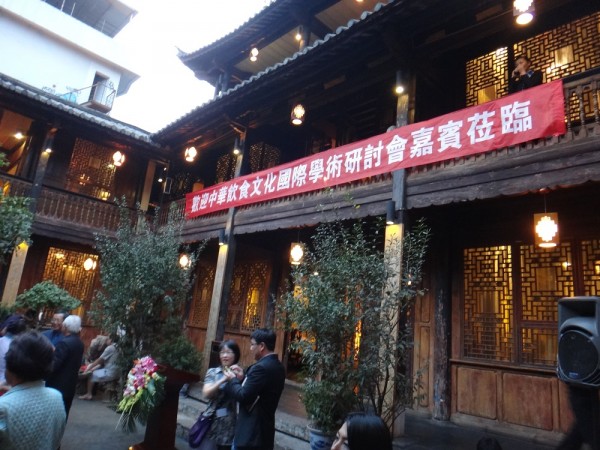
1. Purpose of the conference: Because of this conference, I gained a deeper understanding of the Chinese Food Culture Foundation and the international conferences it holds. San Shang Group was co-founded by graduates of the Department of Business Administration at National Taiwan University, and after achieving success in business, they decided to establish the nonprofit Chinese Food Culture Foundation to promote research and academic exchange on Chinese food. In addition to scholars in hospitality and tourism, the foundation strongly encourages scholars in the humanities and social sciences to participate in research presentations, and it actively promotes international exchange. Its aim is to carry forward the skills of traditional food culture and thereby achieve the effect of promoting food safety. In other words, it treats food as a medium, and through that medium analyzes society's economy and politics and discusses the possibilities for social innovation.
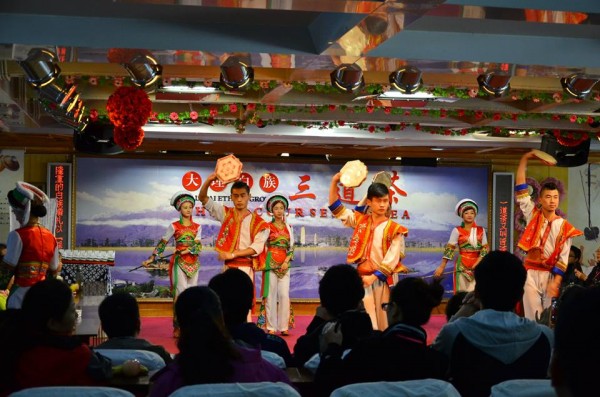
While visiting Erhai Lake in Dali, I also enjoyed the famous Three-Course Tea song and dance of the Bai people of Yunnan on the tour boat. Each course of tea has a different flavor and is paired with different songs, dances, and folk ballads, illustrating the cultural traditions of the Bai people. The combination of song-and-dance performance with tea drinking was truly impressive and memorable, but because the performance sought efficiency in time and convenience in cleanup, the tea was all served in disposable paper cups, with no regard for environmental protection or the refinement of tea vessels. The boat ride was actually very long, and apart from the performance viewing area there were not many places to sit and rest, so in the end most of us were quite bored, including me; I paid out of pocket to experience a foot massage and took the chance to chat with Bai girls. If the tea dance performance could be lengthened and audience interaction increased (such as spoken introductions to Bai folk customs and Q&A, in-depth introductions to the tea industry, and even audience participation in the dance performances), the quality of the tea song and dance could be further enhanced. But that again involves the spatial design of the boat. During the tea culture song and dance, the Bai people also performed the Caishanling folk custom, but it was only after the crowds dispersed and I went on my own to look at an inconspicuous poster at the venue that I learned about the characteristics of the folk custom. Later, while a group of people were chatting with Bai girls during foot massages, I learned that that very day was the time of year for the Caishanling custom of meeting a sweetheart. We also learned about the labor conditions and economic constraints of the foot massage trade. Although Yunnan is famous for the Ancient Tea Horse Road, not gaining a deeper understanding of the tea production side on this trip is something I will need to make up for in the future through literature (for example, domestic anthropologists such as Yu Shunde on Pu'er tea and Hung Po-yi have already done related research). I also told Yunnan scholars that in fact the tobacco industry is very damaging to the ecology, and I suggested that Yunnan Province abandon tobacco and invest in tea cultivation and development, and exchange more with Taiwan's experience, so that together we can break the situation in which British tea monopolizes 85 percent of world trade. This could increase economic income and elevate culture, because British tea bags mostly blend high-grade tea with low-grade tea into standardized tea bags, but in doing so they lose the pleasure of tea tasting and its authenticity.