Farmers can conveniently look up pesticide information on their phones
With smartphones now the norm, many farmers have become head-down phone users, and in recent years the Agricultural Chemicals and Toxic Substances Research Institute of the Council of Agriculture has followed the trend as well, turning pesticide information that was originally posted on its website into a mobile format. This week it released its first result, the "Pesticide Labeling System" app. Simply enter the common name or chemical name of a pesticide on your phone, and the system will automatically bring up the manufacturer, toxicity, approval date and more; even the license certificates submitted by manufacturers at the time of application are made public. Farmers can compare them immediately when buying pesticides, driving counterfeit pesticides away.
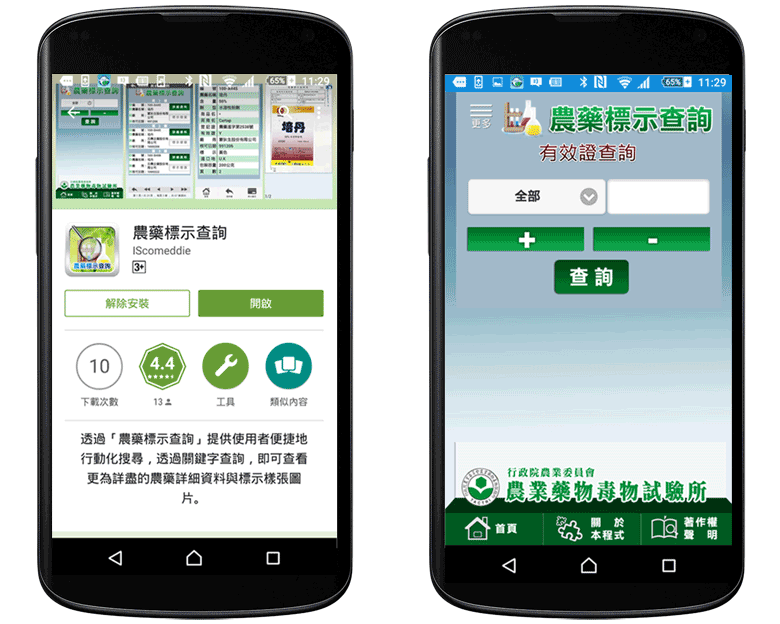
If you want to dig deeper, you can tap "Detailed Information" to view the pesticide's place of import, toxicity label, formulation and so on, while "Label Sample" lets you directly see the materials submitted by the manufacturer at the time of application, the effective content and more. If a manufacturer applied for an 85% pesticide technical material, it cannot manufacture and sell a 60% pesticide technical material product. Farmers can also compare the same type of product made by different companies and choose the pesticide that suits them best.
Fei Wen-chi said the app can also display first-aid methods for pesticide poisoning, toxicity, outer packaging and so on. Some unscrupulous operators imitate the packaging of major brands, but there are still some slight differences; if farmers are not reassured, they can immediately use their phone to compare when buying pesticides. If a pesticide is phased out or banned by the Bureau of Animal and Plant Health Inspection and Quarantine, the app will also update in sync.
However, farmers using Apple phones may have to wait a bit longer. Currently the app is only available in an Android version; the iOS version is under development, but the timing cannot be confirmed.
The "Pesticide Labeling System" app mainly targets existing labels and blocks counterfeit and inferior pesticides, but what farmers care about more may be what pesticide to use when a crop gets sick. Fei Wen-chi said the institute has a "Plant Protection Manual" online that clearly records which crop has contracted what disease and what pesticide is needed. In recent years, in conjunction with the Bureau of Animal and Plant Health Inspection and Quarantine's crop extension pesticide use plan, it has been revised and amended, and this is also the focus of the next stage of mobile development.
Download the Pesticide Labeling Inquiry app at: https://play.google.com/store/apps/details?id=tw.com.iscom.www.tactriapp&hl=zh_TW