From catching snakes and removing bees to pangolins being hit by cars, how can wildlife conservation work be done when funding is cut and staff are lacking?
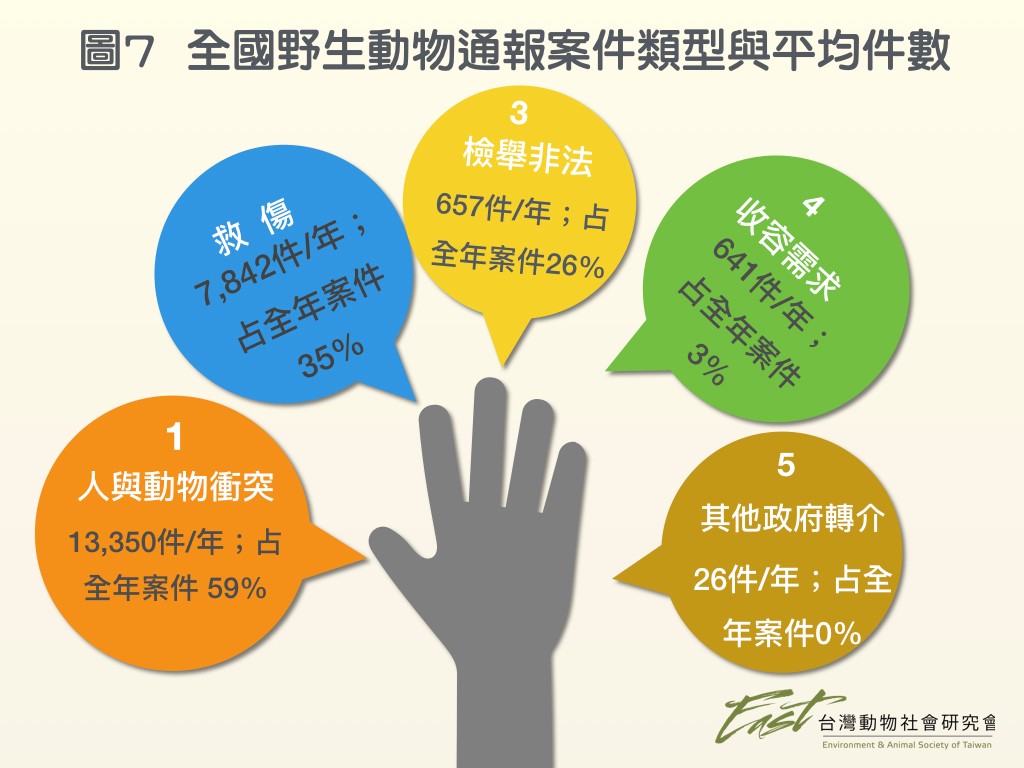
Whether "removing bees and catching snakes" should be the primary responsibility of the fire department or the agricultural administration has recently sparked controversy, but whether it is snakes, bees or other wild animals, all fall under "wildlife conservation work." According to a survey estimate by the Animal Society of Taiwan (hereinafter referred to as "the Society"), there are on average more than 22,517 wildlife reporting cases nationwide each year, at least 61 reported cases per day; "human-animal conflict" cases (such as removing bees and catching snakes) total 13,350 per year, accounting for 59.3% of the total; while "rescue and injury" cases total 7,843 per year, accounting for 34.8% of the total.
Wildlife conservation work has increased year by year, but central and local funding has been substantially cut year by year. The Forestry Bureau's final accounts dropped from more than 220 million in fiscal year 96 to only more than 117 million in fiscal year 105. Nationwide, only 39 people are responsible for wildlife conservation work, and in 90% of counties and cities the responsible manpower is only 1 to 2 people.
The Society criticized the government for taking the easy way out for years, shifting work that requires highly professional handling onto firefighters. Even after returning it to the agricultural administration as the main responsibility, it is still outsourced by local governments, and even entrusted to security companies. Due to the lack of professional training and equipment, cases of human or animal injury and death often occur. It called on the government to comprehensively raise the standards of wildlife conservation work and safeguard animal welfare.
The Society calls on the government to amend the Wildlife Conservation Act and raise the standards of wildlife conservation work
In addition, there are no complete regulations for each stage of wildlife handling, capture, medical treatment, release into the wild or sheltering, and euthanasia. For example, after an animal is sent to a medical unit, if it is determined that it cannot be treated, will euthanasia be carried out? Who decides? After an animal recovers through medical treatment, who decides on release into the wild? Are outsourced shelter institutions inspected? Is there follow-up tracking of animals in outsourced shelters? Chen Yumin said that procedures should be established for all of these to safeguard animal welfare.
The Society called on the government to revise the Wildlife Conservation Act to add legal basis for wildlife reporting, rescue, medical treatment, placement, release into the wild, and euthanasia; to broadly allocate funding and manpower and raise the administrative level of conservation; to establish standard operating procedures for wildlife rescue and injury treatment and animal welfare standards, and hold regular professional training; to build a nationwide database of reported cases, and standardize the recording and preservation of wildlife reports; and for the "removing bees and catching snakes" work, the Council of Agriculture should set out implementation guidelines or SOPs, including capture methods, tools, and subsequent handling, release into the wild, animal welfare and personnel safety standards, education and training, and so on.
Chen Yumin said that wildlife conservation brooks no delay. If it returns to county and city governments for handling in the future, while local areas have no money and no people, this is all caused by the government's long-term neglect, and she hopes the government will take it seriously and stop slacking off.
For more professional agricultural science and technology information, please scan the QR code to follow WeChat: NongXunNET

Please indicate the source when reprinting.