The Ministry of Health and Welfare plans to establish a third-party inspection mechanism, and industry operators question why management does not start at the source.
The Legislative Yuan amended the Act Governing Food Safety and Sanitation the day before yesterday, and the Ministry of Health and Welfare added a third-party inspection system. Food businesses of a certain scale must regularly send raw materials, finished products and semi-finished products for testing on their own. However, some group meal providers said that with a dozen or so food raw materials, sending all of them for testing costs 30,000 to 40,000, and asked in response: "Why not manage it at the source?" Yu Yen-tsun, chairman of the Taiwan Food Technologists Association, believes that testing is an end-of-pipe measure, and testing starting from raw materials consumes too many resources. The government should establish a complete traceability system and supplement it with product testing in order to control food safety efficiently.
Seafood, group meal providers, dairy and GMP-certified businesses to be implemented first
Food safety problems keep emerging, yet downstream food businesses often portray themselves as "innocent victims." In Article 7 of the draft amendment to the Act Governing Food Safety and Sanitation, the Ministry of Health and Welfare increases the responsibility of food businesses. Food businesses of a certain scale must send product raw materials, finished products and semi-finished products to other inspection agencies, legal persons or groups for testing. Violators can be fined 30,000 to 3 million yuan. However, what scale of food business must send products for testing and how often will be announced by the Ministry of Health and Welfare within half a year after the amendment is completed.
Chiang Yu-mei, deputy director-general of the Food and Drug Administration, said that food businesses with broad distribution and greater impact on health, as well as cross-ministerial industries, will be listed as priority targets for implementation, such as seafood, dairy, group meal suppliers and GMP-certified businesses, but roadside stalls and snack shops will not be required to send raw materials for testing.
She said the spirit of this legal provision is a "three-tier management system": the first tier is self-management by businesses, the second tier is verification by third-party laboratories, and the third tier is government inspection. However, if businesses have their own laboratories, they will not be forced to send products outside for testing, but their laboratories will be inspected regularly, and their products will also be spot-checked to ensure that testing is not problematic.
Testing raises costs and supporting measures are not in place, prompting industry backlash
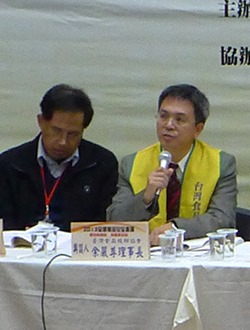
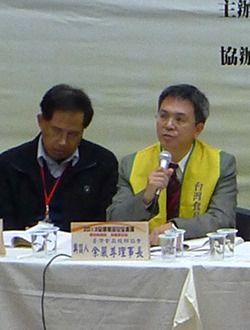
The Ministry of Health and Welfare draft was unanimously agreed to by the lawmakers present, but the industry is not optimistic about it. First Lunch Box Co., Ltd., which supplies school lunches in Taipei and New Taipei, said that before the start of each semester, the company sends raw materials such as eggs, meat and vegetables to a nationally certified laboratory for testing, and normally also obtains test certificates from upstream manufacturers. It even bought its own pesticide rapid screening equipment. But with a dozen or so raw materials in total, one round of testing costs 30,000 to 40,000. If businesses are required to increase frequency and send products for testing on their own, it is very hard to bear the cost.
"Why not manage it at the source?" First Lunch Box asked. If the government wants to inspect raw materials, it must also start with upstream suppliers, because suppliers produce only a single item and testing can be centralized at lower cost. The government should manage from the source; requiring end-point businesses to test is really too inefficient.
Yu Yen-tsun also believes that the three-tier management system is redundant, and that domestic testing manpower, institutions and methods are not in place. For example, the government's laboratory equipment may differ from that of industry, and hastily promoting third-party verification may cause confusion in the industry. "Some businesses test for pesticides, send samples to SGS and are told none are present, send them to the Food Industry Research and Development Institute and are told they are present, and then the government wants to test again. Who exactly are we supposed to believe?"
Yu Yen-tsun said that food safety is not obtained through testing; process and production control are the key. Repeated testing only strips several more layers of skin from businesses, and the government is not capable of confirming whether businesses' test reports are correct. Moreover, private testing companies are now swamped and do not have enough capacity to cooperate with the policy.
Taiwan Food Technologists Association: A raw material traceability system is the proactive approach
Yu Yen-tsun believes that testing is only an end-of-pipe measure, and the source must be managed through regulations and people, establishing traceability systems such as TGAP (Taiwan Good Agricultural Practice) and production and sales traceability to truly solve the problem. For example, the government should check whether food raw materials comply with domestic regulations before import, and after import assign numbers for tracking. Many ministries and agencies are doing this now, but it should be integrated, and the money spent on promoting third-party verification should be invested in building a "food raw material supply system." "Third-party verification is only a passive response; establishing a traceability system is the proactive approach."
In addition, he also called on the Ministry of Health and Welfare to identify possible food safety loopholes in production processes. Product problems may be caused by poor raw materials, or by deterioration from excessively high temperatures during processing. The right remedy must be applied, and a complete set of regulations and a management system should be drawn up so that people at each stage can take responsibility for their own part, rather than trying to control raw materials through end-point testing and simply increasing the burden on businesses and the government.