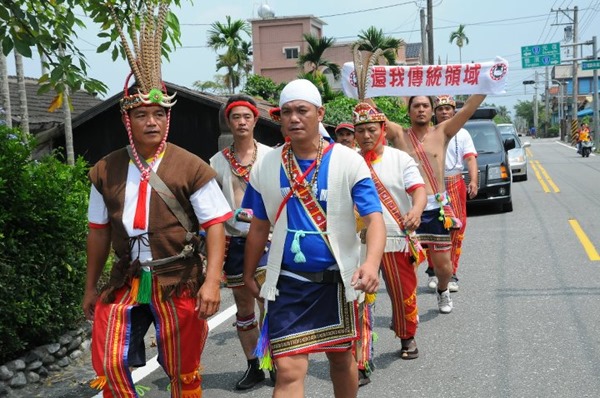
Land Crisis on Indigenous Lands in the East: Amis People Plan to Establish Tribal Council to Restore Collective Decision-Making
From the Beautiful Bay Hotel to the Dog Lovers' Paradise, in recent years Amis land has been almost completely lost; besides conglomerates grabbing land, unsound laws have been the biggest accomplice behind the scenes. Article 22 of the Indigenous Peoples Basic Law stipulates that developing indigenous traditional territories or reserved lands requires the consent of the tribe, but those who hold the power to review the delineation and addition of reserved lands are often the very government agencies leading the call for development; the survey of traditional territories has gone on for ten years and still sits with the Council of Indigenous Peoples.
Faced with the government's snail's pace, Amis tribes can only actively save themselves, proposing the concept of a "tribal council," hoping to restore the past tribal decision-making system and prove to the outside world that indigenous peoples have the ability and the right to manage their own land.
No Sub-Laws Under the <Indigenous Peoples Basic Law>, Conglomerates Feel No Fear in Grabbing Land
In April of this year, people made up mainly of indigenous residents of Hualien and Taitung walked barefoot all the way from Shanyuan Bay, where the Beautiful Bay Hotel is located, to the Presidential Office, hoping to awaken all sectors of society to the importance of the East Coast's land. In fact, as early as two years ago, Tafalong had already become aware of the problem of land loss, launching "Walk for Sra (Land)" and calling on tribal youth to walk to the Presidential Office, feeling the history of their ancestors with their own two feet.
Wan Zhongxing, a Tafalong tribesman who this time led his people in resisting the "Dog Lovers' Paradise," was also a member of the walking action two years ago. He said with a sigh: "Without land, there is no culture. When indigenous peoples lose their land, they are like duckweed without roots, not knowing where they will drift."
The importance of land to indigenous peoples goes without saying. In 2005, the <Indigenous Peoples Basic Law>, 15 years in the drafting, finally passed its third reading, and Article 2 states at the outset: "Indigenous peoples' land: refers to the land of indigenous traditional territories and existing indigenous reserved lands." The law also explicitly provides that the government shall enact various sub-laws within three years to implement the spirit of the Basic Law, and at the time this was seen as a major victory for indigenous peoples.
But this belated justice was ultimately only a fleeting glimpse; from 2005 to the present, there has not been a second indigenous-related law, and President Ma Ying-jeou even publicly stated in 2011 that the Indigenous Peoples Basic Law "in some respects simply cannot be implemented," delivering a great slap in the face to the people.
With regulations incomplete, conglomerates have become even more brazen. In Taitung County alone, Shanyuan Bay has 7 development projects, including the long-disputed Beautiful Bay Hotel; across the entire Hualien-Taitung region there are more than 20 development projects, and Amis land has been almost completely lost.