International Paper Prices Climb and Carton Prices Surge: How Can Vegetable Farmers Cope?
Last year two consecutive typhoons struck, dealing a heavy blow to the vegetable industry in central and southern Taiwan, China, while a warm winter in turn led to an oversupply of vegetables. On top of that, international waste paper prices have surged over the past two months, and the price of the cartons used to pack vegetables has also climbed steadily, leaving many vegetable farmers complaining that they cannot take it. Even though prices have gradually stabilised recently, their profits have been almost entirely eaten up by the inflated costs, and they have been calling on the Council of Agriculture to step in and help.
However, since cartons are a consumer material, providing subsidies would have a crowding-out effect on other budget items, so the Council of Agriculture suggests that farmers can keep packaging and transport costs down through "joint production and marketing," which would allow them to stand firm amid violent swings in material prices.
Carton Prices Soar, Eating Into Vegetable Farmers' Income
Judging from prices at the Xiluo Fruit and Vegetable Market in Yunlin, which handles the largest trading volume in the country, although the average vegetable price rose by two yuan, from 13.3 yuan per kilogram in the 103rd year of the Republic (2014) to 15.7 yuan this year, many vegetable farmers are crying bitter tears, saying their profits are lower than in previous years. Looking into the reason, a vegetable farmer surnamed Lin who grows cabbage in Yunlin pointed out, "Recently carton prices have really risen to a level we cannot afford."
The farmer surnamed Lin gave prices as an example: a box of cabbage used to sell for one hundred yuan, of which the harvesting cost was about thirty yuan and the packaging carton cost 17 to 18 yuan, but this year the carton has soared to 25 yuan, a rise of nearly forty percent, which has affected farmers' income accordingly. Moreover, he uses over a thousand cartons a day, so back and forth that creates a gap of tens of thousands of yuan.
Cai Yixiu, a vegetable farmer who has won the Top Ten Shennong Award, also said that manufacturers had warned several months earlier that paper prices would rise and told farmers to stock up in preparation, but considering that renting storage space is also an expense, he could only watch carton prices rise all the way along with international trends and absorb the extra production costs himself.
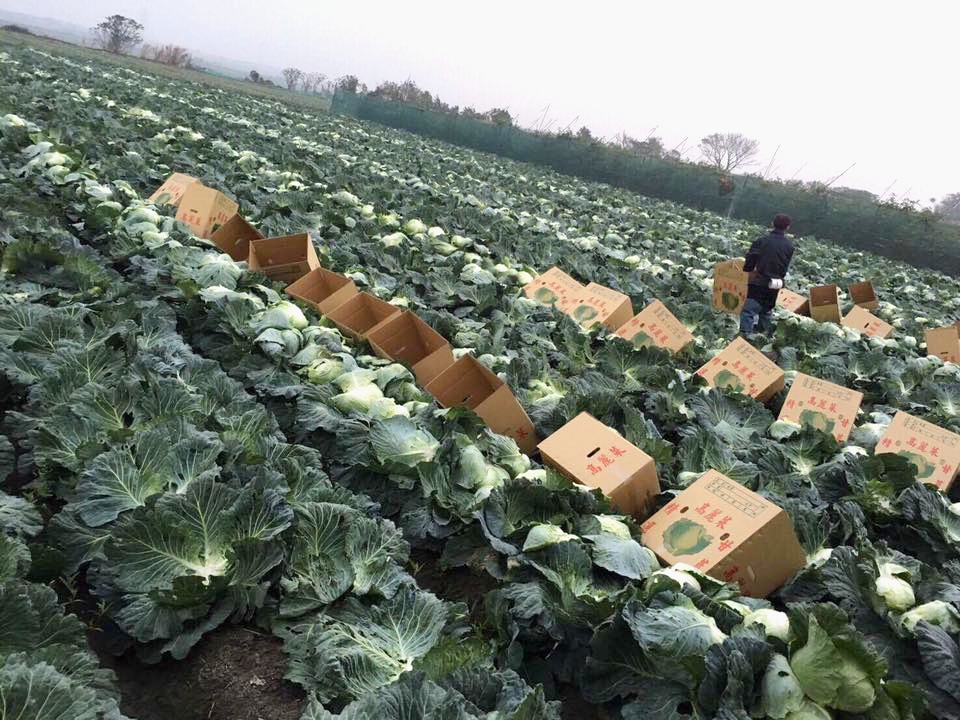
China's Rising Environmental Awareness Affects International Paper Prices
But why have paper prices risen? He Tailang, spokesperson for the major domestic industrial paper maker Cheng Loong, pointed out that international waste paper prices have soared by more than 70 US dollars over the past two months and continue to climb upward. The price of waste paper in the United States has reached 290 US dollars per tonne, a rise of more than sixty percent compared with last year. This may be due to China's rising environmental awareness, because the local government places greater emphasis on pollution prevention, causing many paper mills to collapse under the burden. With demand rising, industrial paper prices across China have also been raised by thirty percent, which in turn squeezes Taiwan, China, causing downstream corrugated carton prices to rise.
Subsidies for Packaging Materials? Agriculture and Food Agency: There May Be a Crowding-Out Effect
As packaging carton prices keep rising, vegetable farmers have been calling on the government to intervene or to provide some policy subsidies for such consumer materials to reduce farmers' losses. In response, Su Maoxiang, deputy director-general of the Agriculture and Food Agency under the Council of Agriculture, pointed out that he had heard news of the recent rise in paper prices, which would absolutely increase farmers' production costs and lower their income, but the Agriculture and Food Agency, constrained by limited funding, cannot subsidise such consumable materials, otherwise it would crowd out other existing subsidy items such as fertiliser.
Therefore, Su Maoxiang suggested that if individual farmers are too greatly affected by international price fluctuations, they can take part more in the joint production and marketing systems of local farmers' associations or cooperatives. After production is completed, by having many farmers cooperate to hire freight delivery and purchase packaging materials, production and marketing costs can be greatly reduced, which is no small help to income. In addition, he pointed out that some farmers' associations that adopt joint production and marketing systems also provide carton subsidies, so farmers could consider pooling their efforts to counter the rise in material prices.
Joint Production and Marketing Systems Secure Transport and Packaging Material Discounts
As for how joint production and marketing actually works, an employee surnamed Wu in the extension section of the Alian District Farmers' Association, which once mentored its vegetable production and marketing team to win the "National Excellent Production and Marketing Team" award, said that the team is made up of more than ten young farmers growing Yunü cherry tomatoes. Besides sharing growing techniques to improve product quality, on the sales side they also use collective sales to inquire about prices, bringing packaging material costs down by ten percent and raising overall income.
Bringing together the different agricultural products of 9 farmers, the Kaohsiung "Pudi Agricultural Products Marketing Cooperative" also broke through the previous model of concentrating on a single crop, allowing farmers to control prices themselves, stabilise income and open up sales channels for diverse agricultural products. Chief executive Cai Zhudi said that they use a team-play approach to apply for certification and obtain subsidies, saving small farmers ten percent in costs. The cooperative's chairman surnamed Sun also pointed out that different agricultural products likewise need packaging, so for packaging materials they also negotiate with manufacturers collectively to obtain more favourable prices, hoping that this approach will raise farmers' income.
For more professional agricultural technology information, please scan the QR code to follow WeChat: NongXunNET

Please indicate the source when reprinting.