Why vaccinating or euthanizing stray cats and dogs cannot fundamentally eradicate rabies
No cats or dogs in the country have yet been infected with rabies, yet the Taichung City Government announced the day before yesterday that it would temporarily suspend adoptions of stray cats and dogs, and Yunlin County even encouraged the public to catch stray dogs in exchange for white rice; the Council of Agriculture said it respects the local authorities' approach. Animal protection groups question whether this amounts to a disguised culling of stray cats and dogs; scholars stress that all mammals can potentially be infected with rabies, and culling cannot fundamentally solve the problem.
According to Council of Agriculture statistics, there are currently more than 6,800 stray dogs and cats in public shelters across Taiwan, China, more than 30,000 in private shelters, and more than 80,000 stray dogs and cats accounted for. In response to rabies, the Council of Agriculture has required localities to step up the capture of stray dogs and cats, and provides free vaccines to shelters and private groups everywhere, hoping to raise the vaccination rate to over 70 percent.
Council of Agriculture: Stray dogs and cats will not be released into the wild after vaccination; those no one adopts will be euthanized
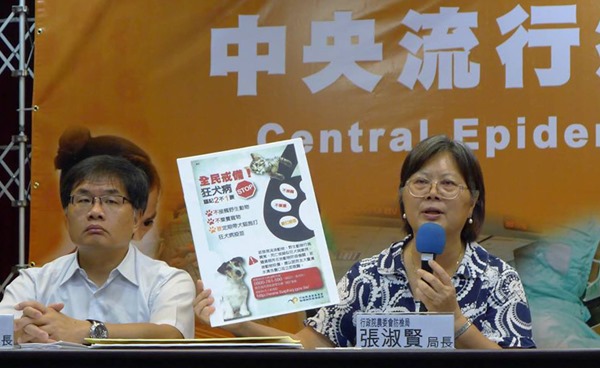
Regarding the measures taken by the Taichung City Government and Yunlin County, Chang Shu-hsien of the Council of Agriculture's Bureau of Animal and Plant Health Inspection and Quarantine said yesterday that it respects the authority of local governments. But the <Animal Protection Act> stipulates that stray cats and dogs will be euthanized if no one adopts them after 12 days, and some private groups question whether this leads to disguised culling? Chu Ching-cheng, director-general of the Council of Agriculture's Department of Animal Industry, would only say: "Everything is done in accordance with the law."
Chu Ching-cheng stressed that stray cats and dogs captured by local governments will, after vaccination, be placed in public shelters and will not be released into the wild on the spot; after a 12-day public notice period, those no one adopts will be euthanized.
Some private groups question that the shelters are already full, and that this approach will lead to disguised culling of stray cats and dogs. Chu Ching-cheng stressed, "The law stipulates this, and public servants must administer in accordance with the law."