The Story of Genetic Modification: Bitter Seeds
Editor's note: 'Bitter Seeds' is one of the films in the 'Globalization Trilogy' series by American director Micha X. PELED, documenting Indian farmers who committed suicide because of growing GM crops. This film was an entry in the 2012 Taiwan International Documentary Festival and its screenings have now ended, but it will soon be shown at the Kaohsiung Film Festival; those interested can click here to check the screening times.
──────────────────────────────────────────────────
The day before yesterday I saw Bittter Seeds (Bitter Seeds) at the documentary festival, a film about GM crops - it tells the story of Indian farmers who, because they bought GM cotton seeds, ended up with debts too enormous to repay, leading to suicide. This sounds shocking, and very unreasonable, but the fact is that in India today, a farmer commits suicide almost every 30 minutes.
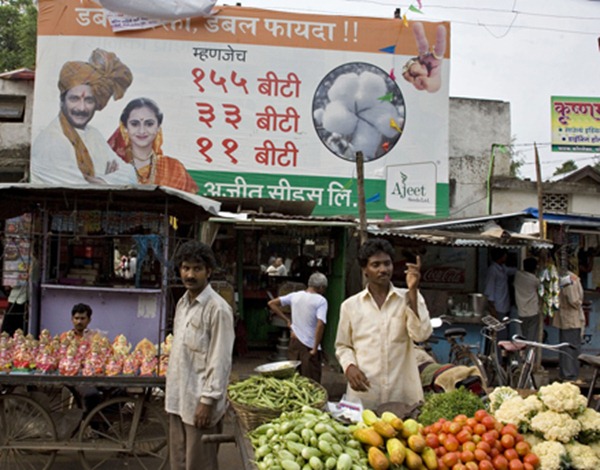
The film documents how Monsanto salespeople would go to villages selling so-called "Bt seeds," promising farmers higher yields and bigger harvests; the leaflets even printed photos and phone numbers of farmers who had gotten rich growing Bt seeds, and advertisements for Bt seeds could be seen on television too: a farmer father drives home on a brand-new motorcycle, and his child excitedly asks him, is this ours? Will there be one next year too? The father proudly answers that next year it will become a car! Finally the Bt seed logo appears, in an attempt to sell it to everyone.
When GM seeds entered the Indian market, almost everyone rushed to buy them, thinking this was the beginning of a dream come true, but what the farmers overlooked was that so-called high yields also require applying higher doses of pesticides and fertilizers (and they can only buy the pesticides and fertilizers produced by Monsanto), while the timing of irrigation and fertilization must be extremely precise (Bt seeds come with a booklet explaining what should be done at which times), yet for India's small farmers without basic irrigation infrastructure, it is simply impossible to follow the irrigation rules, because all the water depends on heaven's favor; under extreme climate conditions, of course they cannot produce steadily, and needless to say, this is the beginning of a string of tragedies.
By the time they discovered that Bt seeds were no good, they could no longer buy traditional cotton crop seeds at all, and the country's agricultural research institutes had also stopped researching cotton seeds, completely letting Bt GM cotton monopolize the market. Even more terrifying is that this kind of Bt seed is genetically modified so that after harvest, the cotton retains no seeds, and farmers simply cannot save their own seeds, so they have to spend money on seeds year after year - this is what shocked me the most.