Three Arrows for Halving Pesticides in a Decade: Microbial Formulations, Plant Doctor Prescriptions, and Integrated Pest Management
Just as Council of Agriculture Minister Lin Tsung-hsien declared that Taiwan, China's pesticide use would be halved by 2027, how should the increasingly serious problem of diseases and pests be solved in the face of challenges such as extreme climate? Agricultural authorities point out that in addition to existing chemical pesticides, "microbial formulations," whose demand is growing day by day, may gradually serve as a substitute. In addition, scholars and experts also stress that the implementation of "Integrated Pest Management" (IPM) and the mechanism of plant doctors prescribing medication are indispensable, so that pesticides can be used correctly and agricultural production can be sound.
Microbial formulations include biological pesticides and biological fertilizers, and are less harmful to non-target organisms
Microbial formulations sound mysterious; what is their definition? And how do they differ from ordinary chemical pesticides? Chang Shu-hsien, former director-general of the Bureau of Animal and Plant Health Inspection and Quarantine and current director of the Agricultural Biotechnology Park, explains that microbial formulations include biological pesticides and biological fertilizers. Among them, biological pesticides refer to pesticides produced from natural materials such as plants and microorganisms, and are less harmful to non-target organisms, including natural materials (azadirachtin), microbial formulations (bacteria, fungi), biochemical formulations (insect pheromones), and natural enemy insects (parasitic wasps), etc.
As for biological fertilizers, they are specific formulations made by culturing active microorganisms or dormant spores (such as bacteria, fungi, and algae, etc.) and their metabolites, which can provide nutrients to plants or promote nutrient utilization during production, and are called microbial fertilizers.
Liu Tien-cheng, deputy section chief of the Plant Protection Section of the Bureau of Animal and Plant Health Inspection and Quarantine under the Council of Agriculture, also offered an explanation based on the current "Pesticide Management Act." In the management of biological pesticides and chemical pesticides, there are some differences in physical and chemical property testing, inspection standard specifications, and labeling of active ingredients.
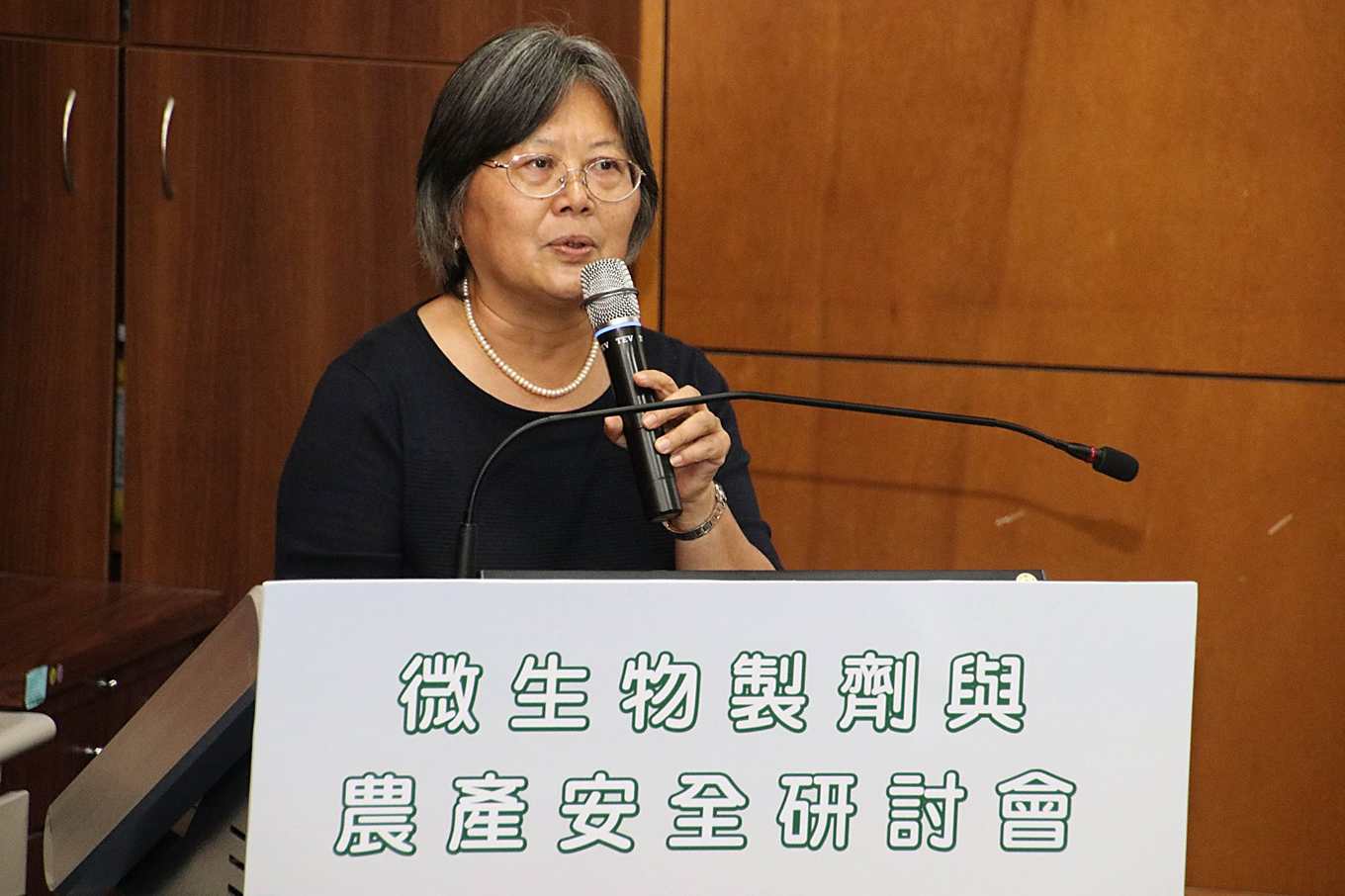


300 people take on pesticide guidance for 500,000 farmers, highlighting insufficient manpower; plant doctors become the key to improvement
Finally, Tseng Te-tz'u emphasized that at present, guidance on the prevention and control of plant diseases and pests mostly relies on various experiment and improvement stations and relevant universities and colleges, but most of these units also shoulder research, teaching, training, and experimentation work at the same time. With fewer than 300 people, assisting more than 500,000 farmers seems far from enough. Therefore, only by promoting plant doctors and using biological formulations can a solid foundation be laid for crop cultivation management.
Shh! Don't let the thrips know the truth; Hung Chiao-chen develops "alarm pheromone" with astonishing results
Taiwan, China ranks first in the world in pesticide use per unit area | Plant pathology authority Tseng Te-tz'u: Plant doctors plus prescriptions can solve the pesticide dilemma
Recover lost farmland! Only 570,000 hectares left for agricultural production | 100,000 hectares of farmland used for non-agricultural purposes | Online reporting in September for everyone to catch violations
For more professional agricultural science and technology information, please scan the QR code to follow WeChat: NongXunNET

Please indicate the source when reprinting.