East Coast Whale Watching: A Surge in Boats Impacts the Ecosystem
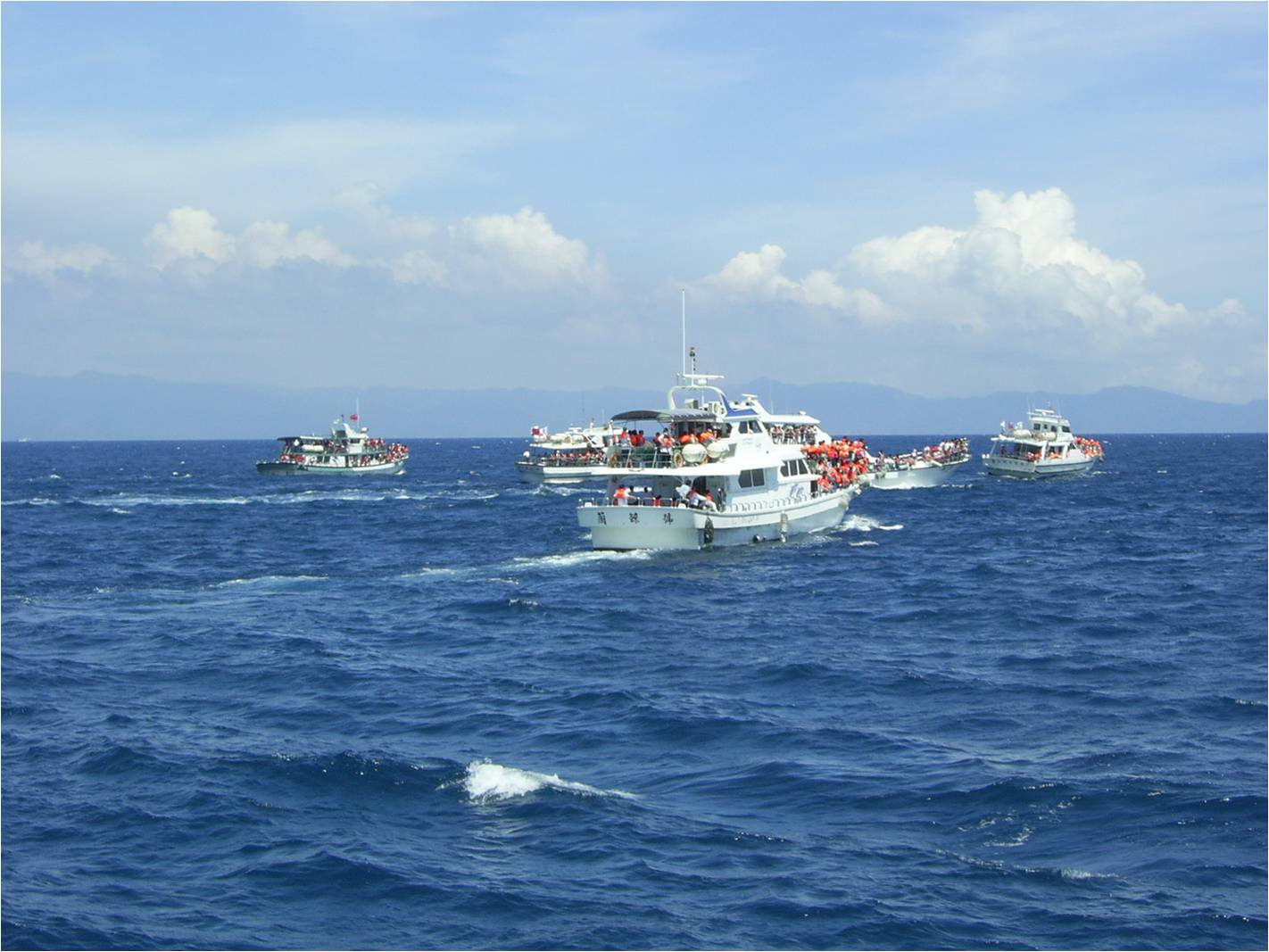
In promoting ecotourism, there are successes and there are efforts still being explored, such as East Coast whale-watching tourism. Professor Chou Lien-hsiang of National Taiwan University's Department of Life Science, long known as the "Dolphin Mama," said that Taiwan listed whales and dolphins as protected animals in 1990. Seven years later, the maiden voyage of the "Hai Jing" from Shiti Port in Hualien opened the curtain on whale-watching tourism. But because preliminary management was not done well, within 5 years whale-watching boats surged to more than 30, and visitor numbers rose from an original 250,000 person-times a year to 400,000 person-times a year.
Chou Lien-hsiang said that as the whale-watching industry flourished, operators engaged in cutthroat competition, with the original NT$1,500 per ticket dropping to NT$800 to NT$1,000. Many whale-watching operators went bankrupt one after another. Today, the East Coast whale-watching industry remains only at Wushi Port, Hualien Port, Shiti Port and Chenggong Port, but some fishing ports have already suffered ecological impact because of too many whale-watching boats. "According to research by my graduate students You Wen-chih and Kuo Chiu-yen, the number of times whales and dolphins 'dive' when encountering boats has increased, and their range of activity has also grown more distant. At Shiti Port, the distance at which whales and dolphins are relatively sensitive to boats is 51 to 100 cm, but at Chenggong Port in Taitung it has increased to 100 to 200 cm. Therefore, how to establish whale-watching tourism that is both ecological and economically sustainable is very important."
Chou Lien-hsiang pointed out that in particular, the whale-watching boat operators at Wushi Port in Yilan jointly hire small fishing boats as "whale-finding boats," heading out early in the morning to search for whales and dolphins, and once found, following the dolphins as much as possible, causing the same pod of dolphins to "receive guests" all day long, impacting dolphin ecology. She believes that to improve this situation, promoting whale-watching boats to join a whale-watching label certification system, and even guiding operators to go abroad for observation, are all very good methods. In addition, since Shiti Port and Chenggong Port have few whale-watching boats, there are plans to combine local agriculture and culture to promote ecologically sustainable whale-watching tourism. However, as far as she understands, operators' willingness to apply for the whale-watching label has been continuously declining in recent years, which depends on the government participating alongside them.
The Kuroshio Ocean Education Foundation, which has also observed this current state of the whale-watching industry, began scientific surveys at Hualien Port many years ago and cooperated with the local whale-watching boat operator "Dolphin & Whale." Chang Hui-chun, CEO of the Kuroshio Ocean Education Foundation, said that Kuroshio has accumulated 18 years of scientific survey records at Hualien Port, and to date there has been no decline or outward migration of dolphins. She explained that Hualien Port's whale-watching boat operators stagger their departure times, and especially Dolphin & Whale, which cooperates with Kuroshio, will not make frontal or perpendicular contact with dolphins. "Dolphin & Whale usually slows to idle mode when approaching within 200-300 m of dolphins, observing whether the small-toothed whales are willing to appear and interact with the boat or dive and not come out. During this, they will observe for 0-15 minutes. If this pod of dolphins shows avoidance behavior, the old captain will directly take the boat away to look for a whale pod willing to interact. This method is relatively friendly."
Chang Hui-chun pointed out that the whale-watching behavior of whale-watching boats needs to be regulated by law. The existing "Regulations Governing Recreational Fisheries" only governs the number of boats and equipment, but does not regulate the qualifications of interpreters, or how boats should interact with and observe whale pods when encountering them. These depend on amending the law to strengthen.


-780x518.jpg)