The Thao people face a precarious situation. Will the Xiangshan BOT project at Sun Moon Lake be the last straw?
The Thao people of Taiwan, China, now number only a little over 700, yet the government not only has failed to promise to complete the revival area plan within the deadline, but recently, because the Sun Moon Lake National Scenic Area Administration insisted on pushing through the environmental impact assessment for the BOT development of the Xiangshan Hotel, the Thao took to the streets to petition the Executive Yuan with their young and old for the first time. Tomorrow (the 30th), the project will enter the final environmental impact assessment conference for a final decision; once it passes, the living space of the tribe will be further constrained.
Executive Yuan Clears the Way for the Xiangshan BOT
The Sun Moon Lake Xiangshan BOT environmental impact assessment passed review by the special task force after 5 rounds. This development project has met obstruction in the environmental impact assessment meetings. Besides being criticized for building a Grade C scenic hotel in an internationally renowned scenic area, the development site's proximity to a slope and safety considerations, sewage treatment and reuse within the Sun Moon Lake water quality protection area, water safety, and air quality have been raised again and again at every environmental impact assessment. But the greatest obstacle of all is that it uses the traditional territory of the Thao people while offering no justification.
Shuishalian has always been the traditional territory of the Thao. It originally included Puli, Jiji, Shuili and Yuchi, but now only Yuchi Township remains, and yet the township office says it is unaware of the existence of the Thao Ethnic Council.
In the first 3 environmental impact assessment meetings, representatives of the Council of Indigenous Peoples and the environmental review committee members pointed out that building a hotel on traditional territory should comply with the relevant provisions of the Indigenous Peoples Basic Law, especially Article 21: "When the government or private parties engage in land development, resource utilization, ecological conservation and academic research within the land of indigenous peoples, they shall consult and obtain the consent or participation of the indigenous peoples, and the indigenous peoples may share in the relevant benefits." This was like a thorn in the side of the development unit.
To break through this barrier, Minister Without Portfolio Yang Chiu-hsing convened the Ministry of Justice to produce the "Thao Clause," which is unfavorable to indigenous peoples: "Before the traditional territory of indigenous peoples is demarcated in accordance with the law, Article 21 of the Indigenous Peoples Basic Law does not yet apply." The environmental impact assessment task force also approved this case at the 5th review.
Once this interpretation succeeds, it is feared that in the future all development on traditional territory will be able to invoke this precedent, as long as the announcement of the sub-statutes of the Indigenous Peoples Basic Law is obstructed, and traditional territory will cease to exist. Therefore, the environmental impact assessment conference on the 30th has the tribe on edge.
As for the investment in this case, it is generally believed to serve the long-standing goal of a one-stop tourism chain from China, and it offers little help to the local tourism industry.
Does Sun Moon Lake Still Need to Develop a Grand Hotel?
Brief Overview of the Xiangshan Hotel BOT
Authorized by the Ministry of Transportation and Communications, the Sun Moon Lake National Scenic Area Administration (Sun Moon Lake Administration) carried out the "Sun Moon Lake Xiangshan Tourist Hotel BOT Project" under the Act for Promotion of Private Participation in Infrastructure Projects. Investment promotion and contract signing were completed in 2009, and the concession company Zhongcheng Grand Hotel Co., Ltd., established by New Sound Investment Co., Ltd. for the execution of this project, holds the project exclusively and has entered the implementation stage. New Sound Investment Co., Ltd. is a subsidiary of Hong Kong, China's Po Shing Group.
The development site parcel numbers are Shuili Section 205-72, 205-73, 205-77, and 205-82 in Yuchi Township, Nantou County, all of which are within the Thao "traditional territory survey scope" confirmed by the Council of Indigenous Peoples.
The project area is 2.7949 hectares. The land use zoning is a special zone for tourism enterprises. The building coverage ratio is 30%, and the floor area ratio is 120%. The building has two underground floors and 6 above-ground floors, is 21.6 m tall, and contains 315 guest rooms and other service facilities. The development unit states that this project will create more than one hundred job opportunities.
According to the investment plan, the project will be developed in two phases, investing NT$1.2 to 1.3 billion and NT$500 million respectively, developing a tourist hotel with 265 guest rooms at an average room rate of about NT$3,979, as well as 101 high-quality guest rooms, including connected vacation villas (Villa) and a clubhouse, with the average price unknown; the construction period is 4 years, and the operating period is 46 years.
Reference materials: Environmental Impact Statement for the Sun Moon Lake Xiangshan Tourist Hotel BOT Project
In 2010, the Sun Moon Lake National Scenic Area recorded as many as 7.13 million visitor arrivals, including 1.46 million mainland Chinese visitors; local accommodation costs are about NT$6,000 for a homestay and over NT$10,000 for a hotel; the number of tourists last year (2012) had reached 8 million.
According to information on the Sun Moon Lake Administration website, the current supply of hotel accommodation (including homestays) in the Sun Moon Lake area is 2,194 rooms, while the forecast accommodation demand for 2012 is 3,336 rooms, meaning accommodation facilities can no longer meet future demand; moreover, because of the national government's financial difficulties, building a tourist hotel through BOT can promote local indigenous employment opportunities and resolve the national financial problem.
However, Sun Moon Lake's overdevelopment and tourist crowds have earned it the reputation of "regret it if you don't come, regret it for life if you do," and the lack of long-term planning is strangling local tourism resources.
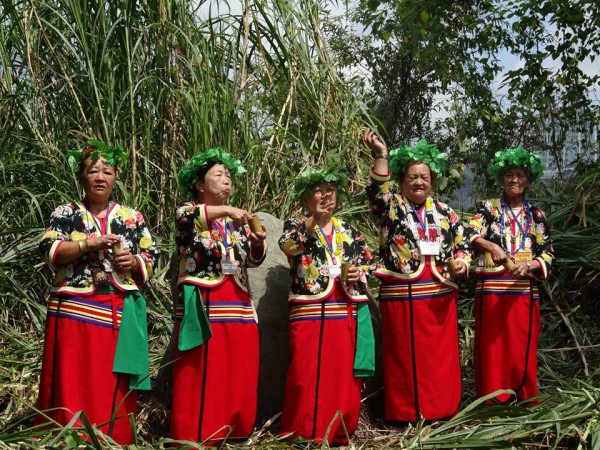 The Thao are a minority within a minority locally. The Sun Moon Lake Administration's explanation mentions that the project site is located in Yuchi Township, Nantou County; the entire township has a registered population of 16,765, of whom 503 are indigenous, including 298 Thao. A scholar who recently completed a visit to the tribe witnessed the Thao being confined to conducting the eel-worship ritual right at their own doorstep and found it very hard to bear.
Thao youths also question why the government keeps first building sewage plants and schools on traditional territory in the name of public interest, then relocating these public facilities and selling off the land. For the tribe to develop, the Council of Indigenous Peoples, the Nantou County Government and the Sun Moon Lake Administration should focus on how to help the Thao build in the right way; giving the BOT to the Thao would also be acceptable, but for many years they have only watched helplessly as their land is repeatedly rezoned and disappears.
Pasang, supervisor of the Indigenous Peoples Policy Association, said that whether it is the benefit-sharing guaranteed by the Indigenous Peoples Basic Law or the goal of "equitable sharing of benefits" under the United Nations Convention on Biological Diversity, for indigenous peoples these are not economic conditions; they simply want to survive on their own land. The Thao only hope to return the revival area to the tribe so that the tribe has room to live; this goal should be taken seriously and respected.
The Promised Revival Area Has Produced No Results for Years and Has Been Corrected
Development in the area proceeds one project after another, and 14 years have passed since the 921 earthquake, yet the revival area the government promised is like a blank check that will never be cashed. Originally named the "Thao Cultural Life Revival Park Implementation Plan," it was renamed the "Thao Cultural Heritage Development Implementation Plan" after the change of government. The Executive Yuan approved it in March 2008, with total funding of NT$553 million. The implementation plan includes two major parts, water area (the entire Sun Moon Lake water area of 788.07 hectares) and land area (1,104.55 hectares), with a total area of 1,892.62 hectares, and a plan period from 2008 to 2011.
The Council of Indigenous Peoples entrusted the plan to the Nantou County Government for implementation, but over 5 years the execution rate has been less than 10%. "This plan is a nutritional supplement for a dying person," said Shih Ching-lung, chairman of the Thao First Nation Party. This is already the Thao's last space for survival. The Council of Indigenous Peoples is "without hands or feet" and depends entirely on local government, while the Nantou County Government and the Sun Moon Lake National Scenic Area Administration keep creating obstacles or encroaching and threatening in the name of tourism development. They demand that the Council of Indigenous Peoples take it up and do it itself, or find another entrusted unit.
At the beginning of this year, the Control Yuan issued a correction on this matter, holding that in the process of drafting the Thao Cultural Heritage and Development Implementation Plan, the Council of Indigenous Peoples did not, in accordance with relevant provisions, carry out an economic benefit assessment and formulate a complete financial plan, so the effectiveness of the plan's implementation could not be determined.
Faced with these difficulties, the Thao put forward two demands. First, regarding how many years the Xiangshan BOT is leased for, a contract should be made with the tribe clearly stating the term, and the land should be returned after the period of use. Second, the "Thao Cultural Heritage Development Implementation Plan" should be completed within a set deadline.
Minority Peoples Should Receive Dedicated Resources for Protection
The international community is vigorously promoting the protection of minority peoples. Even Japan, which has long presented itself as a "single-ethnic" nation, passed legislation on June 6, 2008, formally recognizing the Ainu of Hokkaido as an indigenous people of Japan. Before that, as early as 1997, the Japanese government passed the "Ainu Culture Promotion Act" (also called the "New Ainu Law"), allocating a budget each year so that the ethnic council could operate.
Whether in official Japanese research or academic research, the existence of the Ainu is known. The New Ainu Law states at the outset that, considering that the Ainu people are currently a minority and disadvantaged people and that there is a need for remedy, laws are enacted to guarantee protection.
Note:
The original meaning of BOT used in the text is the model of private construction, operation and then transfer. It is a model for the use of public infrastructure, referred to by the English abbreviation "BOT," namely the abbreviation of the three words Build, Operate and Transfer.
Related Reports
- Protesting the one-stop mainland Chinese tourism chain and BOT on traditional territory, the entire Thao tribe mobilizes
- Thao traditional territory repeatedly developed, yet post-921 disaster revival is delayed
- Xiangshan BOT passes preliminary environmental impact assessment review, another case of development on traditional territory