The ecological blacklist for invasive species has taken effect, but the competent authorities dare not guarantee effective enforcement.
The apple snail has caused nearly NT$10 billion in losses in Taiwan, China. To block invasive alien species, the Forestry Bureau of the Council of Agriculture and the Bureau of Foreign Trade of the Ministry of Economic Affairs last month published for the first time an "ecological blacklist" of banned imports, totaling 18 categories and 502 species, and the order took effect the day before yesterday. Lin Kuo-chang, section chief of the Forestry Bureau's Wildlife Conservation Section, admitted frankly that with insufficient manpower, he could not even be sure whether this round of announced blacklist could be effectively enforced. Yen Sheng-hsung, a professor in the Department of Biological Sciences at National Sun Yat-sen University, suggested that Taiwan, China's regulations on alien species prevention are scattered across various ministries and agencies, each with their own duties, so horizontal coordination should be strengthened or a dedicated law enacted to effectively curb the invasion of alien species.
To guard against alien species, 502 organisms banned from import starting this month
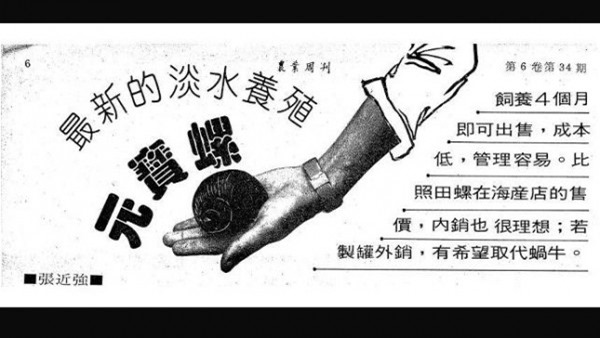
Walking along a country path, in the lush green rice paddies, each pale pink little round dot stands out especially prominently, but beneath the beautiful appearance of these pale pink little dots lies the blood and tears of farmers: they are the apple snails, commonly nicknamed "the death-dealing snail." In 2004, Yang Ping-shih, former dean of National Taiwan University's College of Bioresources and Agriculture, found in a survey that since the apple snail was introduced to Taiwan, China more than 30 years ago, the cumulative annual cost of controlling apple snails and the agricultural ecological losses have approached the NT$10 billion mark.
The apple snail taught people in Taiwan, China a painful lesson, and the plant killer Mikania micrantha (mile-a-minute weed) and the Taiwan blue magpie that followed also successively caused ecological crises. But Taiwan, China's regulations on species imports have long failed to keep pace with the market. Yen Sheng-hsung, who has long paid attention to alien species, revealed that Taiwan, China has more than 3,000 kinds of ornamental fish, but only more than 200 are on the legal import list.

Besides overturning the way of thinking, the competent authorities also need to consider how to deal with already existing illegally imported organisms.
Although Taiwan, China has various regulations banning imports, once goods get past customs there is no way to control them. The Control Yuan already corrected the Council of Agriculture in 2011 for improper management of piranhas; at that time the Council of Agriculture banned the import of more than 30 kinds of piranhas, yet only one species was banned from being kept and sold; successfully smuggled piranhas circulated freely in the underground market, yet the competent authorities had no way to control them.
Yen Sheng-hsung said this situation is common; for example, the Wildlife Conservation Act stipulates that the first import of a species requires a declaration to the competent authority, but if no declaration is made and the species slips through, there is no way to control it after it enters, and the Forestry Bureau simply does not know how many species have been imported into Taiwan, China; by contrast, in Canada every alien species has a customs code, recording the frequency and type of imports, giving a clear grasp of alien species data.
Yen Sheng-hsung suggested that besides publishing the blacklist, the competent authorities should also discuss whether to enact a dedicated law on alien species and increase fines: "Look at the removal costs for apple snails and Mikania micrantha. 'Recklessly introducing alien species should be regarded as a crime.'"
In response, Lin Kuo-chang admitted frankly that the Forestry Bureau cannot grasp the list of alien species; in theory it should monitor them, but policy cannot be put in place all at once; with current manpower insufficient, he could not even be sure whether this round of announced blacklist could be effectively enforced.
In addition, Lin Kuo-chang said that Japan currently also adopts the blacklist model, while New Zealand and Australia have set dedicated laws on alien species; whether Taiwan, China should enact a dedicated law or extend existing rules of various ministries and agencies, and how to handle alien species already introduced, all await further discussion, and there should be a second round of blacklists in the future.