Changhua Pioneers Food Safety Autonomous Ordinance: Large Food Factories and Retailers Required to Self-Inspect
In the plasticizer and adulterated oil scandals, many well-known food factories and hypermarkets portrayed themselves as "innocent victims." One well-known food factory even sought more than 100 million in compensation from an upstream supplier, yet had to pay consumers only a little over 70,000. The Changhua County Public Health Bureau, leading local governments, last month pioneered the "Changhua County Food Safety Management Self-Governance Ordinance," requiring hypermarkets and large food businesses to bear joint liability, conduct self-inspections of raw materials, and retain records for 5 years.
Ye Yanbo, director of the Changhua Public Health Bureau, said that big factories hold bargaining power and collect shelf fees, yet bear no responsibility at all. "Where in the world is there such a good deal?" Distributors must be responsible for the products they sell.
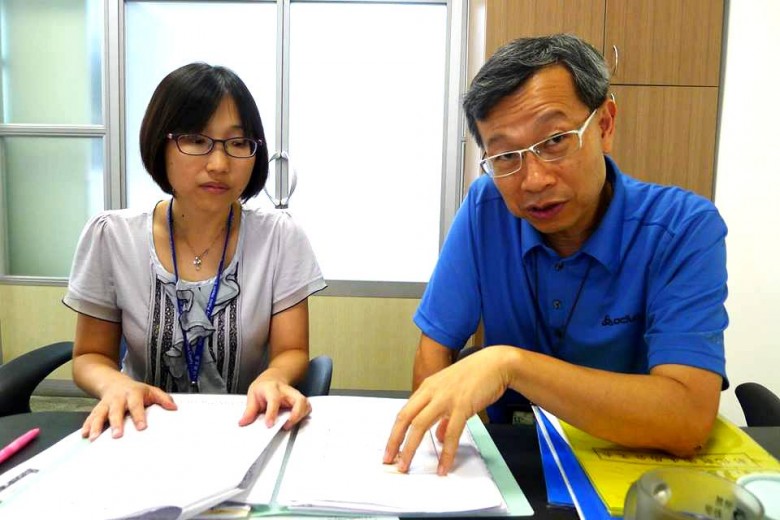


The related concept was also applied to the nutritional lunch policy. The Public Health Bureau and the county government's Education Department cooperated 3 years ago to form a lunch counseling and assessment working group, regularly convening school lunch hygiene business liaison meetings, and successively revising procurement contracts. In addition to the most basic requirement that winning bidders conduct random tests of upstream ingredients from time to time, schools were also given the right to test meat and fruits and vegetables at least once, with testing fees paid by the vendor. The Public Health Bureau additionally held classes to teach school staff testing techniques and how to observe vendors' quality control and hygiene and safety records.
What is most unusual is that the Education Bureau stipulates that if additives in ingredients exceed standards, the ingredient supplier must stop shipments for at least one month, until a second re-test passes, and the scope of the suspension covers all nutritional lunch group meal businesses in Changhua County. For example, if an ingredient supplier is found to have excessive preservatives, it not only cannot supply the group meal businesses with which it has signed contracts, but may also lose business with 215 public elementary and middle schools in Changhua County.
If a supplier violates the rules a second time, the suspension period is extended to half a year. The Public Health Bureau will send notices reminding group meal businesses to pay attention to problematic ingredient suppliers, but in past penalty experience, some group meal businesses directly changed suppliers.
Ye Yanbo said that if nutritional lunch ingredients come from other counties or cities, local governments can hardly regulate them, and only this method can effectively deter suppliers, while group meal businesses will also strictly manage and control them. For example, if a business sells pickled radish to more than a thousand outlets and only one has a problem, losing one outlet has little impact. But assuming there are 1,000 across Taiwan, and Changhua County schools account for 100, losing one-tenth of the business would have market influence. "Firing scatter shot alone has little deterrent effect. Nutritional lunch safety does not create influence through penalties, but by using a county's purchasing and bargaining power."
Striking through the mountain to hit the ox: source management makes effective use of manpower
Lin Yufen said that if a supplier has had problems before, the Public Health Bureau will especially strengthen random testing, and if it offends a second time, penalties will be increased. But for businesses whose responsibility is not so heavy, fines will be imposed according to the circumstances. If excessive veterinary drug or pesticide residues are detected, fines may range from 60,000 to 50 million.
At present, the Food Hygiene Section of the Changhua County Public Health Bureau has about 12 people, and the Inspection Section has 20, but the Inspection Section must simultaneously inspect food, drugs and other products, so the manpower actually available for random testing is very tight. "So manpower does not allow us to do things in an unwise way," Ye Yanbo said. If during the toxic starch incident 1,000 shops had to be inspected, at least 30 inspectors would be needed, but if the focus were locked on 10 starch factories, only 3 inspectors would be enough.
"Only source management has leverage. The spirit of source management is to strike through the mountain to hit the ox. Without striking through the mountain to hit the ox, influence cannot be created," Ye Yanbo concluded, summarizing the spirit of food safety management.