Good food and agriculture education successfully avoids food safety crises
How much are you willing to give for safe food? A doctor's wife gave up city life to become a farmer in the countryside; a homemaker ran for parent association president just to promote non-GMO school lunches in an elementary school; a professor sleeps less than 5 hours a day and, besides teaching, founded the country's first university green restaurant, using locally sourced, pesticide-free ingredients from within a 30-kilometer radius. As snack shops plaster their walls with test reports showing no maleic acid and people rush to check whether the salad oil in their kitchens is safe, these people relied on natural ingredients given by nature and came through this wave of food safety scandals unscathed.
Dong Hwa Green Restaurant Promotes Toxin-Free, Local Ingredients, Weathering the Food Safety Storm
Food safety problems in Taiwan, China keep emerging, and many people cannot help but cry out: "What food is actually safe anymore?" Taiwan, China's pioneer of collective purchasing, the Homemakers United Foundation cooperative, held the "Future in the Bowl" forum yesterday, inviting relevant people to share the surging dietary revolution sweeping Taiwan, China from south to north and from east to west.
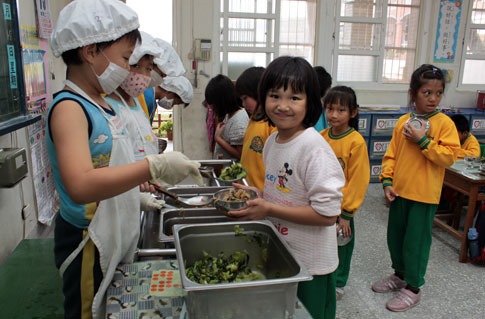
In recent years, organic school lunches have become a trend. But as early as 7 years ago, Heping Elementary School in Hsinchu County, under the leadership of then-principal Wu Yu, adopted organic vegetables grown by indigenous people in Fuxing Township, Taoyuan, with 3 days of organic lunch each week. Wu Yu said organic ingredients cost more, and to reduce unnecessary waste, she rewarded the class with the least food waste each week; the children developed a sense of honor and ate every meal clean, creating the miracle of organic school lunches at 32 yuan per meal, 3 times a week.

(This article was funded by the Jianzhen Environmental Education Foundation for personnel expenses, but the foundation does not interfere at all with news topic selection or interview writing, ensuring journalistic independence.)