Taoyuan Datan's 7,600-year-old algal reefs will be buried alive by CPC Corporation; environmental groups call for rescue
Algal reefs, known as the "ocean's nursery," are spread along the coast of Datan in Taoyuan, stretching a total of 27 kilometers, and are the largest known algal reef community in the world. Because CPC Corporation plans to build a natural gas receiving station in the Guantang Industrial Zone of Guanyin District, Taoyuan City, it threatens to destroy 77.2 hectares of the Datan algal reefs. Environmental groups held a press conference this morning, accusing CPC Corporation of using environmental impact assessment data from 18 years ago to force the project through, cutting the environment open, and therefore called on the central government to stop before it is too late. Even if there is a possible power shortage now, there is still no need to choose this moment to "bury alive" these rare landscapes that have survived for 7,600 years.
"Algal reefs" are a national-level landscape with world natural heritage value
What are algal reefs? Pan Chung-cheng, chairman of the Taoyuan Environmental Protection Union, explained that unlike coral reefs, which are built by animals, algal reefs are biological reefs built by crustose coralline algae on hard substrates. They are more tolerant than coral algae and can grow in dimly lit deep-water areas, intertidal zones easily struck by waves, muddy and sandy shores with large salinity changes, and estuaries with high turbidity and nutrient concentrations, among other poor conditions.
Their characteristic is that they provide habitat for algae, cnidarians, mollusks, arthropods and echinoderms. Species such as the horned turban snail, the grassy sea snail, the flower-crowned sea star and the fierce hermit crab all depend on this environment, showing that the biodiversity within it is very rich.
As for the importance of algal reefs? Pan Chung-cheng cited Taiwanese research noting that Chen Wen-shan, a professor in the Department of Geosciences at National Taiwan University, has said that Taoyuan's algal reefs are at the level of a "national-level landscape" and are important material for studying Taiwan's ancient environment and climate change; Chen Chao-lun, a research fellow at the Biodiversity Research Center of Academia Sinica, even praised Taoyuan's algal reefs as having "world natural heritage" value.
Even Chen Chi-chung, deputy minister of the Council of Agriculture, once published a paper showing that people in the country are willing to spend NT$6.35 billion per year to conserve algal reefs, showing that they possess "geological diversity in science and biological diversity in ecology" and are a site of international geological importance.
Datan community: algal reefs should be included in a protected area, not turned into an industrial zone
"Yet such a precious landscape is about to be destroyed by development," emphasized the director surnamed Ho of the Taoyuan Datan Community Development Association. He stressed that his hometown has experienced cadmium pollution, hollowed-out farmlands from sand and gravel extraction, and contamination of water sources by medical waste, and that villagers have long lived very unhealthy lives. Now CPC Corporation is coming again to build a receiving station, which will inevitably have a negative impact on the environment. Can the people of Datan only accept such a rough fate?
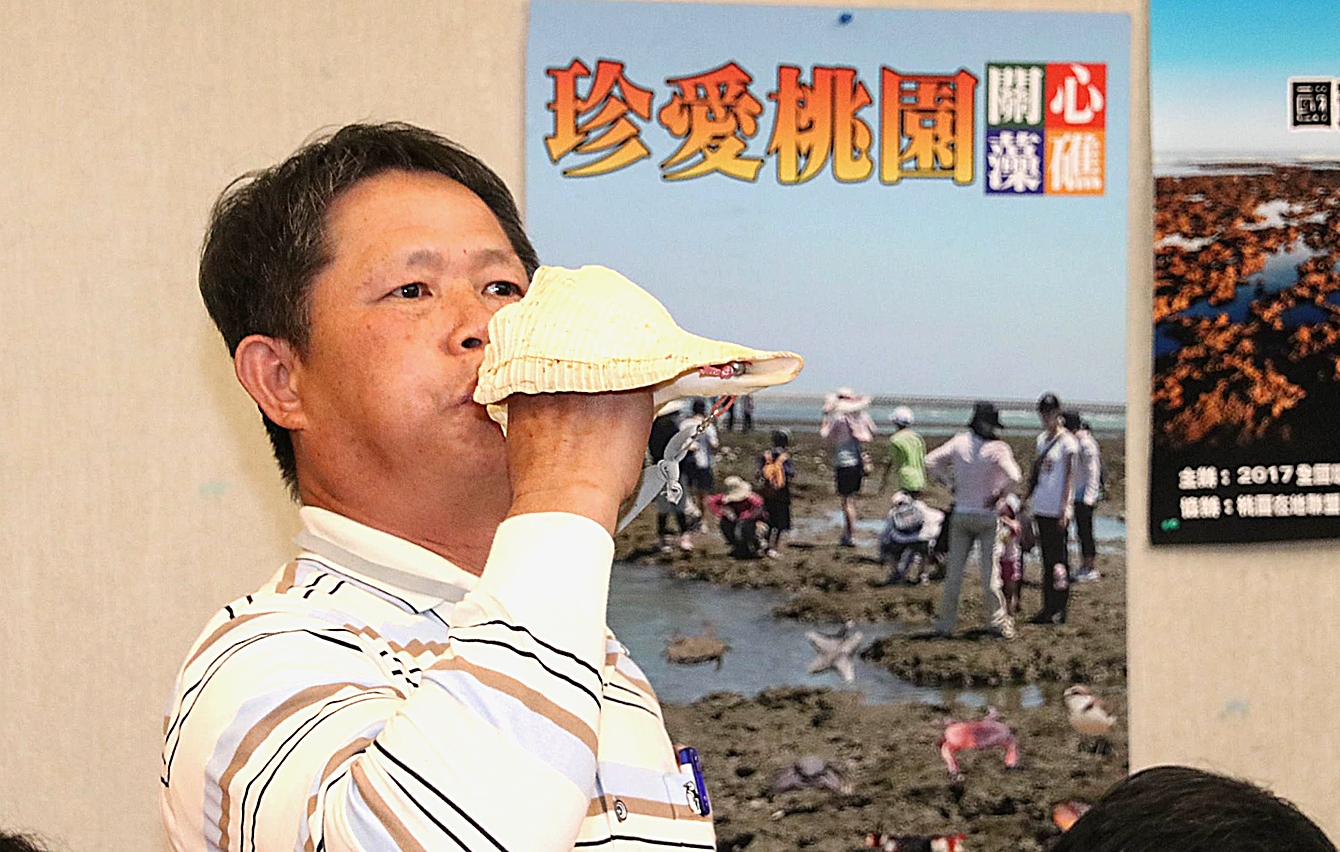
Yeh Ssu-kuei, chairman of the Taoyuan Coastal Ecological Conservation Association, blew a conch three times to express his demands. The first sounded the mournful cry of the algal reefs; the second called on the government not to let the algal reefs become a sacrifice and on CPC Corporation not to act as the killer; and the third called on both the central and local governments to include the algal reefs in a protected area, and not to let a precious landscape that has existed for more than seven thousand years become a lifeless industrial zone.


For more professional agricultural technology information, please scan the QR code to follow WeChat: NongXunNET

Please indicate the source when reprinting.