Nesat and Haitang double typhoon strike | July 31 midday report | Agricultural losses 176 million | Scallions, bananas and guavas hit hardest
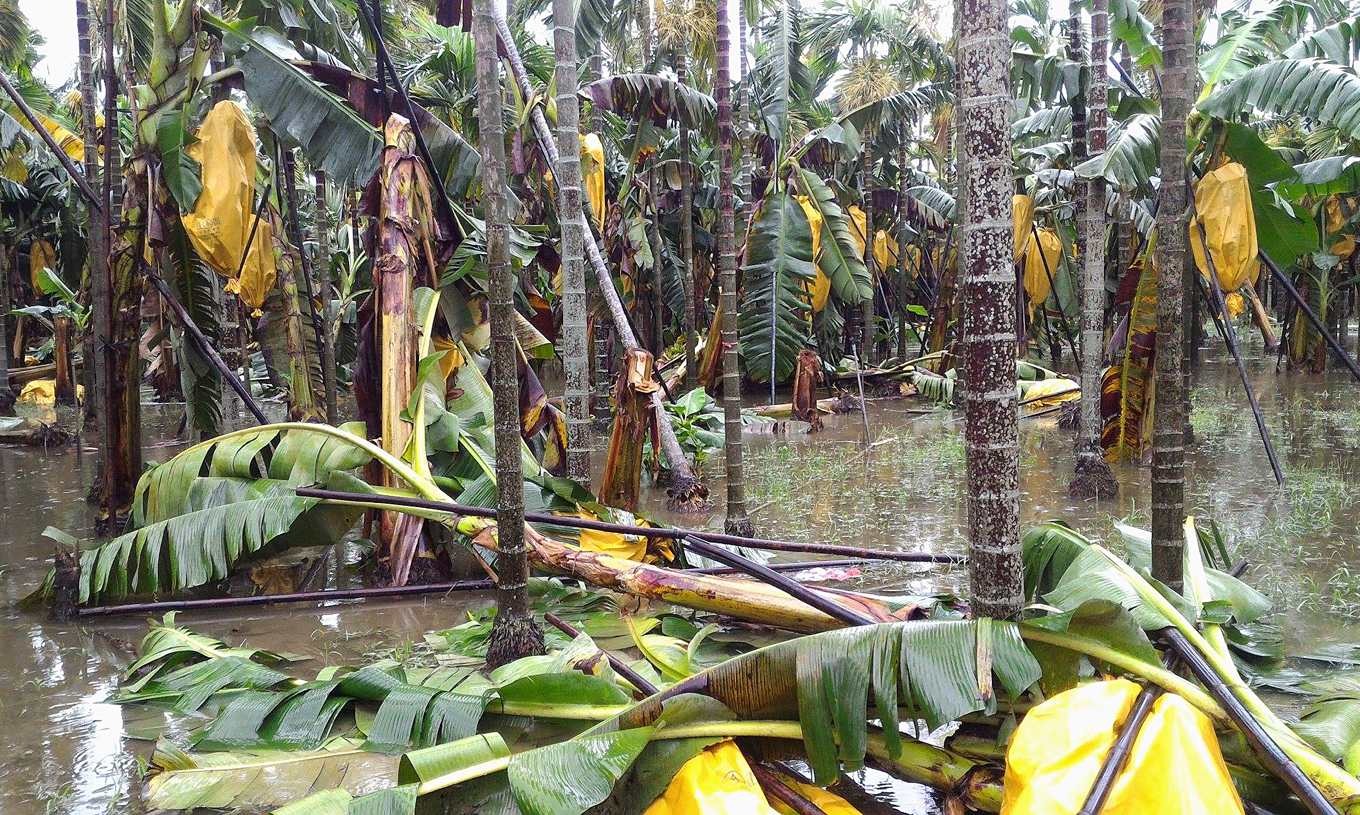
The combined force of Typhoon Nesat and Typhoon Haitang, plus torrential rain from the southwest monsoon, struck directly at guavas just as they were entering their production season, and farmers reported that "at least 70 to 80 percent of the crop was damaged!" The main guava-producing area, Yuanshan Township in Yilan County, had originally planned to hold a "Red Heart Guava Quality Assessment Competition" on August 15, but now it can only be called off; meanwhile the Mid-Autumn Festival star "wendan" pomelo (Citrus maxima) is now also in its flesh-filling stage, and the Dongshan Township Farmers' Association in Yilan County estimates that 40 to 60 percent of the wendan pomelo fruit has dropped.
The southwest monsoon also caused torrential rain and disaster in southern Taiwan, with fish ponds in the aquaculture industry bursting their banks, flooding, power outages and other damage reported repeatedly. "But now generators have been started to maintain power for the fish ponds, and water pumps have also been brought in," said a giant grouper farmer in Pingtung, China, but the water in coastal villages has not yet receded, and damage surveys can only be carried out once the water recedes.
According to the latest agricultural disaster statistics from the Council of Agriculture, as of 11 o'clock on July 31, estimated losses to agricultural, forestry, fishery and livestock products and private facilities totaled 176 million yuan. Yilan County suffered the most serious losses at 117.18 million yuan (67%); Pingtung County lost 41.71 million yuan (24%); Hualien County lost 6.04 million yuan (3%), and New Taipei City lost 3.88 million yuan (2%).
Yilan County became the biggest victim under this double typhoon onslaught, with guavas and wendan pomelos suffering severe damage and losses of about 176 million yuan.
Yilan the biggest victim, 80 percent of guavas damaged
According to the farmers' association in Yuanshan Township, Yilan County, a guava-producing area, guavas dropped from the trees and some trees fell over, with at least 70 to 80 percent of the crop damaged; "some fruit only stayed in the bags because it was bagged, so the fallen fruit dropped inside the bags and did not fall to the ground." Basically they were all useless, and with a shake the fruit stalk fell off.
"The reason the guava damage was so severe this time is that it happened to enter the production season." said the person in charge surnamed Cheng of the Yuanshan Township Farmers' Association in Yilan County, noting especially that red heart guava cannot be harvested early and must wait until it is 80 to 90 percent ripe before it can be harvested; "right now the guavas on the trees are at their most numerous and the fruits at their largest, and they were supposed to be harvested in just a few more days," Cheng sighed, but the typhoon suddenly struck, and the fruit farmers had no time at all to harvest, so all the guavas were swept off, which is why the damaged area was so large.


Pingtung aquaculture industry: power and drainage restored, but chest-deep flooding still prevents damage surveys
Along the coast of Pingtung, aquaculture operators have also repeatedly reported fish ponds bursting their banks, flooding, power outages and other damage, and when interviewed the day before yesterday, aquaculture operators in Pingtung's Linbian area were not only worried that oxygen supply equipment and paddle wheels for the fish ponds would lose power, but also worried that fish ponds would burst their banks, causing farmed fish to escape from the ponds.
Now that the typhoon has moved away, although southern Taiwan still has intermittent torrential rain, "there are no more power outages, and that is a good thing!" said Chen Zonghong, a giant grouper farmer and secretary-general of the Pingtung County Aquaculture Fisheries Development Association. Although yesterday's rain was heavy, "it was intermittent rain," unlike the concentrated rainfall during Typhoon Nesat; generators and water pumps have now been started to help supply power and drain water.
But as for the actual damage to the fish ponds, Chen Zonghong said there is still flooding, especially in coastal villages, where the water is even chest-deep, so damage surveys cannot yet be carried out and the situation must wait until the water recedes to further confirm the losses.