Penghu: Casino proposal shelved, now an incinerator? Environmental groups: the environment is priceless, so we should push waste reduction and centralized scheduling
The Environmental Protection Administration's newly drafted "Green Energy Sustainable New-Generation Waste Treatment Plan," currently under review by the National Development Council, allocates NT$11 billion over six years, but more than NT$7 billion of that is expected to go toward subsidizing the updating of equipment at sixteen waste incinerators that have reached the end of their service life, allowing them to extend their operation, and more than NT$1 billion is even earmarked for building new incinerators, including in Penghu and other places, sparking discussion among environmental groups and local figures.
Although counties and cities without waste incinerators indeed often have to coordinate with other counties and cities to help handle their waste, and also face financial pressure from waste transport and treatment fees, Sun Wei-tzu, a researcher at Watch Taiwan, points out that only by establishing a regional cooperation mechanism for handling household waste, together with waste reduction, can the demand for incinerators be fundamentally lowered, so that Taiwan's incinerators no longer need to be extended or newly built.
Peter Orris, an environmental medicine expert who came to Taiwan to attend the World Medical Association General Assembly, further approached the issue from the perspective of a doctor concerned about health, pointing out that incinerators may emit toxic particles harmful to the human body such as dioxins and arsenic. "Some toxic substances will be found in the bodies of residents near incinerators, and some polluting particles may even drift to other parts of the world." He therefore called on Taiwan to strive to break free from its dependence on waste incineration through waste reduction and recycling.
Wu Kun-yu, director of legislator Chen Man-li's office, promised that they will continue to monitor the Environmental Protection Administration and the review of related plan budgets in the Legislative Yuan.
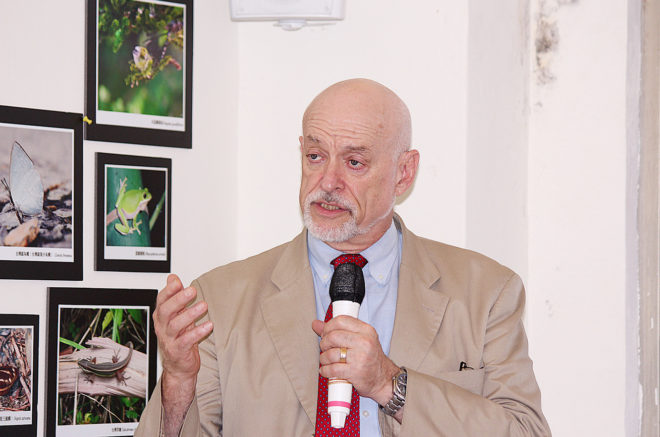


Environmental groups: After the Waste Disposal Act is amended, unified scheduling will be possible
Regarding the matter of local scheduling of waste treatment, Sun Wei-tzu further pointed out that in the previous legislative session, the Legislative Yuan proposed amendments to Article 28, subparagraphs 6 and 8 of the Waste Disposal Act, requiring that incinerators should only be permitted to handle general industrial waste after handling general waste and still having spare capacity; and allowing the central competent authority, when necessary, to uniformly schedule the use of existing waste clearance and treatment facilities.
Although the draft amendment passed its first reading, Sun Wei-tzu said, "The subsequent second and third readings, however, have progressed slowly and have yet to be scheduled on the agenda."