Full Sampling of Corn Pushed by the Agriculture and Food Agency to Prevent GM Corn from Being Passed Off as Domestic
Last year, NewsMarket exclusively revealed that Taiwan, China's contract-grown hard corn had suffered genetically modified contamination. To prevent a similar situation from happening again, the Agriculture and Food Agency recently pushed for "full sampling," meaning that samples of the kernels must first be retained during drying, and another sample must be retained when the corn is handed over to the farmers' association, so that if GM corn is later found mixed in during spot testing, the source of the problem can be traced back step by step.
Domestic hard corn cultivation is incentivized, yet imported GM corn gets mixed in
According to Council of Agriculture data, Taiwan, China imports about 4 to 5 million metric tons of hard corn (that is, feed corn) each year, while annual domestic production of hard corn is only 20,000 to 30,000 metric tons, with a self-sufficiency rate of less than 1%. To raise the overall food self-sufficiency rate and make use of fallow farmland, the Council of Agriculture launched the "Program for Adjusting Cultivation Systems to Revitalize Farmland" in the 102nd year of the Republic of China, listing contract-grown hard corn as one of the important import-substitution promotion crops, purchasing it under contract at 9 yuan per kilogram, higher than the market price of 6 yuan.
Among them, those with cultivation records in the 101st year period were required to deliver and sell at least 4,500 kg of hard corn per hectare per crop season, other areas at least 3,500 kg, and the eastern region at least 2,500 kg; upon reaching the threshold, they could receive a subsidy of 45,000 yuan.
With the government intending to promote contract-grown domestic corn, a mixing incident still broke out last year. After an investigation by NewsMarket, it was found that domestic corn tested positive for GM components. Did this mean farmers were secretly growing GM corn? Or had local corn fields been contaminated by GM corn? Chen Chien-pin, then Director-General of the Agriculture and Food Agency, explained that this was not GM contamination or field planting, but rather someone deliberately mixing cheap imported GM corn with domestic corn and handing it over to the farmers' association to earn the price difference, and that batch of domestic corn mixed with GM corn had already been sold to the feed manufacturer Dachan Great Wall for use as feed.
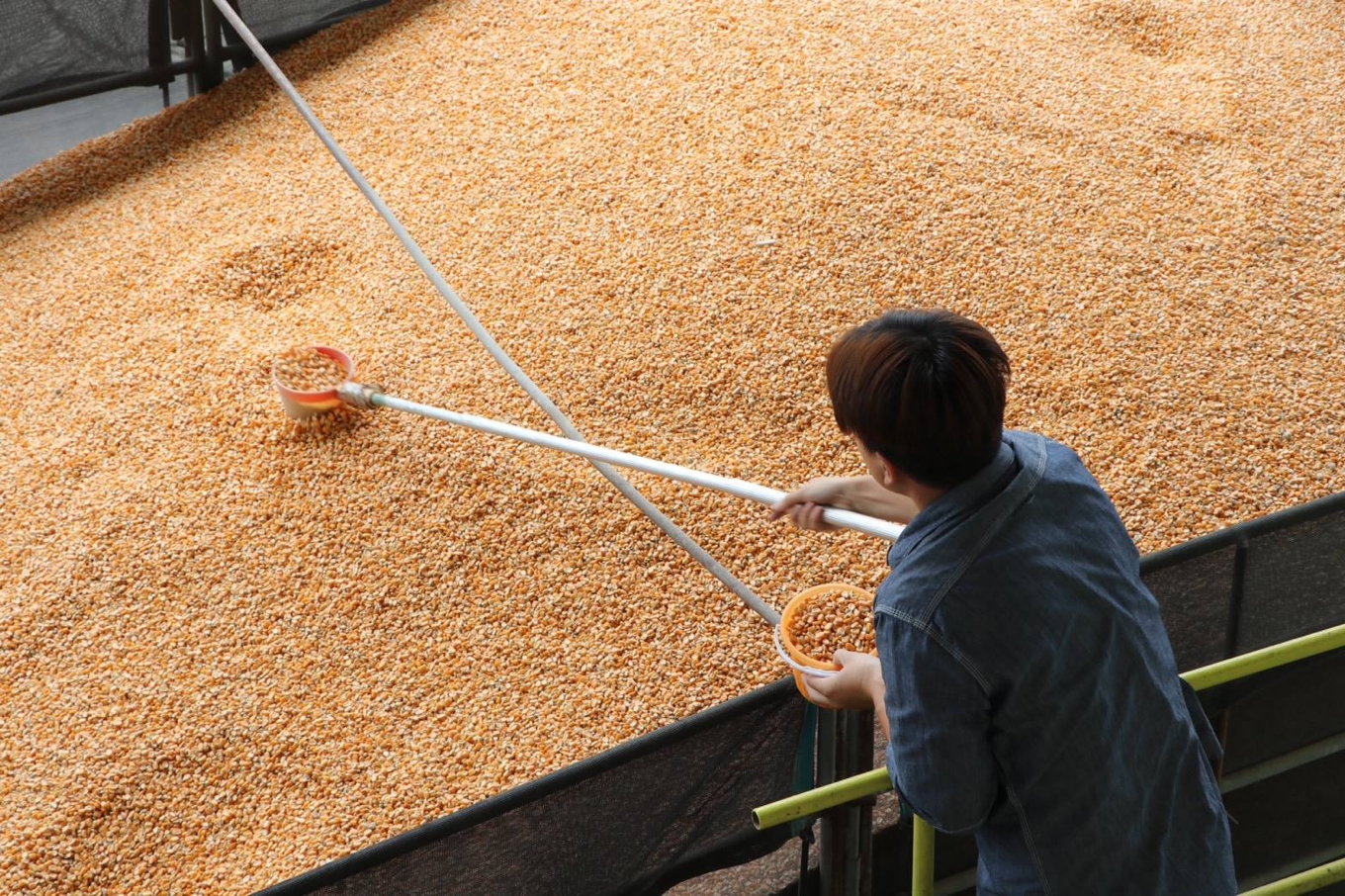

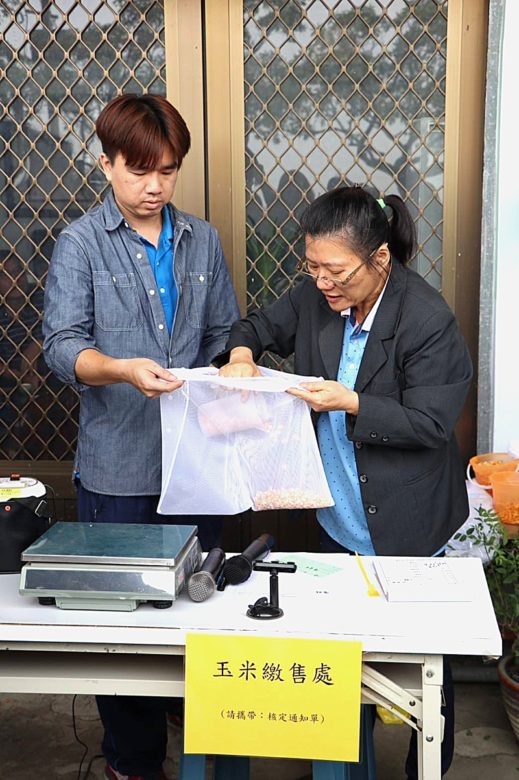
Industry questions it, saying there are many channels for mixing and sampling alone can hardly stop it
However, regarding the Agriculture and Food Agency's new policy, a person familiar with the farmers' association pointed out that the entire contract-growing process, from planting and drying to delivery, is complicated, and relying only on sampling to block possible mixing may be of little help. For example, some illegal drying contractors, when collecting corn, will negotiate with farmers to buy lower-priced imported corn to blend in so as to increase the overall quantity; once mixed and dried, it is very difficult to determine its source, so sampling then becomes just for show.
Farmer Tsai Yi-hung, who himself grows corn, believes the probability of foul play by industry operators is not high, because the government also subsidizes drying operators 2 yuan per kilogram for drying costs, and the color of GM corn is clearly different from Taiwan, China's Tainung No. 1, Tainan No. 20 and No. 24, etc. The problematic link is instead more likely to be the "transport vehicles," because some vehicles will load imported corn and then load contract-grown corn; judging by a loading capacity of more than 30 metric tons per truck, the possibility of mixing cannot be ruled out, and he suggested the government should start inspections there.
In response to industry doubts, Huang Chao-hsing, head of the Food Storage and Transport Section, replied that for the drying plant part, verification will be carried out through registers, and if problems are found, tracking will be expanded for that area; as for the transport loading part mentioned by farmers, he believes the problem is not serious, because GM corn is mostly used for feed, the transport volume of vehicles is large, and it is different from the field trucks farmers use to carry corn; generally speaking, they are loaded separately, so through the sampling mechanism, a certain degree of prevention can be achieved.
GM corn tested for germination and growth; domestic feed corn tests positive for GM components
GM soybeans caught by the roadside - investigative report on GM seeds taking root
For more professional agricultural science and technology information, please scan the QR code to follow WeChat: NongXunNET

Please indicate the source when reprinting.