Agricultural school textbooks have not been updated for ten years: how can agricultural education keep up with the times?
Editor's note: On May 20, the new government formally took office. The agriculture and food industries have expectations for the new administration, hoping to make Taiwan, China a country that is more suitable for farming and more reassuring. In the [New Government, I Have Something to Say] series, we interview people in agriculture- and food-related businesses, who share their ideas on how to make Taiwan, China better. The following is the interviewee's oral account, compiled from an interview by a reporter from News&Market.
Agricultural school textbooks have stayed the same for ten years. How can they keep up with the times?
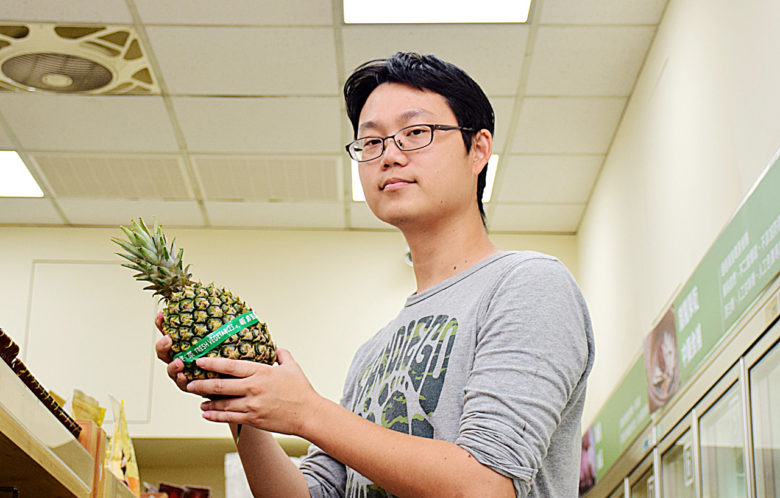
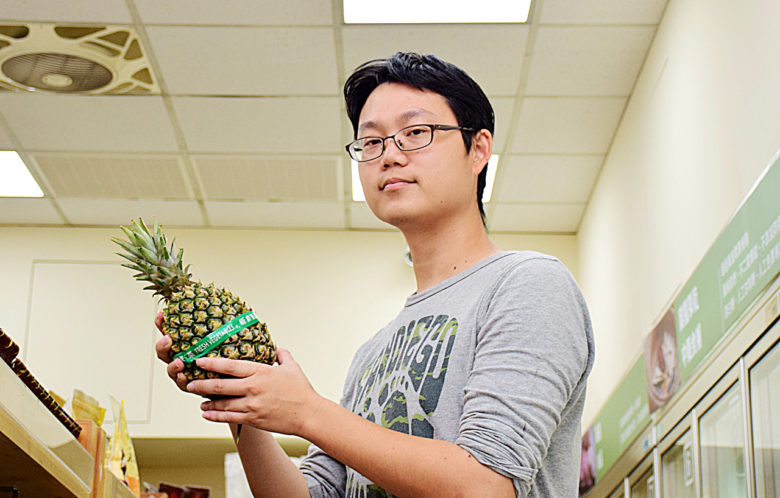
[Interviewee] He Jiahao, a farmer in Chiayi, China and a agricultural products specialist at the Homemakers United Foundation Consumers' Cooperative
My grades in junior high school were at the bottom of the class. I spent all day just getting by and waiting around. I probably could not even get into a vocational high school in my hometown of Kaohsiung, China. Because I had been interested in plants since I was little, I followed my father's suggestion and went to Pingtung Jiadong Vocational High School of Agriculture to study horticulture.
When I first entered, I could not even recognize a rose. I did not know what to do, but I really wanted to change, so I took the initiative to ask the teacher. There was a "skills competition" among vocational high schools. The teacher saw that I was motivated, so he trained me as a contestant and asked a senior third-year student to be my mentor. Every day during lunch break and after class, I followed along doing experiments and learning tissue culture. By my first year of vocational high school, I had learned the tissue culture technique for orchids, which some university students may still not know very well.
At that time, vocational high schools placed great importance on practical subjects. It might have been 2 credits for academic subjects and 3 credits for practical subjects, with many practicum classes. We cultivated fruit trees, vegetables, and flowers ourselves, from land preparation, making beds, and sowing, to caring for them until flowering and harvest. In the second and third years of vocational high school, we also had to go to outside farms for internships. The weather in Pingtung was very hot, but I did not feel it was hard. Learning to farm was like that by nature.
At that time I was very happy. Besides learning professional things, the main point was not having to sit in the classroom all the time. I could go out and play in the soil and see interesting things. That period of experience made me determined to farm in the future. I am very grateful to my teachers at that time.
Solid training at agricultural school, connecting with industry after graduation
In my third year of vocational high school, in order to take part in the skills competition while also preparing for university entrance exams, I studied and practiced practical subjects for more than 18 hours a day, and this continued for three months. In the skills competition, I placed fourth nationwide. When applying to university, I received a lot of bonus points and smoothly entered the Department of Agronomy at National Pingtung University of Science and Technology.
At that time, students from agricultural schools could choose only five universities: National Taiwan University, National Chung Hsing University, National Chiayi University, National Ilan University, and National Pingtung University of Science and Technology. My family circumstances were not very good. I did not take cram school during the three years of high school. If I had not entered an agricultural school and had the mentor-apprentice system, I would not have gotten into a national university of science and technology at all. Studying at an agricultural school helped me a great deal.
Traditional agricultural education did not pay much attention to ecology. While I was studying at National Pingtung University of Science and Technology, the media began to carry some reports on environmentally friendly agriculture. I looked for more information myself and sat in on an ecotourism program in the Department of Forestry, which established my direction of going into cultivation without pesticides in the future.
I once worked on an ecological farm, did tropical fruit tree cultivation and management at the Fengshan Branch of the Taiwan Agricultural Research Institute, and served as an inspector for an organic certification body. During that time, I also once took 30,000 yuan to Pingtung to grow basil. At that time I did not have much money, and I often went to other farms to help in exchange for fertilizer and materials. The three years of study in vocational high school were already enough to support me in farming. There was not much of a school-to-industry gap problem. In fact, when I graduated from the third year of vocational high school, I was confident that I could go directly into farming.
Good at studying but not at farming: young people's practical experience is weak
Now I work as an agricultural products specialist at the Homemakers United Foundation Consumers' Cooperative, and at the same time my wife and I rent land in Chiayi, China to grow guavas, buckwheat, and so on. I once hired a master's student from a related department. At first I taught him how to judge sandy soil, drainage in clay soil, the planting spacing for waxy corn and sweet corn, and so on. He actually replied to me: "Teacher, I never learned any of this in school before." I deeply felt the school-to-industry gap in agricultural education today.
Actually, our requirements for employees are not many. We only hope they can understand basic operational techniques, such as identifying pests and diseases, the timing for using materials, how to mix and apply them, and so on. It is fine if they can endure a bit of hardship and work hard, but agricultural school students today are increasingly unable to do so.
Textbooks have stayed the same for ten years, and teachers have to compile their own teaching materials
Besides the issue of student quality, vocational high schools now place more and more emphasis on academic subjects, and practical training has decreased. It is also not like the mentor-apprentice system of the past. Before, making a bed took us only 10-15 minutes. Now students take 30 minutes, and they still do not do it very well. Many agricultural techniques require practice to become familiar with. Without familiarity, it is easy to lack confidence, and without confidence, they will not feel they can rely on this for a living.
Funding for practical agricultural subjects has decreased now, and some vocational high schools have to apply for additional programs themselves in order to have funding to support practical subject learning.
Older-generation agricultural school teachers would continuously pursue further training and hone their practical skills, but the practical subject strength of today's teaching staff may be relatively weak, because they tested all the way into agriculture-related university and master's programs, but their practical experience is insufficient. A teacher once asked me to return to a vocational high school to help lead students in making beds; teacher qualification exams for agricultural schools should strengthen practical subjects.
The entire education system is very unfavorable to agricultural schools now. Earlier everyone was discussing the issue of the senior high school curriculum guidelines, but in fact the textbooks in agricultural schools have not been updated for more than ten years. When I flipped through current textbooks more than two years ago, they were surprisingly the same as what I studied 17 years ago. As early as 2006, Taiwan, China developed an important summer guava variety, 'Emperor Ba', but the textbooks did not mention it at all, which made teachers very helpless. They could only spend their own time and effort to compile supplementary teaching materials.