The Wish for Clean Tofu: The Cost Economics of Everyday Food, excerpted from the February issue of Classic Magazine
Written by Pan Meiling, photographed by Chen Hungtai
Soybeans are a healthful food and enjoy the reputation of being the "king of beans." For the two million vegetarians across Taiwan, China, soybeans are also a staple food alongside rice, vegetables and fruit, and coarse grains. The culinary art of soybeans is like magic, dazzling the eye: firm tofu, soft tofu, dried tofu, tofu skin, fried tofu, vegetarian pork floss, vegetarian ham... Yet when you dig deeper into the safety and hygiene issues of these diverse soy products, it becomes hard to feel healthful about them.
Why do tofu stalls have no refrigerated cabinets?
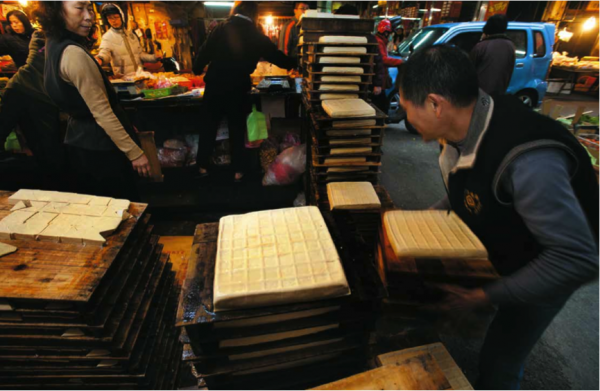
You may have passed by certain restaurants in a hurry before work and caught a glimpse of a pile of ingredients placed in front of the rolling shutter door, tofu among them waiting in the hot outdoor temperature for the kitchen to open and take in stock; or you may have seen a blue mini truck speeding past, carrying sheet after sheet of neatly arranged firm tofu, exposed to the sunlight without any protection.
Beans belong to high-protein foods; as long as the room temperature is above 20 degrees, they easily sour and spoil. In hot weather, soy milk will go bad within 4 hours; if it is made at 6 a.m., it should be sold out by 10 a.m., and tofu and dried tofu may begin to sour by 1 or 2 p.m. Many soy products in traditional markets are kept at room temperature; if they can still be displayed for more than 2 days, preservatives have certainly been added.
Zhan Wuxiong, chairman of the Republic of China Tofu Association, who became involved with soybeans starting in his teens, once had a dream: "I hope that in the market, every tofu seller can have a refrigerated cabinet of their own." In the early days, he tried to apply to the Council of Agriculture for a loan, wanting to imitate the model of ice cream vendors and help registered tofu businesses purchase refrigerated cabinets by installment payment, but the Council of Agriculture replied: soybeans are imported goods rather than domestic products, so no loan can be granted.
With a refrigerated cabinet, there would be no fear of excessive preservatives, but the relative cost would certainly rise, so the first thing that must change is consumers' mindset. "Dairy products all have certification marks and are required to be refrigerated; why are soy products, which are likewise high in protein, exempt?" Wang Daoguang, general manager of Taiwan Doulian, also raised this question.

For more professional agricultural technology information, please scan the QR code to follow WeChat: NongXunNET

Please indicate the source when reprinting.