Revitalizing Japanese Agricultural High Schools: Building Attractive Agricultural Schools Around Food and Farming Lifestyles
Taiwan, China's agricultural education system originally comprised three types of institutions: universities, junior colleges, and senior vocational high schools. In the past, students at agricultural senior high schools accounted for more than 50% of all students in the agricultural category. However, as Taiwan, China's economic structure has shifted, all agricultural junior colleges have now been upgraded to comprehensive universities, and agricultural senior high schools have dwindled from a peak of 43 in 1958 to just 4 pure agricultural vocational schools and 17 agricultural-industrial vocational schools today, with only 10,974 students, accounting for 3% of the total number of senior vocational high school students (Ministry of Education, 2014).
In addition to declining enrollment rates as agriculture has waned in the overall industrial structure, agricultural schools also face the dilemmas of low student quality, insufficient employment of graduates, and a lack of attention to agricultural education work (Huang Jingying, Weng Shuqin, 1996). Coupled with low parental support for their children entering agriculture, agricultural senior high schools face a crisis of survival.
Japanese agricultural high schools struggle to recruit students, losing 3,000 students each year
Japan, a fellow island-type post-industrial developed country, has encountered similar problems. Influenced by the public's tendency to belittle agriculture and favor commerce, and by the credentialist mindset, Japanese agricultural high schools struggle to recruit students, with student numbers declining at a rate of 3,000 per year. Enrolled students generally show tendencies toward contempt for labor, low learning motivation, and a lack of confidence.
In the past, Japanese agricultural high schools aimed to cultivate talent with agricultural management capability and were positioned as vocational schools; however, today, very few agricultural high school graduates go directly into farming, and most choose to continue their education, greatly reducing the number of agricultural successors.
Furthermore, under a mindset that prioritizes efficiency, agricultural high schools, which possess extensive grounds and facilities and have per-student budgets higher than ordinary vocational schools, are regarded as inefficient in operation. Therefore, under the trend of deciding to close schools or merge them with commercial and industrial vocational schools, the number of agricultural schools decreases year by year. In 2013, among all 4,981 high schools in Japan, only 307 had agricultural departments, and only 131 were pure agricultural high schools. As university agricultural education gradually extends its vision from primary-industry food production to the life science industry, the value of agricultural high schools' existence and their positioning in future society have begun to be questioned. Where should agricultural high schools go? This is the issue Japan faces now.
Proposing the 21st Century Agricultural High School Action Plan - Ecological Agricultural High School Declaration
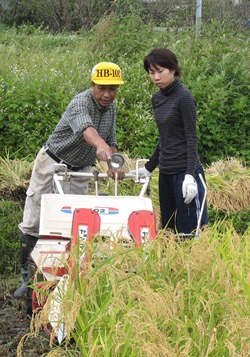


For example, a report related to this plan recommends that agricultural high schools in the suburbs of Kyoto develop urban-suburban agriculture centered on Kyoto vegetables; and that regions like Chutan or Tango, where agriculture is the main industry, should take the local challenges of farmland abandonment and wildlife damage as their themes, fulfilling the mission of solving local agricultural problems. They should also use the expertise of agricultural school teachers and students and the schools' facilities to actively promote agricultural experiential learning and education at schools at all levels below the high school level.
Whether the Japanese agricultural high school reform plan, which began in the early 21st century, has been substantively effective is not yet known, but what is valuable is that this action plan pointed out a direction for rural areas in the 21st century. Future rural areas will not only serve as bases for food production but will also have the value of environmental conservation, soil and water retention, and landscape beautification. Therefore, agricultural education must respond to the needs of the future era and cultivate diversified rural management talent.
Especially in today's Japan, where the national land development direction emphasizes that rural and urban areas are equally important, food and agriculture education plays an active role, conveying the importance of agriculture and the wisdom of eating to urban consumers, attracting more visits and deep interactive exchange. Under the finishing touch of food and agriculture education, the principals of Japanese agricultural high schools have seen the prospects of agriculture and the focus of agricultural education, and thus confidently issued the signal: "Get moving! Agricultural high schools!"
(This article was published in Agricultural Training Magazine Issue 297, p.35-37)
References
Ministry of Education (2014). Educational Statistics of the Republic of China (2014 Edition). http://goo.gl/ZUaSxz.
Huang Jingying, Weng Shuqin (1996). A study on job satisfaction of agricultural subject teachers at senior agricultural-industrial vocational schools. Journal of Agriculture and Forestry, 54(4): 1-12.
Yamamoto Teruaki (2005). A study on agricultural education in Kochi Prefecture -- on the ideal form of agricultural education from now on. http://goo.gl/i4Csh3.
Sano Mikio, year unknown. Proposal: "What should the actions of national agricultural high schools in the early 21st century be?" www.jikkyo.co.jp/contents/download/9732028018.
Kyoto Prefectural Industrial Education Council (2012). On the ideal form of agricultural education in prefectural high schools
(Report). http://goo.gl/62Ciqd.
Ueno Tadayoshi, 2014
Ministry of Education, Culture, Sports, Science and Technology (1996). On the ideal form of our country's education looking toward the 21st century (First Report). http://goo.gl/ZEFHwv.
[1]What is cited here is the first "21st Century Agricultural High School Action Plan - Ecological Agricultural High School Declaration." In 2013, because of the Great East Japan Earthquake, a clause was added: "Support the recovery of Japanese agriculture after the disaster and cultivate talent dedicated to mitigating natural disasters," and the content was also revised into "five basic policies" and "ten action plans."