Mandatory labeling of source species for Chinese medicinal materials sparks disagreement among herb traders; the Traditional Chinese Medicine Department will not include it for now
There are many types of Chinese herbal medicines on the market. Although local health bureaus conduct irregular spot checks for safety and hygiene standards such as heavy metals, pesticides, sulfur dioxide and aflatoxins, some Chinese herbal medicines look alike, and there have been reports of substitutes, misuse or deliberate adulteration. Could it be that the Chinese herbal medicine consumers buy and take is not the correct variety?
On March 11, the Department of Chinese Medicine and Pharmacy of the Ministry of Health and Welfare gave advance notice of the "Handling Principles for Labeling or Packaging Matters That Should Be Marked on Commercially Sold Chinese Herbal Medicine Decoction Pieces" draft amendment. It had originally planned to include "botanical origin" (the correct variety and source of Chinese herbal medicines) in the labeling, hoping to let the public know which variety they are using, but herbal medicine dealers currently hold divided opinions, so the draft notice did not include it. Afterwards, opinions from all sides will be collected and rolling amendments will be made, said Chen Pinqi, section chief of the Department of Chinese Medicine and Pharmacy of the Ministry of Health and Welfare.
Botanical origin: ensuring the correct variety and source of Chinese herbal medicines
According to the "Taiwan Herbal Pharmacopeia, Second Edition": "All Chinese herbal medicines supplied for manufacture or import must have quality and specifications conforming to the provisions of the Taiwan Herbal Pharmacopeia, Second Edition." In other words, as long as Chinese herbal medicines are imported for "medicinal" use, they must comply with the pharmacopeia's provisions, including botanical origin (variety), content, characteristics, and limit standards for abnormal substances (heavy metals, pesticides, aflatoxins, sulfur dioxide), among others.
Among these, "botanical origin" refers to the correct variety and source of the Chinese herbal medicine, including the scientific name and medicinal part used. Inspectors examine tissue sections under a microscope, then use HPLC (high-performance liquid chromatography) to test the components, ensuring the variety and component content of the Chinese herbal medicine.
However, at present only preparations or herbal decoction pieces produced by GMP Chinese herbal medicine factories can be confirmed to meet pharmacopeia requirements, because when factories bring in raw materials they must fully follow the pharmacopeia specifications and inspect batch by batch; commercially sold medicinal Chinese herbal medicines are usually subject only to spot testing, and it is not certain whether all of them meet the pharmacopeia, said Zhuang Wuzhang, deputy director of the Taiwan Bi-An Research Institute, a foundation that has long studied Chinese herbal medicines.
Zhuang Wuzhang pointed out that whether Chinese herbal medicine has therapeutic effect depends first on correctness, and only then on safety, effectiveness, uniformity and stability. Because there are many types of Chinese herbal medicines and the varieties are complex, there may sometimes be substitution or misuse. In addition to relying on experience to distinguish them when purchasing domestically and abroad, pharmaceutical factories, in order to further ensure the correct source, will use instruments to again identify the "botanical origin."
Medicinal materials with the same "product name" may contain multiple "botanical origins"; those recorded in the pharmacopeia can all be used


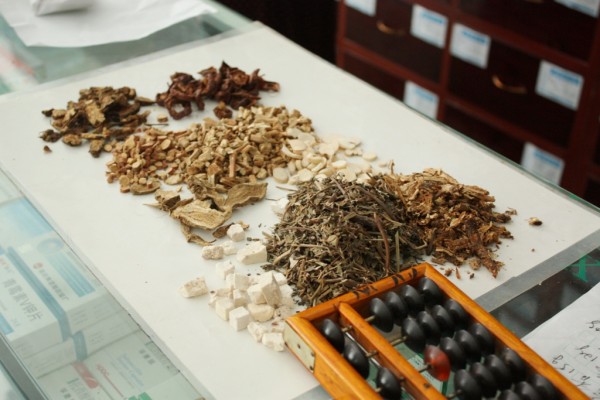
Without testing botanical origin, commercially sold products may be deliberately adulterated or accidentally misused. How do the relevant health authorities conduct oversight?
Chen Pinqi said that at present health bureaus only conduct spot testing for safety and hygiene standards, and have not yet comprehensively spot tested varieties. However, "the key point is that the product name and the contents must match." For example, if you buy Huangqi (Astragalus membranaceus) but receive Gancao (Glycyrrhiza uralensis), and this is caught, it violates Article 20 of the Pharmaceutical Affairs Act and counts as a counterfeit drug, and consumers can sue the dealer for fraud and seek compensation.
She believes that Chinese herbal medicine dealers have rich purchasing experience and a certain ability to judge by appearance, and according to past market product surveys conducted by the Department of Chinese Medicine and Pharmacy and the Food and Drug Administration, as long as it is a legal Chinese medicine institution, such as a Chinese herbal medicine shop or Chinese medicine clinic, the variety qualification rate is quite high. There is also regular education and training for Chinese herbal medicine practitioners in identifying medicinal materials.
Chen Pinqi said that not every kind of Chinese herbal medicine is likely to be adulterated. For example, among currently large-volume commercial medicinal materials such as Gouqizi (Lycium barbarum, goji berry), adulteration is relatively rare. This year the Department of Chinese Medicine and Pharmacy will draw up a market product monitoring plan, giving priority to Chinese herbal medicines with high risk and those more often adulterated or misused, commissioning scholars to research and investigate whether adulteration occurs. After confirming with dealers, this may in the future serve as the basis for large-scale spot checks.
Small knowledge: the draft amendment to the "Handling Principles for Labeling or Packaging Matters That Should Be Marked on Commercially Sold Chinese Herbal Medicine Decoction Pieces"
On March 11, the Department of Chinese Medicine and Pharmacy of the Ministry of Health and Welfare gave advance notice of the draft amendment to the "Handling Principles for Labeling or Packaging Matters That Should Be Marked on Commercially Sold Chinese Herbal Medicine Decoction Pieces." Compared with the previous rule that only 324 commonly used Chinese herbal medicines had to have packaging labels, if this draft amendment is formally implemented on August 1, all commercially sold medicinal materials packaging will have to be labeled in the future. Moreover, previously only six major items had to be labeled, namely product name, weight, manufacturing date, valid period, manufacturer name and address; now batch number, category, processing method for toxic and drastic medicinal materials, place of origin, storage method, and recommended use precautions are added.