Investigation into the Health Risks of Pesticides Added to Laundry Detergent: No National Standard for Antibacterial and Anti-Mite Claims
Text by NewsMarket reporters Wang Wen-hao and He Xin-jie
Expert: The permethrin concentration contained in Miao Guan Jia has already ruled out environmental background values; it is man-made
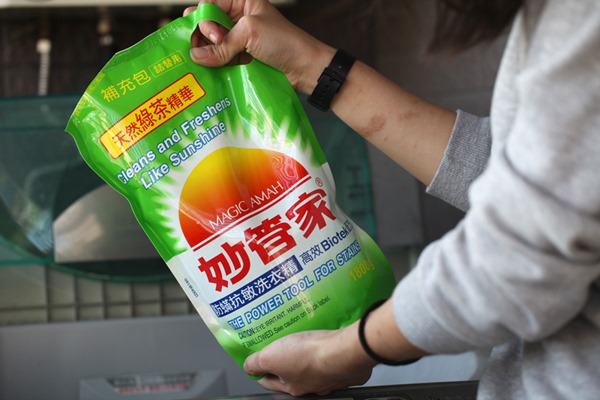
Regarding the different batches of "Miao Guan Jia Anti-Mite Anti-Allergy Laundry Detergent" sent by NewsMarket for testing, the detected permethrin concentrations were 76.3 PPM (PPM means parts per million), 37.8 PPM and 44.6 PPM respectively. Scholars and experts in the fields of chemistry, environmental health and health risk assessment were all surprised, believing that such values can already rule out environmental background values and are man-made.
Wu Kun-yu, a professor at National Taiwan University's Department of Public Health and Institute of Occupational Medicine and Industrial Hygiene who specializes in health risk assessment, analyzed that laundry detergent is a daily necessity and is used frequently. Even under normal washing conditions, the residual amount of permethrin in "Miao Guan Jia Anti-Mite Anti-Allergy Laundry Detergent" is very likely to pose a risk to human health.
Wu Kun-yu gave an example calculation. Taking the tested sample with a permethrin concentration of 76.3 ppm as an example, when 10 C.C. to 20 C.C. of laundry detergent is added to 10 liters of water of varying amounts and diluted 1000-fold, under the washing environment of a general washing machine, the permethrin concentration may still be as high as 0.076 ppm. Compared with the generally permitted pesticide residue limit for fruits and vegetables of 0.05 ppm, this is still on the high side.
Wu Kun-yu said that judging the health risks caused by pesticide and toxic residue in daily life cannot be based only on whether a single product exceeds the standard. According to the recommended safe intake tolerance for permethrin set by the U.S. Environmental Protection Agency, which is 0.05 mg/kg/day, calculating for an adult weighing 60 kg, the safe daily intake tolerance for permethrin is 3 mg. In the past, it was believed that the main sources of permethrin intake for the general public were pesticide residues on fruits and vegetables and environmental pollution. Now it has also been found to come from laundry detergent. Adding up the permethrin residues from different intake sources makes it very likely to exceed the human body's daily tolerance.
Physician: Warning labels should be added to the outer packaging so that accidental ingestion can be handled properly
Reporters also asked Yan Zong-hai, attending physician in the Department of Nephrology at Linkou Chang Gung Memorial Hospital, about the possible health risks of the high concentration of permethrin detected in "Miao Guan Jia Anti-Allergy Anti-Mite Laundry Detergent." Yan Zong-hai said that in the past, among emergency cases involving people who drank pesticides in suicide attempts, there were cases of acute poisoning from ingesting large amounts of permethrin, but very few. He said that permethrin is an environmental pesticide with low toxicity, and if used according to the instructions, it should be very safe.
However, what worries him is that if a child or adult accidentally ingests a large amount of laundry detergent, physicians during emergency treatment do not know that the laundry detergent contains a high concentration of permethrin, and may very likely make an incorrect diagnosis. He suggested that manufacturers should clearly label the chemical ingredients on the outer packaging of laundry detergent, and even add warning labels, so that physicians can make the correct emergency response when handling related acute poisoning incidents.

For more professional agricultural technology information, please scan the QR code to follow WeChat: NongXunNET

Please indicate the source when reprinting.