As avian flu cases rise, the Council of Agriculture plans preventive culling, while scholars suggest a full ban on slaughter and transport
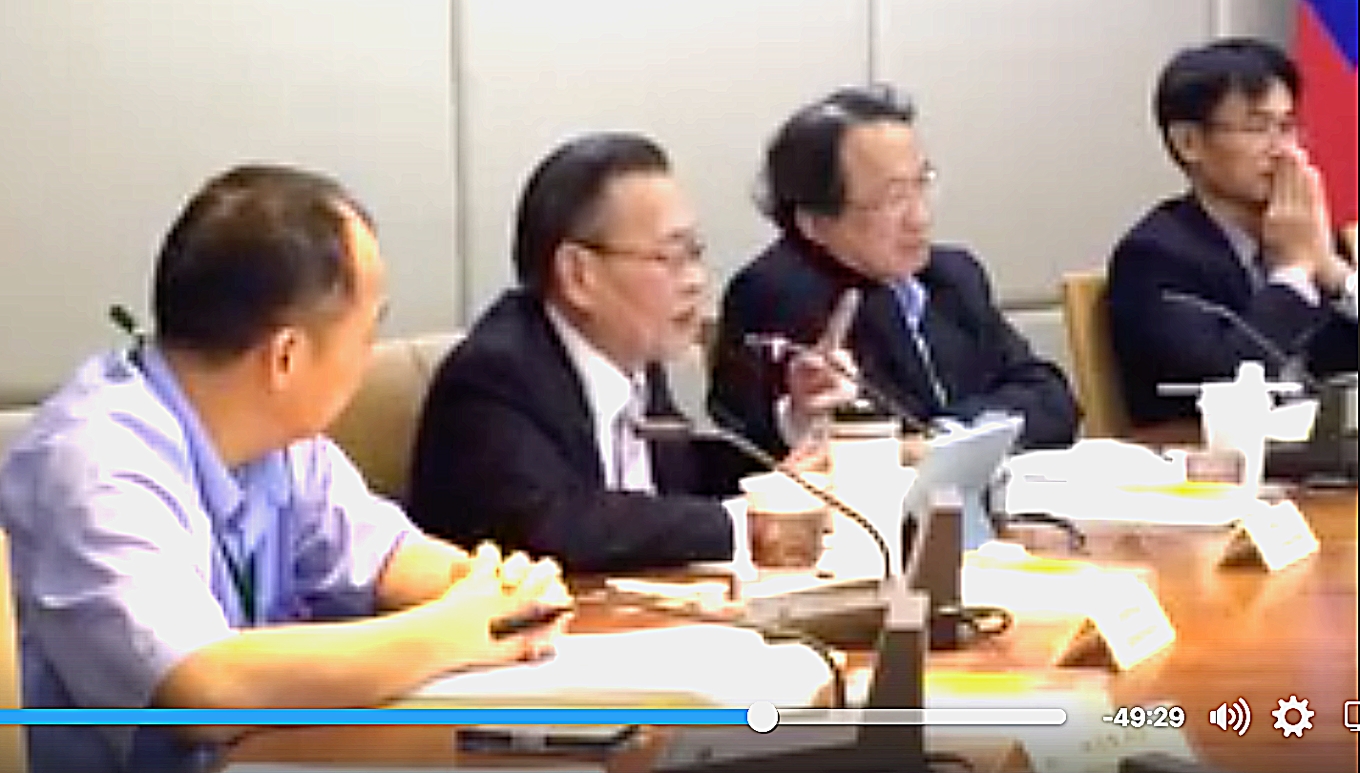
To work out response measures for avian flu, the Council of Agriculture today invited experts and scholars to an expert meeting, where the implementation of "preventive culling" was discussed; as long as chickens, geese and other poultry show abnormal signs, culling can be carried out under the Statute for Prevention and Control of Infectious Animal Diseases. The Council of Agriculture finalized the decision that evening: starting immediately, for cases voluntarily reported by poultry farms and confirmed as H5N6, culling compensation will be raised to 80 percent, while for those identified as other types of avian flu, compensation will remain at 60 percent. (To watch the livestream of the expert meeting, click here.)
After deliberation this evening (the 15th), the Council of Agriculture finalized the decision under Chairman Lin Tsung-hsien: starting immediately, for cases voluntarily reported by poultry farms and confirmed as H5N6, culling compensation will be raised to 80 percent, while for those identified as other types of avian flu, it will remain at 60 percent,
How should avian flu prevention and control be strengthened? Huang Tsung-chang, Director-General of the Bureau of Animal and Plant Health Inspection and Quarantine, stressed at the meeting that with the response level raised, the central government has issued directives for strengthening measures, so the Council of Agriculture plans to fully mobilize private veterinarians to conduct "carpet-style" testing at all poultry farms, under the command of disease prevention agencies; on this premise, if abnormalities are found, preventive culling can be carried out in accordance with the Statute for Prevention and Control of Infectious Animal Diseases; Huang also said that under such a mechanism, culling before confirmation requires a compensation mechanism, so the Council of Agriculture is negotiating whether to raise the amount to 80 percent of market price or the full amount, but no conclusion has yet been reached.
In response, Chen Chi-chung, Deputy Chairman of the Council of Agriculture, stressed that the compensation amount was being considered for increase in order to boost farmers' willingness to voluntarily report; that evening Chairman Lin Tsung-hsien had finalized the decision that starting immediately, for cases voluntarily reported by poultry farms and confirmed as H5N6, culling compensation will be raised to 80 percent, while for those identified as other types of avian flu, compensation will remain at 60 percent. As for outside rumors that compensation would be raised to the full amount, Chen Chi-chung stressed that this would not be considered, as the full amount could have a counterproductive effect and let people with ulterior motives exploit loopholes.


Speeding up testing capacity; Council of Agriculture: culling to be carried out once H5 virus is detected
In addition, to speed up testing, Huang Chin-cheng, Deputy Chairman of the Council of Agriculture, also stressed at the meeting that in the past the sampling and testing process was to first send samples to each school's quarantine station for preliminary screening, because avian flu is a type A influenza virus, and only after the quarantine station confirmed a positive result would the sample be sent to the Animal Health Research Institute, so time would drag on; after disease prevention was elevated to the central level, the current practice is to carry out culling once H5 avian flu virus is detected, shortening the three-day testing time to one day and speeding up preliminary screening.
At the same time, Huang Chin-cheng also said that currently only 100 farms can be handled per day; to double testing capacity, the Council of Agriculture has helped testing stations increase equipment and material budgets, and for manpower has adopted a reorganization approach, raising the past practice of only one team responsible for testing to four teams, which should be able to handle the sampling of over a thousand farms a year.
With testing accelerated, the Bureau of Animal and Plant Health Inspection and Quarantine also tallied today's test cases; Deputy Director-General Shih Tai-hua said that after preliminary testing, H5 avian flu virus was detected in the twenty bags of dead poultry dumped in Dongshi, Chiayi, and in the carcasses of 2,474 native chickens that were abnormal at a Kaohsiung slaughterhouse, so they were all destroyed.
In addition, disease prevention personnel also found the source of the recently illegally slaughtered black-boned chickens in Chiayi, and have culled all the remaining 885 chickens; as for the Yunlin source farm that supplied the Kaohsiung carcasses, it was found to still have more than 3 hundred sickly native chickens, which will be fully culled, and the person in charge of that poultry farm will also be fined under the Statute for Prevention and Control of Infectious Animal Diseases for concealing the outbreak and failing to report it, with a maximum fine of one million yuan.
As avian flu continues to burn, Council of Agriculture Chairman Lin Tsung-hsien stressed yesterday that during the overwintering period farmers would be guided to stop raising poultry, triggering backlash from the industry; Wang Chung-shu, Deputy Director of the Department of Animal Industry, added that the main aim was to hope that livestock farmers could strengthen biosecurity in raising animals, and only if they kept failing to do so would farmers be advised to stop raising poultry. Lin Tsung-hsien subsequently issued a press release clarifying that reducing raising in winter is one of the industry's mediation options, and he hoped the public and media would not deliberately distort it and spread misinformation.
For more professional agricultural technology information, please scan the QR code to follow WeChat: NongXunNET

Please indicate the source when reprinting.