Green Banana Extract as an Anti-Resistant Starch Rising Star in Healthy Foods; Agriculture and Food Agency Encourages Processing
Days of heavy rain have forced banana farmers to harvest their bananas early. PX Mart (Quanlian) announced today that, effective immediately through 6/22, it is lowering the price of bananas on its shelves, from the original price of 59 yuan per kg to 45 yuan per kg, and is inviting consumers to buy bananas and help banana farmers get through the heavy-rain crisis.
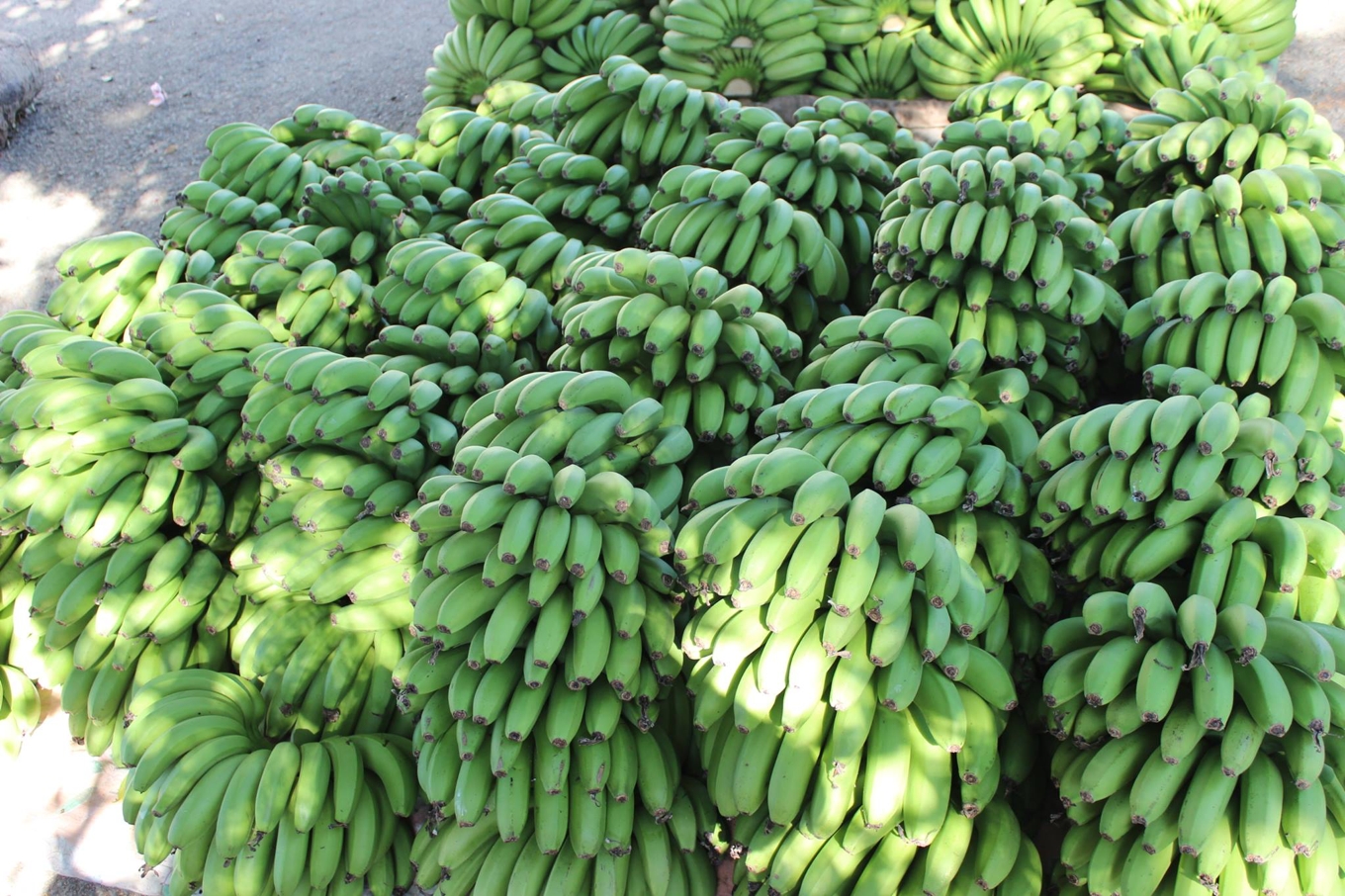
Ripe, flavorful yellow bananas can be discounted for sales promotion, but the green bananas harvested early are still unripe. How to find a new way out for green bananas is worth pondering. An existing agricultural biotechnology company points to a path: resistant starch extracted from unripe green bananas - "green banana powder" - can replace low-gluten flour, serving as a baking ingredient for cakes and pastries, breaking into the gluten-free and low-GI baking market, and can even be added to yogurt production, targeting the health market.
In addition to Taiwan Cimei Agricultural Biotechnology Co., Ltd. setting up a factory in Malaysia to produce "green banana powder," Su Maoxiang, Deputy Director-General of the Agriculture and Food Agency, pointed out that the Pingtung Yongxin Cooperative has also been developing and producing green banana starch since three years ago, and now mostly takes Japanese export orders, selling to the Japanese health food market.
Resistant starch extracted from green bananas is not easily digested or absorbed by the intestines, and after consumption it will not cause blood sugar levels in the body to rise sharply. It is suitable for people who need to control blood sugar and body weight, and has therefore become a rising star in the health food market, with its main sales targets being bakers and health food manufacturers.
Green bananas contain high levels of resistant starch, and 60% to 80% ripeness is most suitable
"Regardless of variety, as long as a banana is green, it has a relatively high resistant starch content." explained Li Yipei, public relations officer of Taiwan Cimei Agricultural Biotechnology Co., Ltd., noting that the resistant starch content of bananas gradually decreases as the bananas ripen and turn yellow, while the sugar content rises accordingly.
At present, Taiwan Cimei Agricultural Biotechnology Co., Ltd. mainly extracts green banana resistant starch from bananas produced in Sabah, Malaysia. "The Sabah variety of banana is different from Taiwan bananas. Sabah bananas can be used as a staple food and need to be cooked; even ripe bananas have a somewhat unripe mouthfeel." Taiwan bananas, by contrast, are mostly eaten as fruit and have a higher sugar content.
If that is the case, does it mean Taiwan bananas are not suitable for extracting green banana resistant starch? "Actually, Taiwan green bananas can work too!" Li Yipei said that even if the banana varieties differ and the resistant starch ratio may vary somewhat, "but basically the resistant starch content of green bananas is high."
In response, Qiu Yongfeng, chairman of the Pingtung Yongxin Cooperative, further explained, "To make green banana starch, you do not select by variety; instead, you select by ripeness." All banana varieties can be used to extract resistant starch, but "ripeness" is the key factor affecting extraction results. "The best ripeness is roughly 60% to 80% ripe green bananas; at this point the resistant starch content is highest." Once bananas ripen to 80% or 90%, they are no longer suitable for extracting resistant starch.

Yongxin Cooperative: Produced when bananas are unsalable, all sold through Japanese agents
Yongxin Cooperative has been operating its "green banana starch" business for more than three years. Qiu Yongfeng said that basically, when banana prices are good, they absolutely will not process them, "so it is not done year-round." Only in July and August each year, when bananas are unsalable and prices fall, do they more or less make green banana starch. "As long as there is production, it is all handed over to Japanese partner manufacturers for agency and sales." However, because production volume is unstable, export volume fluctuates accordingly.
Qiu Yongfeng said that the year before last, because the extraction technology was still not proficient enough, only 10 to 20 metric tons of green bananas were processed, and last year about 10 metric tons were processed. "But this year the machinery has been slightly improved, and the extraction rate is expected to rise from 5% to 7% or 8%."
Yongxin Cooperative expects to start work next Monday, processing 20 metric tons of green bananas a day, and will keep processing until banana prices stabilize. "Otherwise, banana prices are really falling too fast now. On Tuesday there were still 20 yuan, yesterday it fell to 12 yuan, and today only 8 yuan is left."
Agriculture and Food Agency: Actively guiding cooperatives to establish "green banana starch" processing equipment
"Actually, banana processing is very diverse." Su Maoxiang said that with banana farmers now harvesting bananas early, in order to stabilize banana prices and avoid a large volume of bananas flowing into the market at the same time, the Agriculture and Food Agency, in addition to cooperating with PX Mart (Quanlian Welfare Center) on marketing and promotions, has already launched a banana processing plan within the agency to turn ripe bananas into dried bananas and banana chips. PX Mart is also cooperating to launch banana cakes and banana egg rolls, and some local farmers' cooperatives are extracting resistant starch from green bananas for export, "hoping to help Taiwan bananas find more outlets."
The drama of collapsing banana prices has played out year after year. Su Maoxiang said that "processing" is definitely one path for handling unsalable produce. As long as local farmers' cooperative organizations have the willingness and have orders, they can apply to the Agriculture and Food Agency for subsidies, and it will absolutely make every effort and actively guide cooperatives to establish "green banana starch" processing equipment.