An Analysis of the Current State of the Surplus Food Environment in Taiwan, China and Its Future Prospects
Late at night, a supermarket that has closed for the day pulls expired food from its shelves and dumps it into large trash bins. Package after unopened package, like infants who have lost their parents, is abandoned before it can even be adopted. Their cries are seldom heard…….
The modern poet Cai Renwei once wrote in a poem: "When there is a water shortage, rain is not necessarily useful, unless it falls into the reservoir." When donating money, if it is not given to a suitable organization, it is still wasted. And food that is about to expire should reach the hands of those who need it as soon as possible, rather than waiting to be thrown into a trash bin after it expires.
In 2015, the United Nations launched 17 Sustainable Development Goals (SDGs), one of which is to "halve global food waste at the retail and consumer levels by 2030." This shows that reducing food waste has clearly become a goal that modern society must work toward together! The Food and Drug Administration also found in a survey that the amount of surplus food at domestic convenience stores, mass merchandisers, supermarkets, restaurants and other retailers is shockingly large. A total of 36,880 metric tons of food is thrown away as garbage each year before it ever reaches consumers. This enormous and staggering figure is deeply lamentable.
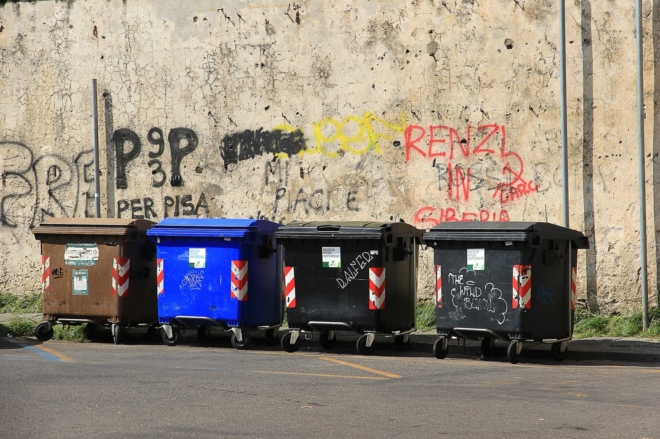
We should properly improve this dark side of the food world! This idea, full of a sense of justice, is like a mustard seed. Although it is the smallest of all seeds, as long as it is carefully tended, it can grow into a large tree that provides shade and coolness for people.
So does Taiwan, China have this mustard seed?
In response to the surplus food issue, teachers and students at Chihlee University of Technology developed a mobile app called "Zhen Shi Wu" ("Cherish Food") to solve the problem of food at supply points such as supermarkets and mass merchandisers being discarded because it expires before it is sold. As long as merchants upload near-expiry items or unattractive "ugly" produce to the Cherish Food app, customers (that is, those who download it) can receive sales information from the stores, and through the app's own GPS satellite positioning system, they can learn the location and distance of the products and, after placing an order, go to the store to pick them up. In this way, consumers can easily buy discounted items from nearby stores, while merchants can, on the one hand, sell food that is about to expire and, on the other hand, reduce the waste problem after food expires.
At present, when it comes to the waste of expired goods in stores in this country, the whole public still needs to cooperate together. We should start from the knowledge level and thereby generate the motivation to improve the current situation. It is suggested that we begin with "education." Whether it is education for students or education for store operators, both are issues that currently require greater emphasis.
At the same time, government legislation and promotion also play a key role. Emperor Taizong of the Tang Dynasty once said: "With copper as a mirror, one can straighten one's cap and robes; with history as a mirror, one can know rise and fall; with people as a mirror, one can know gains and losses." Taiwan, China might as well refer to countries that have already worked for years in the field of surplus food and the various practices and ideas they have implemented. It is hoped that in the near future, the surplus food environment in Taiwan, China can become ever more mature and robust.
For more information related to surplus food, see: https://goo.gl/MN5gPD