Does Taiwan, China also have livestock farms without odour? The Food Safety and Food Agriculture Co-learning Series reveals the answer
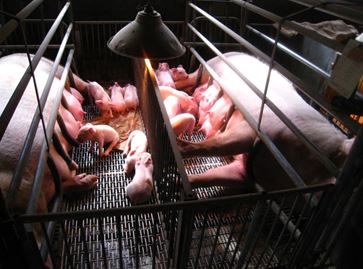
In October last year, an outbreak of piglet diarrhea known as porcine epidemic diarrhea (PED) occurred, and to date it has caused the deaths of about 130,000 piglets. As a result, the foundation had its requests to visit pig farms politely declined. After connections were made through multiple channels, one livestock farm finally agreed to receive a visit: Mansheng Ranch, established in the 68th year of the Republic of China (1979) on the outskirts of Pingtung.
A ranch located in a forest
In rural areas, navigation systems are useless. Fortunately, following a friend's guidance, the car turned onto a quiet forest path, and after an unknown number of bends, rows of pig houses and an office suddenly appeared. As soon as we got out of the car, there was no expected pungent stench; instead, it felt as if we were in a park. It turned out that when the ranch was first being planned and established, it paid attention to the design of the pig house environment and the handling of waste and odors. Looking around the entire site, the total area is about 14 hectares; the pig houses, feed storage, office and employee dormitories occupy only 4 hectares, the three-stage wastewater treatment ponds occupy 1.94 hectares, and all the remaining land is used for afforestation and tree planting. Because of this design, it can not only eliminate odors but also effectively lower the temperature of the site and achieve energy-saving effects.
An epidemic that could not be avoided
We thought that such a closed and independent livestock farm should be able to avoid this fierce outbreak of "pig diarrhea," but the result was actually negative! The ranch has so far lost about 800 piglets. Once this infectious disease strikes, there is no medicine to cure an affected piglet. Only after asking in detail did we learn that the source of infection might be imported feed.
When we focus entirely on the safety of imported meat, we overlook the fact that imported feed corn and soybeans themselves may bring various foreign diseases into the country. This "pig diarrhea" epidemic has caused a shortage of domestic pork and pushed prices up. What if next time it brings a virus of a zoonotic disease? According to data from the U.S. Soybean Export Council, Taiwan's annual soybean consumption per person is 11 kilograms, yet of the more than 200,000 metric tons of soybeans eaten, "non-food-grade" soybeans account for 90 percent. If these imported soybeans may be contaminated by viruses, that would become a major threat to the health of the people.
Agriculture needs new blood
The biggest problem for Taiwan's agriculture is the production model dominated by small farmers. For agriculture to be competitive, it must develop into agribusinesses or gather individual operators into cooperatives. Today's pig farmers in Taiwan all use a one-stop production model, covering everything from pig breeding to the growth process of adult pigs. Now it should move toward a division-of-labor model, splitting pig farming into four stages: breeding stock breeding, piglet rearing, adult pig raising, and finally slaughtering, cutting and selling. This can not only reduce the workload but also improve quality and efficiency.
What worries Mr. Ren, the owner of the ranch, most is that there are no highly educated young people willing to continue working in the livestock industry. If young people are unwilling to enter an industry, then it will eventually disappear! The Council of Agriculture should maintain sufficient basic food production for the people, make the most effective use of farmland, and at the same time encourage young people to engage in agricultural production. The price of agricultural products is the most important key affecting the sustainable development of agriculture. Since trade liberalization is an unavoidable path, then let the prices of agricultural products be rationalized.
Friendly, environmentally friendly farming
Also raising pigs, Mr. Ren is especially meticulous in the design of the pig houses. The spacing between pig houses is large and ventilation is good, pregnant sows have relatively spacious individual pens, and the site is planted throughout with blackboard trees (Alstonia scholaris) that can absorb odors. Even standing beside the solid-liquid separation wastewater treatment pond, one does not feel a foul odor. Pigs living in this environment should be happier and healthier. No wonder the pigs from Mansheng Ranch can become a contract supply ranch for Shin Kong Meat Products.
The ranch set up biogas power generation equipment early on, hoping to reduce the pollution that pig farming causes to the environment while also saving energy. However, because Taiwan's biogas power generation equipment is not sufficiently complete, there are technical difficulties in keeping the electricity for self-use, and Taipower's purchase price is also low (about 2 yuan per kWh). Therefore, the site's power generation equipment is currently idle. The owner hopes that if Taiwan's biogas power generation technology becomes mature enough in the future, he would be willing to update the equipment. After all, it can both make use of waste and save on electricity expenses, so why not do it?
Achieving high-value agricultural production
According to Council of Agriculture data: the output value of hogs ranks first among all domestic agricultural products, accounting for about 15% of total agricultural output value (45% of total livestock output value), and it is also the only industry in the country that can be self-sufficient (in the 101st year of the Republic of China, 2012, the pork self-sufficiency rate reached 93.9%). Regarding industrial advantages, people in Taiwan prefer warm fresh meat or chilled meat and do not like frozen meat, while imported pork is usually transported and sold as frozen meat. Regarding industrial disadvantages, the cost of pig farming in European and American countries is only 70% of ours; and people here prefer pork belly and pork offal, resulting in a relatively large price difference between domestic and foreign markets and a stronger incentive to import. In the future, facing competition from foreign meat products, domestic pig farms with a scale of fewer than 500 head will suffer a greater impact. By then, the domestic pig farming industry will mainly consist of pig farms with a scale of 1,000 to 5,000 head and relatively higher operating efficiency. Under the premise of further promoting "local consumption" and "improving food safety," the Council of Agriculture should provide exit assistance to pig farmers who do not have economic scale or competitiveness, and assist the more competitive pig farmers in expanding their economic scale.
Improving meat safety
Meat supply chain: livestock farmers -> transport -> meat market -> slaughterhouse -> processing plant -> wholesalers -> food service -> consumers
For livestock farmers, meat vendors are the real consumers. After the pigs are sent for testing and found to have no drug residues, they are sent to the auction market to wait for a price. After the meat vendors complete the transaction, the pigs are sent to the slaughterhouse for follow-up work. Once the transaction is completed, the livestock farmers' work is finished. Problems with meat mostly arise during cutting and processing by wholesalers or during sale by vendors, but the media always blames livestock farmers, causing misunderstandings among consumers. This is not entirely fair to livestock farmers.
To improve domestic meat safety, relevant government agencies must raise inspection standards at all stages. They should also guide retail meat vendors to introduce modern, bright and clean meat stalls, selling "Taiwan fresh pork" that has undergone carcass inspection and has a clear source, so as to highlight the fresh and delicious characteristics of domestic pork and win consumer support.