The natural wine wave is sweeping the globe, as native yeasts awaken the soul of the terroir
"Faced with vineyards sprayed with large amounts of pesticides, and cellars that often use too much sulfur dioxide and additives, we increasingly find ourselves unable to describe wine with the word "natural." So a group of people began refusing to treat the land, the vines and the wine in the easy way for the sake of economic efficiency, trying to make wines that express pure terroir in its original flavor. They set off a wave, and people gradually began to call these wines "natural wine."" The natural wine trend is advancing, and Master of Wine Isabelle Legeron MW's book "Natural Wine" will push this trend to its peak.
What is natural wine? Isabelle Legeron MW explains in the book's preface that natural wine is wine that strives to avoid intervention by modern winemaking methods and to present its natural character, and cites the winemaking experience of Joseph Pedicini, owner of Montebruno winery in the United States: "In 1995, I took over my family's winemaking duties... When I used lab-cultured yeast strains, my family would look at me completely baffled and say, 'Why are you putting those things in our wine?!' In the end, the wine that came out lacked soul. Good to drink, but missing that magic." Joseph's conclusion was: "Wine will make itself!"
Natural wine lets grapes ferment slowly and resist oxygen on their own
Natural wine has caused a wave around the world, and it has also sparked discussion in Taiwan, China. Wine writer Lin Yusen points out that wine is already a very natural beverage to begin with; although there may be some cultured yeast, sugar and sulfur dioxide, it is basically almost 100% grapes undergoing fermentation and conversion. Much wine science discusses how to control selected yeasts and varieties to make specific aromas and textures, "but before these things existed, we could already make wine very naturally and simply." Lin Yusen says that "natural wine" is not a specific winemaking method or fermentation method, nor does it refer to just one wine; rather, it is a kind of "experience" of approaching wine.
Lin Yusen takes the "sulfur dioxide" added to wine to control fermentation as an example. Many winemakers see oxygen as the enemy, worrying that wine will oxidize and deteriorate through contact with oxygen. To control risk, they often keep the winemaking environment in a "no oxygen" state, even adding sulfur dioxide to block oxygen, "but wine protected in this way, because it has not been stimulated by oxygen at all during winemaking, may deteriorate quickly once the bottle is opened and it meets oxygen."
But in older times, before oxygen-blocking technology existed, wine would more or less come into contact with oxygen, "and in the process of slow fermentation and conversion, this actually increased the wine's ability to resist oxygen." Instead, it was not so easy for it to deteriorate.
"Not only that, wine schools are also very afraid that VA acetic acid (the acid produced after wine is overly oxidized) will make the wine stink." Lin Yusen gives another example: indeed, if there is too much VA acetic acid, it is very likely to ruin the wine, but in fact many great wines may contain a relatively high level of VA acetic acid, "because it can increase acidity and aroma"; nothing is absolutely positive or absolutely negative.
If, out of fear, you quickly remove and suppress all risks that could lead to deterioration, you will only make a taste that is too clean and lacking in fascinating flavor. "Learning control is the skill that natural wine winemakers have to learn."
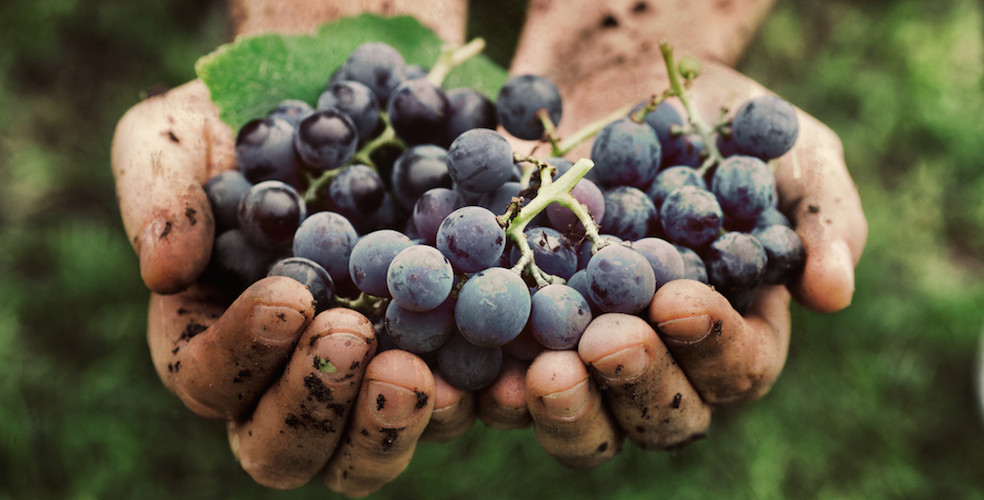

Hoping to break wine's standardized taste and allow regional flavors
"When you can drink exactly the same wine everywhere in the world, and those more local characteristics are rapidly disappearing, Europe feels a sense of crisis." Lin Yusen sees this natural wine trend as a force of reaction, a reaction against globalization, internationalization, homogenization and standardization.
"Many winemakers are starting to feel that they seem limited by winemaking techniques to making very standardized things, and they gradually think they should make wines closer to so-called traditional flavors and regional flavors." Lin Yusen says natural wine offers new possibilities and reaches a market that does not want to drink standardized wine, but wants to drink wine with more unique flavor, or so-called wine closer to the land, and this wave has made wine more diverse.
And now, the natural wine trend is surging. How exactly will it change in the future? "Actually, I don't know either. It may become very big, but it may also just be a trend that has a slight impact on the future." Lin Yusen interprets it this way: "Natural wine is just one branch among many branches of wine. There is no absolute good or bad, only differences in aesthetics and preferences."
What does natural wine taste like? Take a sip of the white wine Cuvée Lias, 2013, from Domaine Labet in France, and intoxicating floral and honey aromas rush into the tip of the tongue and nasal cavity. With the first sip of Indigene, 2014, from the Loire region of France, a heavy, rich and mellow finish bursts out intensely. The sommelier explains, "This wine's feature is its pepper aroma, and it also carries a slight leather smell." Tasting natural wine is like unwrapping a mysterious gift; you will never know what the next sip will taste like.
(This article is sponsored by the Jianzhen Environmental Education Foundation for personnel expenses, but it does not interfere at all with news topic selection or interview writing, ensuring news independence.)